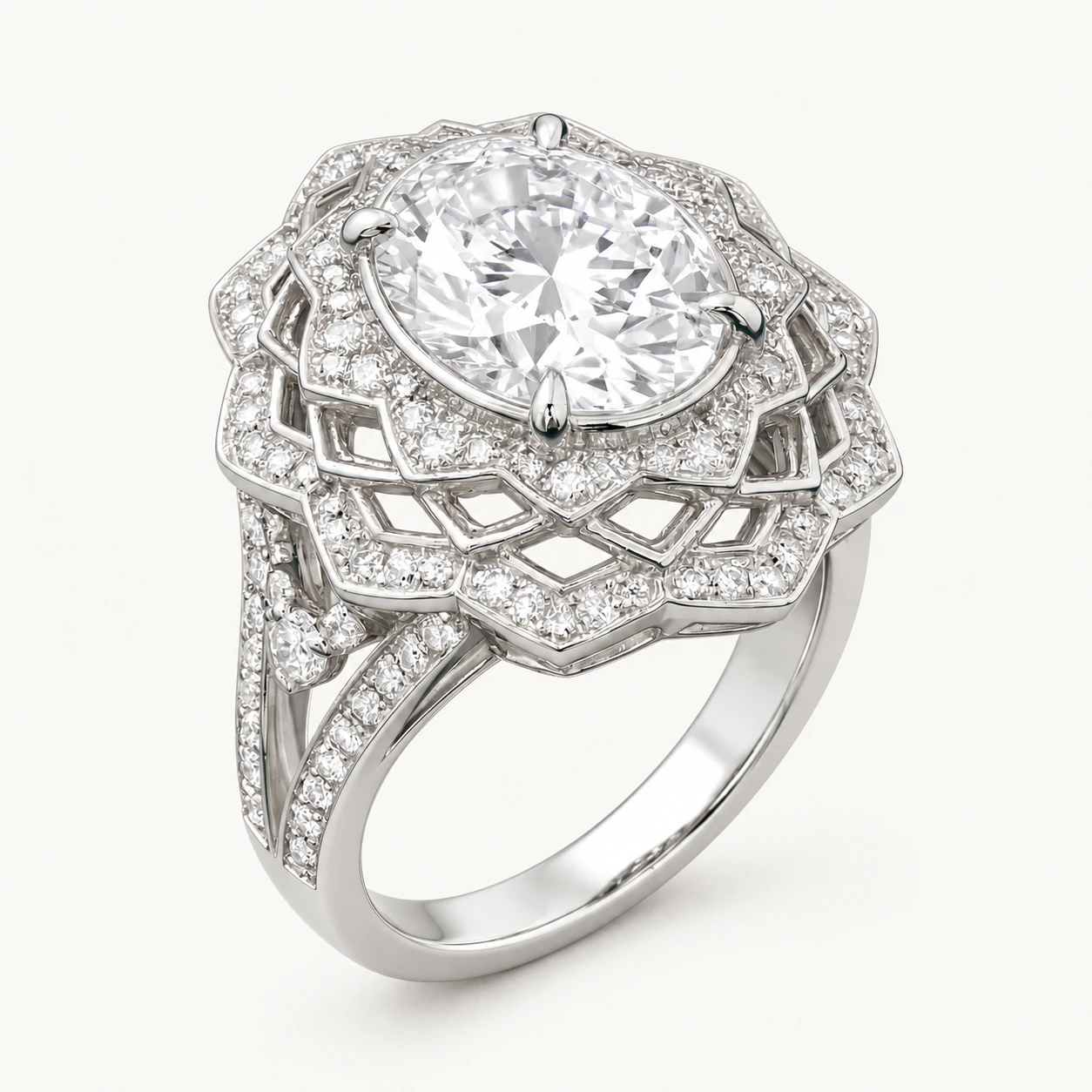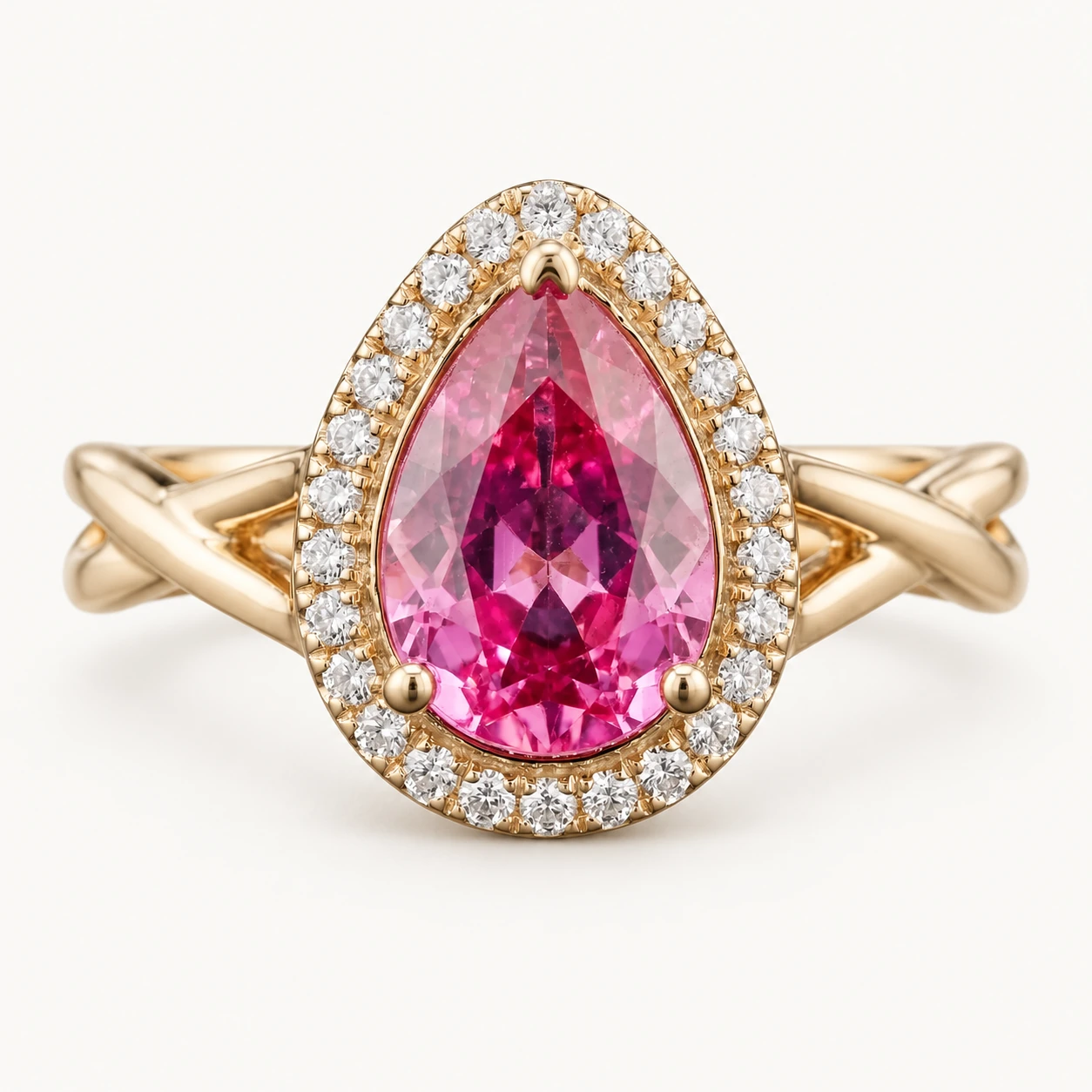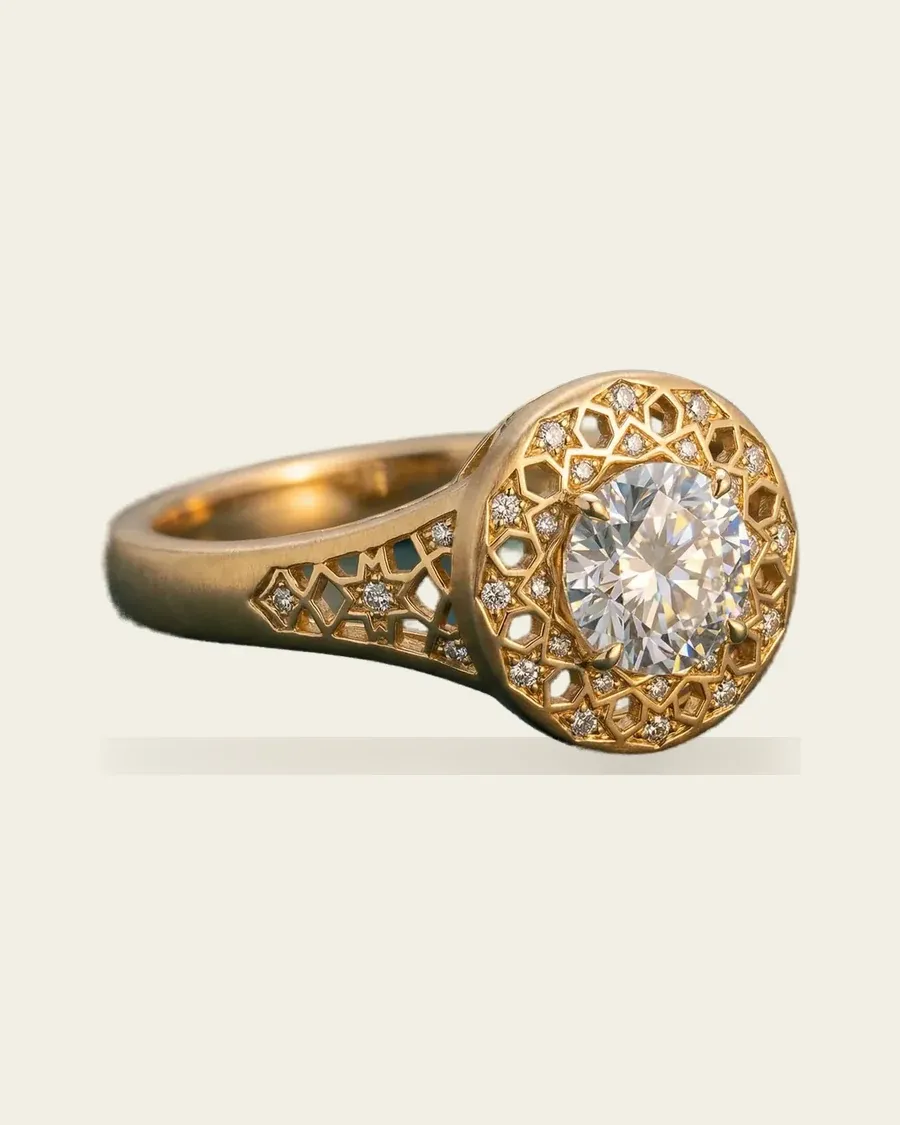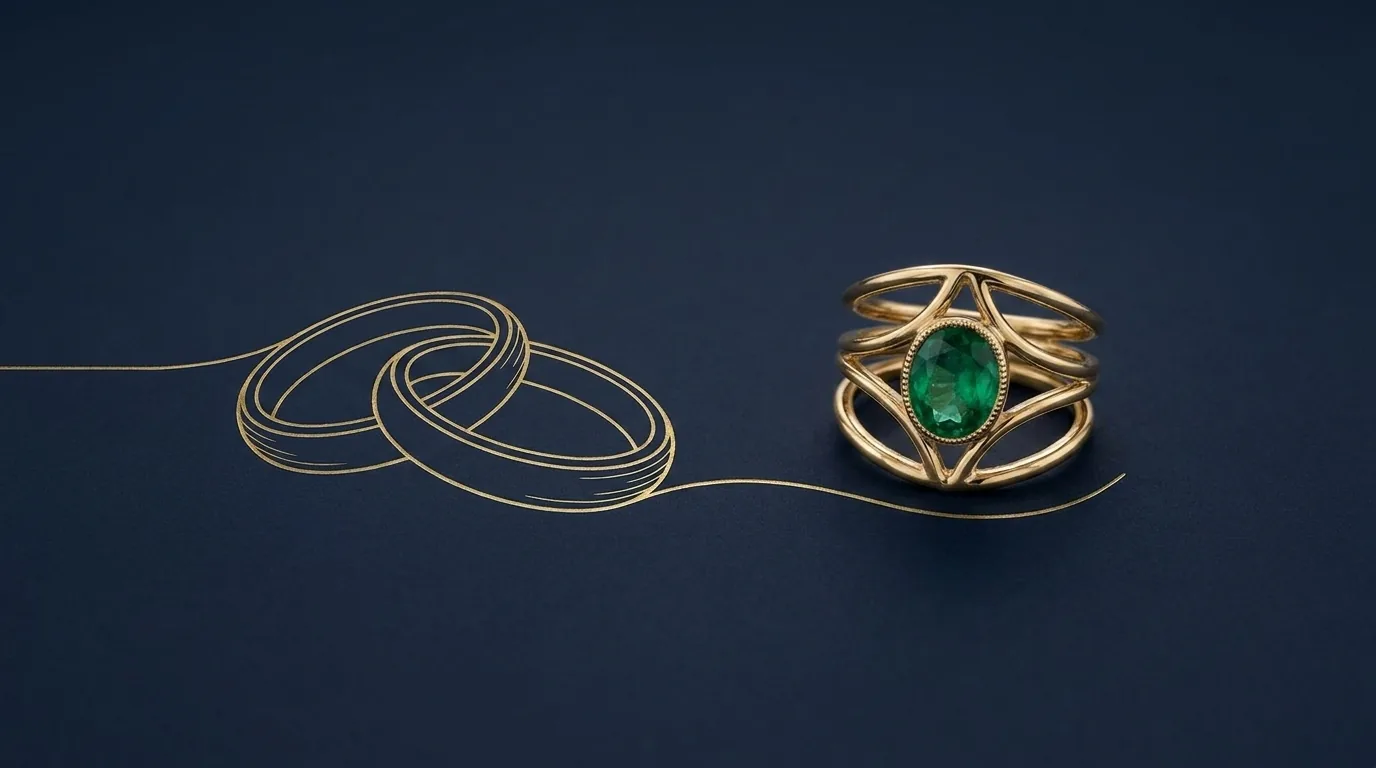
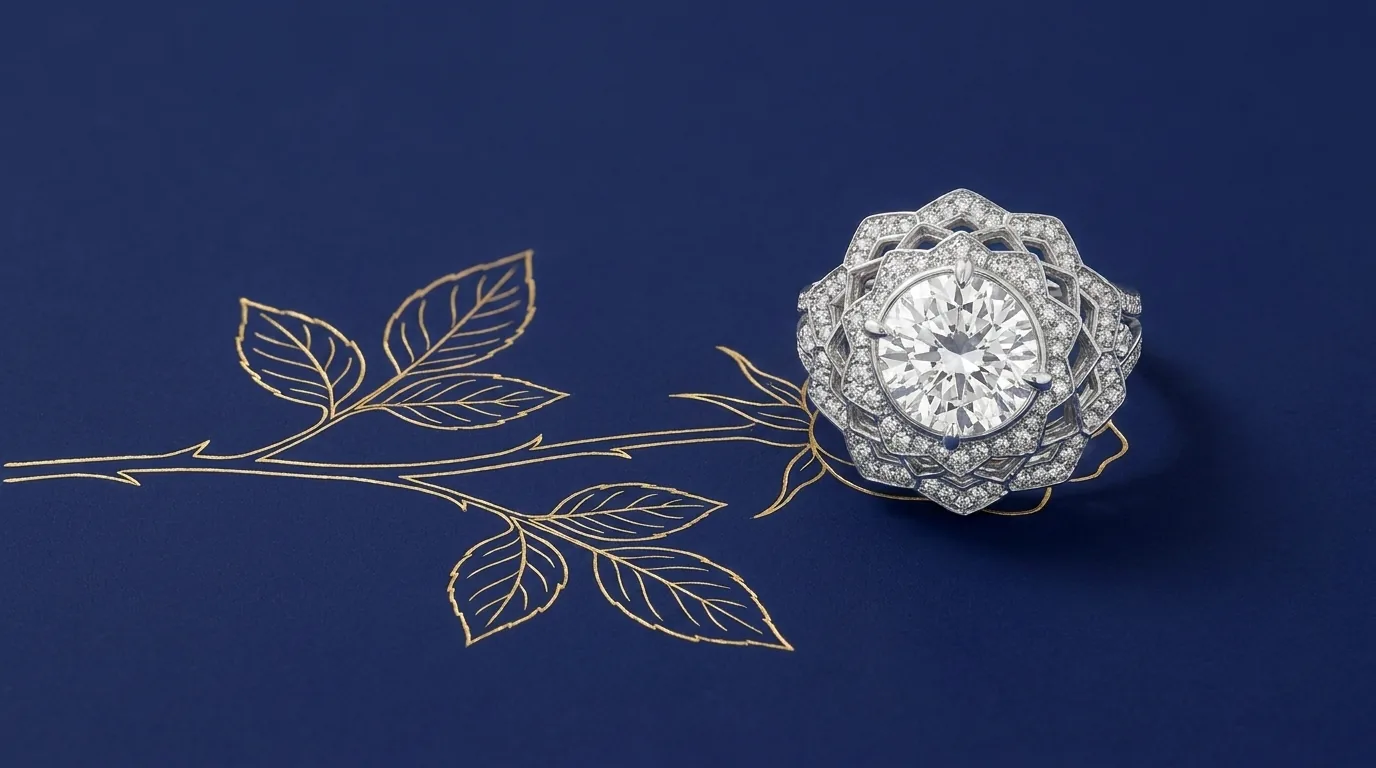
How long does it take to make a ring? Less time than you would imagine, and rather more thought than you would guess. The making itself, the casting, the setting, the polishing, is a matter of days. What takes the time is everything that happens before the metal is touched: a conversation, a handful of drawings, a model precise enough to measure, renders checked against the hand it is made for, and the accumulation of small decisions that eventually become something that has never existed before.
Every bespoke ring, or custom ring if that is the term you know it by, follows the same path, whatever the design. Here is what actually happens, stage by stage.

Seven stages, one ring
Consultation and brief. Design development. A model precise enough to check every dimension. Approval from renders, and a resin prototype to hold if you would like one. Lost wax casting, a technique older than writing. Stone setting, the most exacting discipline in the trade. Finishing and hallmarking. Not one of those stages can be skipped without it showing in the finished piece.
The consultation, a conversation with consequences
Every commission begins with a conversation, and its quality decides everything that follows. The questions go beyond stone and metal preference into lifestyle: how the ring will be worn, alongside what other pieces, whether the wearer works with their hands. A band that sits beautifully at a dinner table can be entirely wrong in a workshop.
Jewellery has always carried meaning beyond decoration, from the Victorian mourning brooch to the Art Deco ring that announced a new kind of independence. A bespoke engagement ring carries the weight of a relationship’s beginning. That is not a small brief, and it deserves an hour of proper conversation, sometimes more, before a single line is drawn.
The idea before anything else
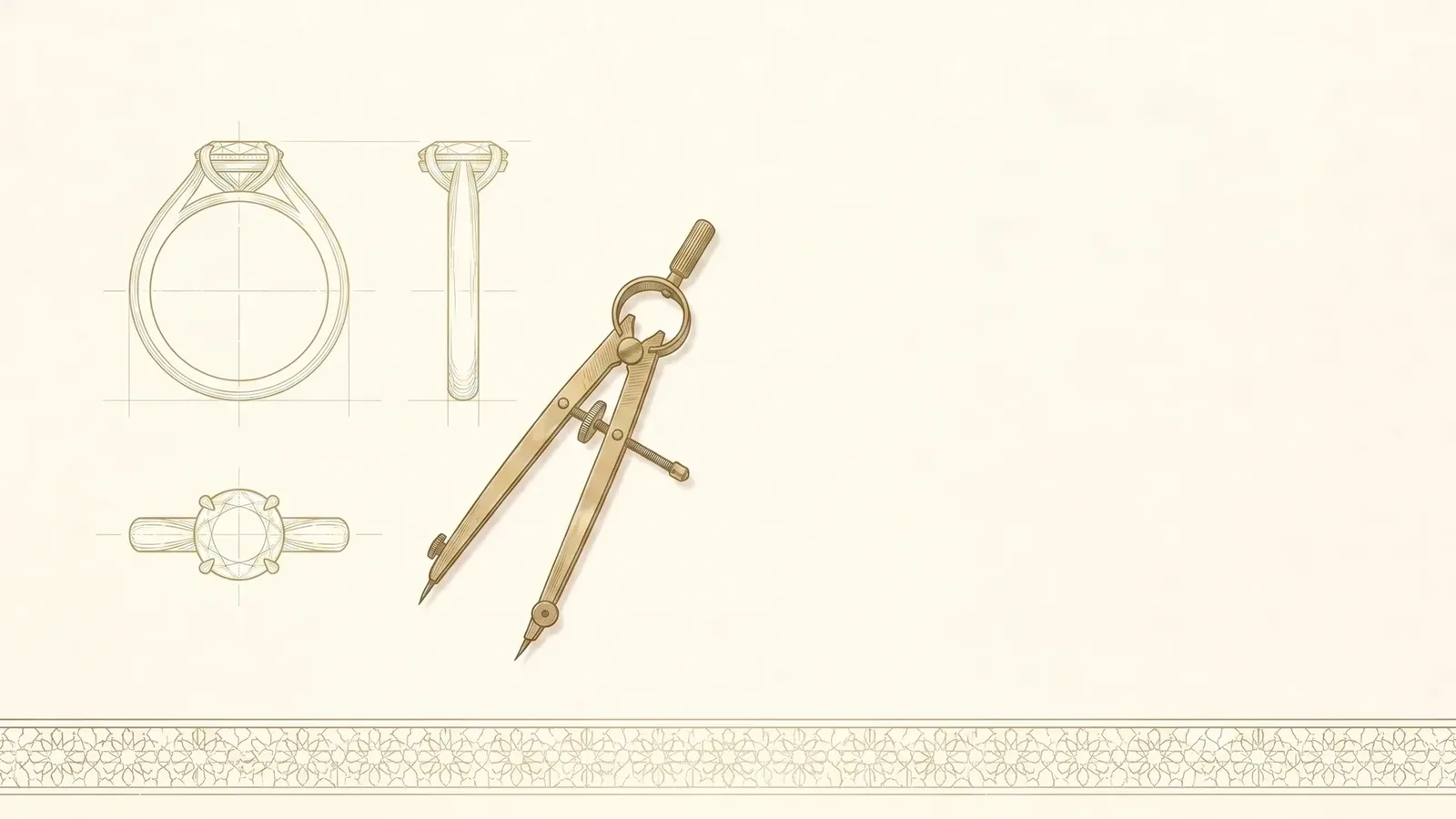
Every ring begins as design studies: quick, loose explorations of proportion, silhouette, and balance, made before anything is fixed. Two or three directions usually emerge from a first session, each one a different answer to the same brief.
Early studies force commitment. It is tempting to refine a design indefinitely; a study is an honest record of a decision made. When three directions sit side by side and a hand goes to one without hesitation, that instinctive response says more than any technical discussion could.
Discovering a problem in the model costs nothing to fix. Discovering the same problem after casting costs metal, time, and goodwill. Checking before casting is an investment in accuracy.
A drawing that can be measured
Once a direction is chosen, that study becomes a precise model, one where every dimension can be checked and none is left to guesswork. This is where a ring stops being an idea and starts being an engineering document. A shank that will finish at 1.60mm is modelled a little thicker, to allow for what polishing removes. A gallery rail is never made thinner than roughly 0.80mm, with enough metal left between the outer edge and the stone seat to keep it secure for decades. Claws are sized to the stone they hold, thin enough to sit close, thick enough never to flex.
That model is checked from every angle before a gram of gold is touched, and you approve it from renders that show the true proportions of the piece against its stone. If you would rather judge it in your hand than on a screen, a resin prototype can be printed: tried on here in the studio, or posted to you. Either way the design is confirmed in something that can easily be undone, rather than in metal that cannot.
Made to order, which means made only once
Lost wax casting has barely changed since ancient Egypt and Mesopotamia first practised it. The principle is the same: a wax model is invested in plaster, burned out at high heat, and molten metal is forced into the void the wax leaves behind. Platinum alone requires specialist handling, it melts at 1,768°C, well beyond what most workshops can manage.
Setting is the most exacting discipline in fine jewellery. A claw is bent over the stone’s crown facets with even pressure, filed to a consistent size, and checked from every angle before it is trusted. A heavily pavé-set piece can involve hundreds of individual operations across a single surface, each one invisible unless it fails.
Finishing removes every trace of the casting: progressive sanding, then polishing by hand around stones that must never be touched by the wheel. Before delivery, every claw is tested for security under magnification, the ring is cleaned ultrasonically, and, where the weight threshold applies, it is sent for UK hallmarking. That mark is not a purity certificate: it is an independent statement of fineness, struck by an office with no interest in the sale. How to read one.
All of this, working always in solid gold and made only once it is ordered, typically takes four to six weeks from design approval to the piece reaching you. The stages before that move at your pace rather than ours, so they are not part of the estimate, and the timing is set out in full here. The wait is not idle. It is thought, made physical, one stage at a time.
The decisions at every stage, the profile of a shank, the height of a claw, the placement of a single stone, accumulate into an object that is precisely itself and nothing else. That is why a well-made bespoke ring outlasts every trend: it was made to be exactly what it is, for exactly the person who wears it. If you are curious to see the process for your own piece, the Golestan, Mehr, and Vasl collections are a fair place to begin the conversation.