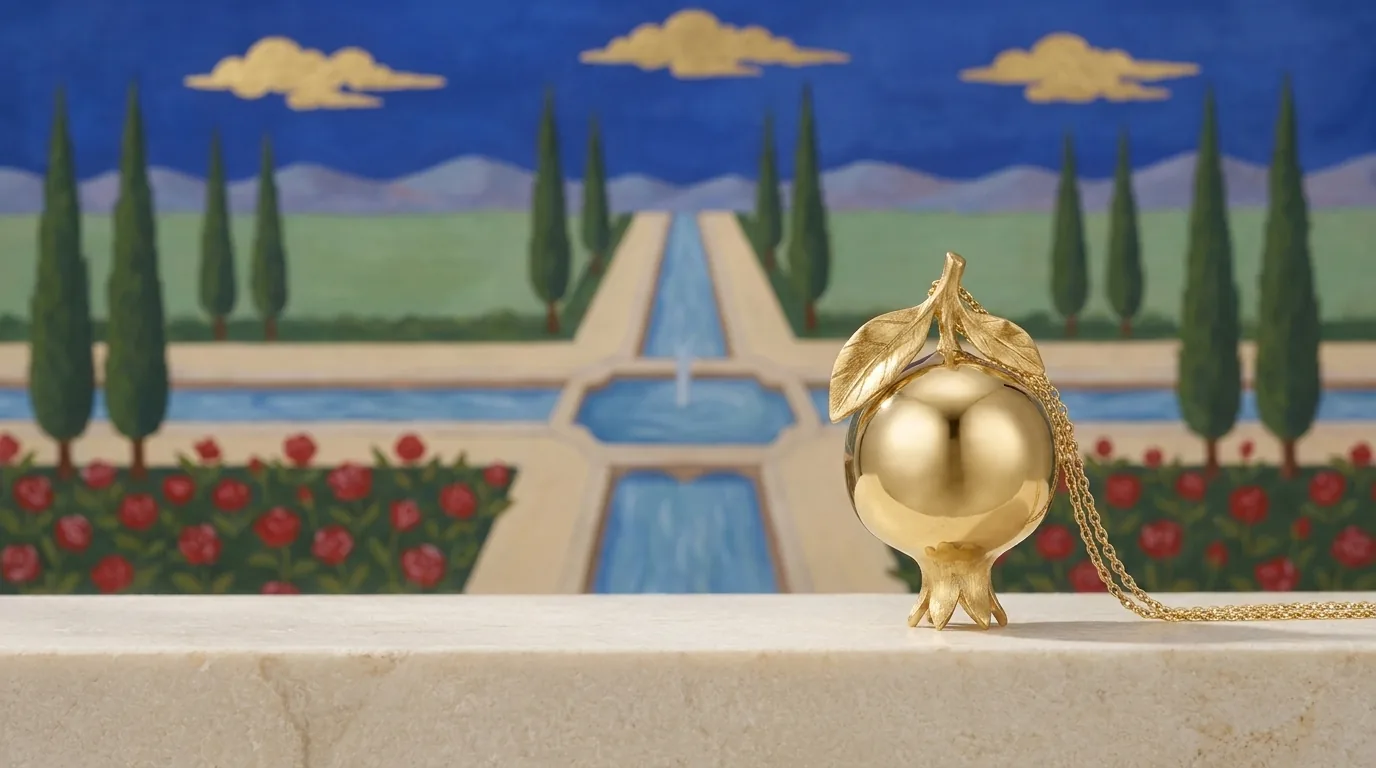
In Persian, gol is rose. Stan is place. Golestan: the place where roses live. It is not simply a garden. The word carries two thousand years of poetry, architecture, and devotion inside four short syllables, and it is the name of the most personal collection made at Silux London.

A paradise garden jewellery collection, named for roses
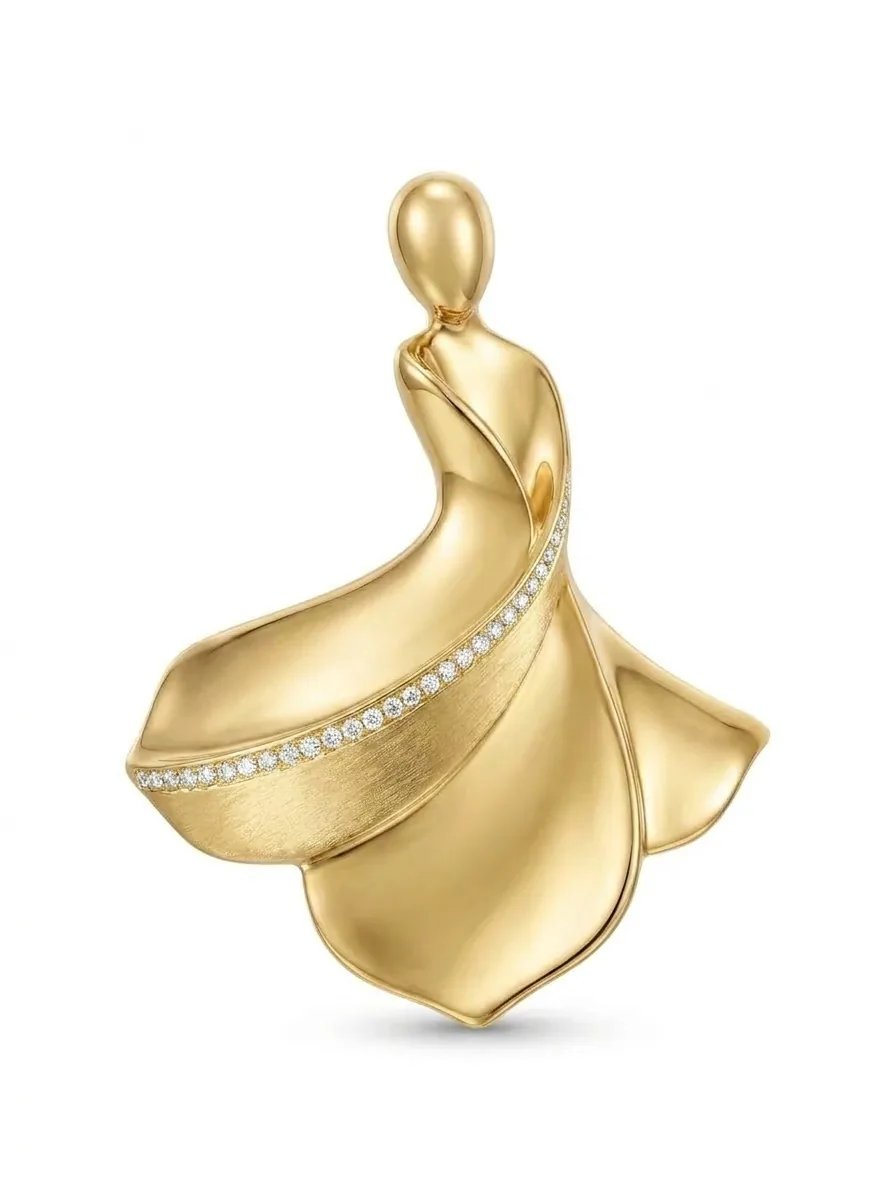
The Golestan collection translates Persian garden design into fine jewellery, built from solid 18ct gold and finished by hand. The aim was never to decorate a piece with a flower and call it Persian. It was to carry the garden’s actual structure, its geometry, its symbolism, its colour language, into something that could be worn.
The word paradise is itself Persian in origin. It comes from pairi-daeza, a walled enclosure. Ancient Persian gardens were never wild or romantic in the way an English garden might be. They were deliberate: walled against the desert, irrigated against drought, and laid out according to a principle that has shaped garden design for two and a half thousand years, since the Achaemenid Empire first built them.
The Chahar Bagh, the blueprint for paradise
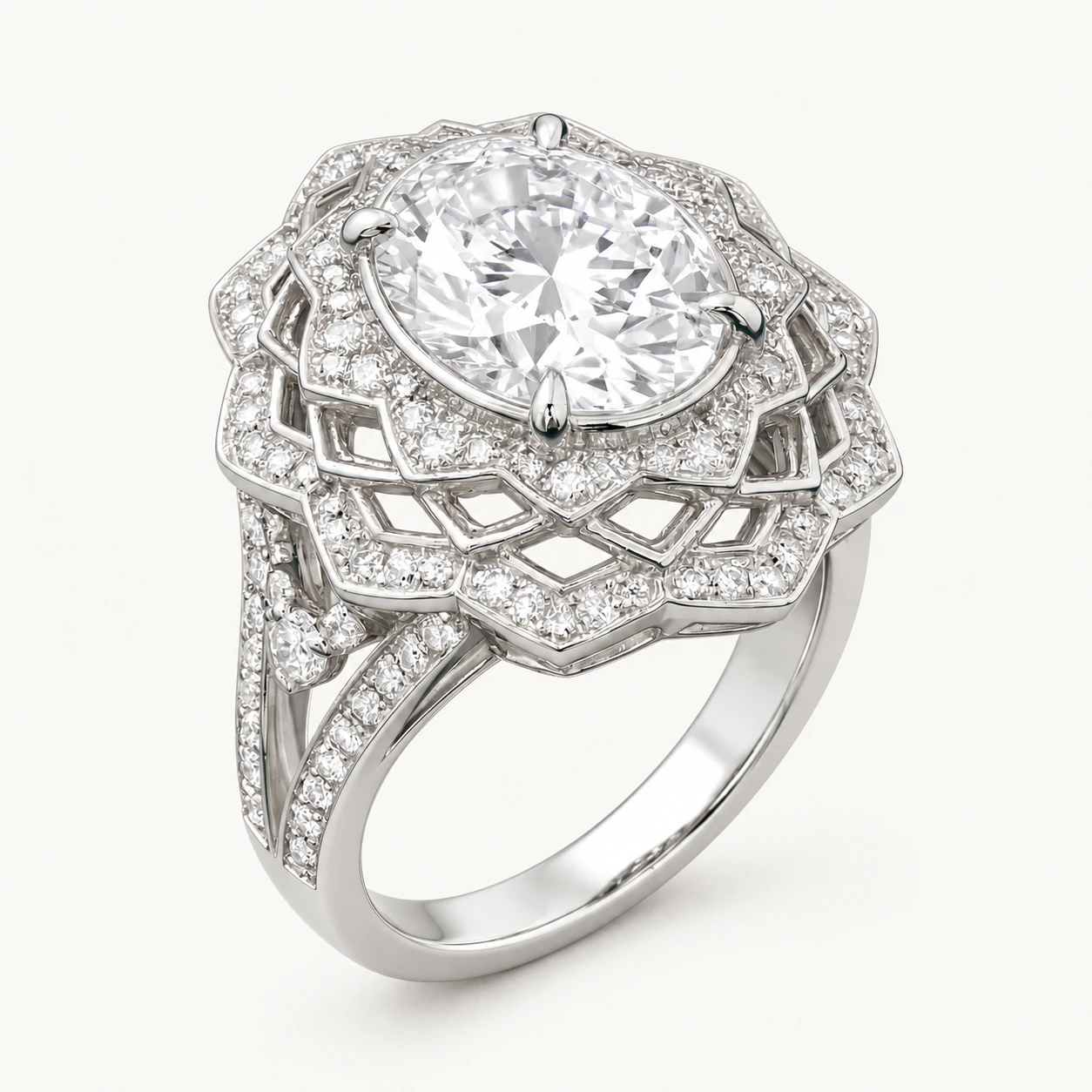
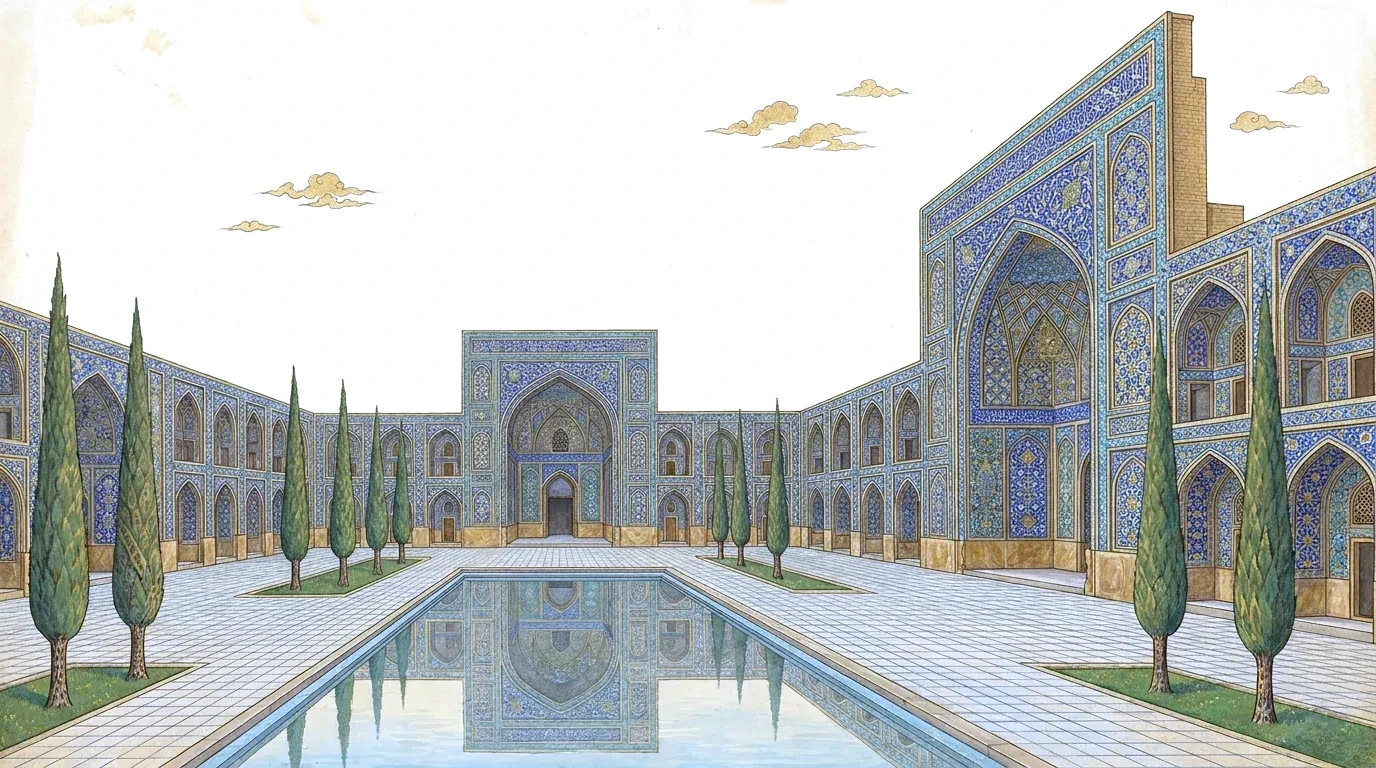
That principle is called the Chahar Bagh, four gardens. Two perpendicular water channels divide the space into four quadrants, meeting at a central pool or pavilion. Each quadrant stands for one of the four elements. The point where the channels cross, where earth and heaven meet, is the still point around which the whole garden turns: the place of greatest beauty and greatest calm. This geometry is the structural foundation of every piece in the Golestan collection, whether it appears as a crossing-axis stone setting or simply as a sense of balance around a single central form.
The Chahar Bagh travelled the Silk Road in both directions. The Mughal gardens surrounding the Taj Mahal follow the same layout. The garden carpets of the Safavid period are aerial views of a Chahar Bagh laid flat, woven for a ruler who wished to sit at the centre of paradise without leaving the room. Its influence reached the Alhambra in Granada, the courtyards of Morocco, and the gardens of Ottoman Istanbul. It is a design language that outgrew its origin centuries ago, embedded in Persian decorative art at every scale, from mosque tilework to the rugs found in Persian homes today.
The rose is never only a flower
The rose, gol, is the central symbol of Persian poetry and Sufi mysticism. It recurs in Rumi, Hafez, and Saadi with a consistency that makes it almost a technical term rather than an image.
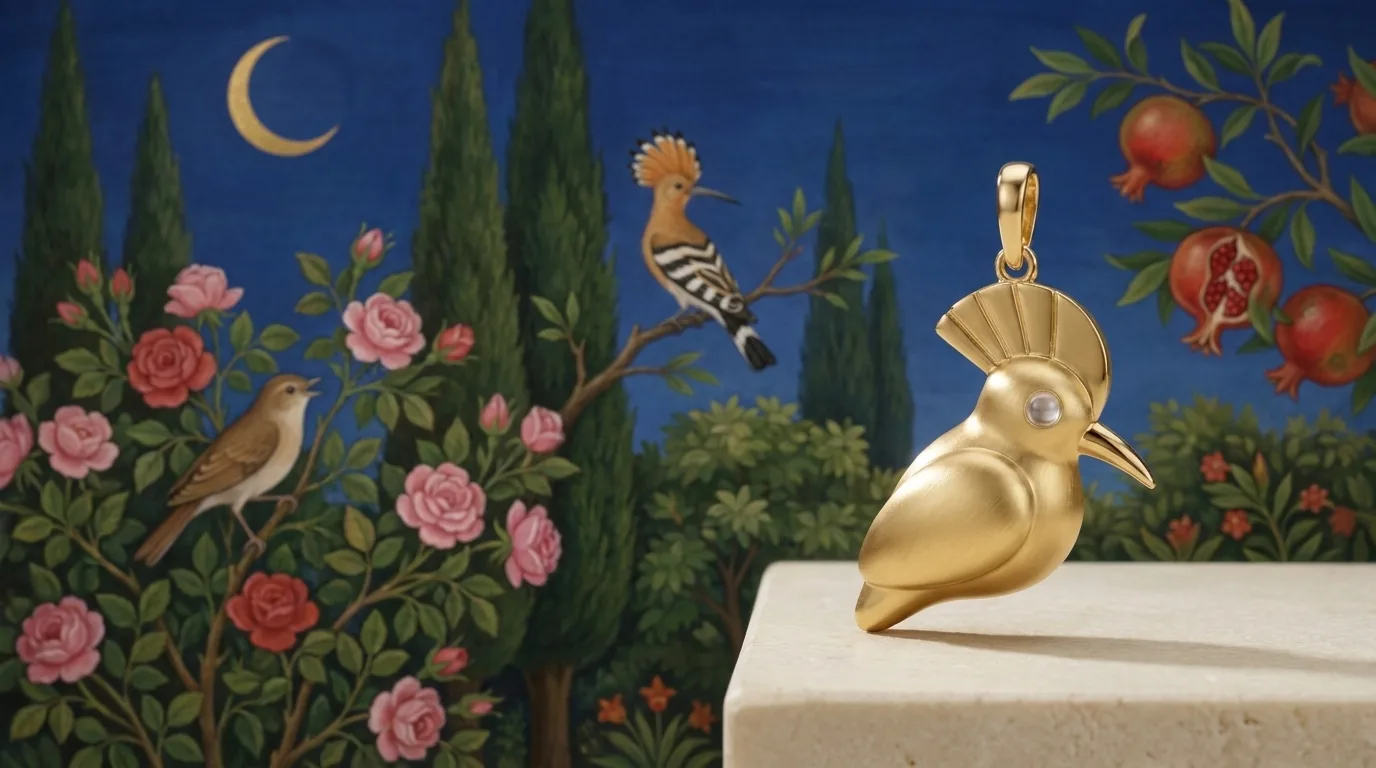
In Persian poetry, the rose and the nightingale are inseparable, gol o bolbol. The nightingale sings its longing through the night, never fully reaching what it loves. It is not simply a nature image. It is the central metaphor of Sufi mysticism: the soul yearning towards the divine, finding meaning in the longing itself. The beauty of the rose is not merely visual. It is a doorway.
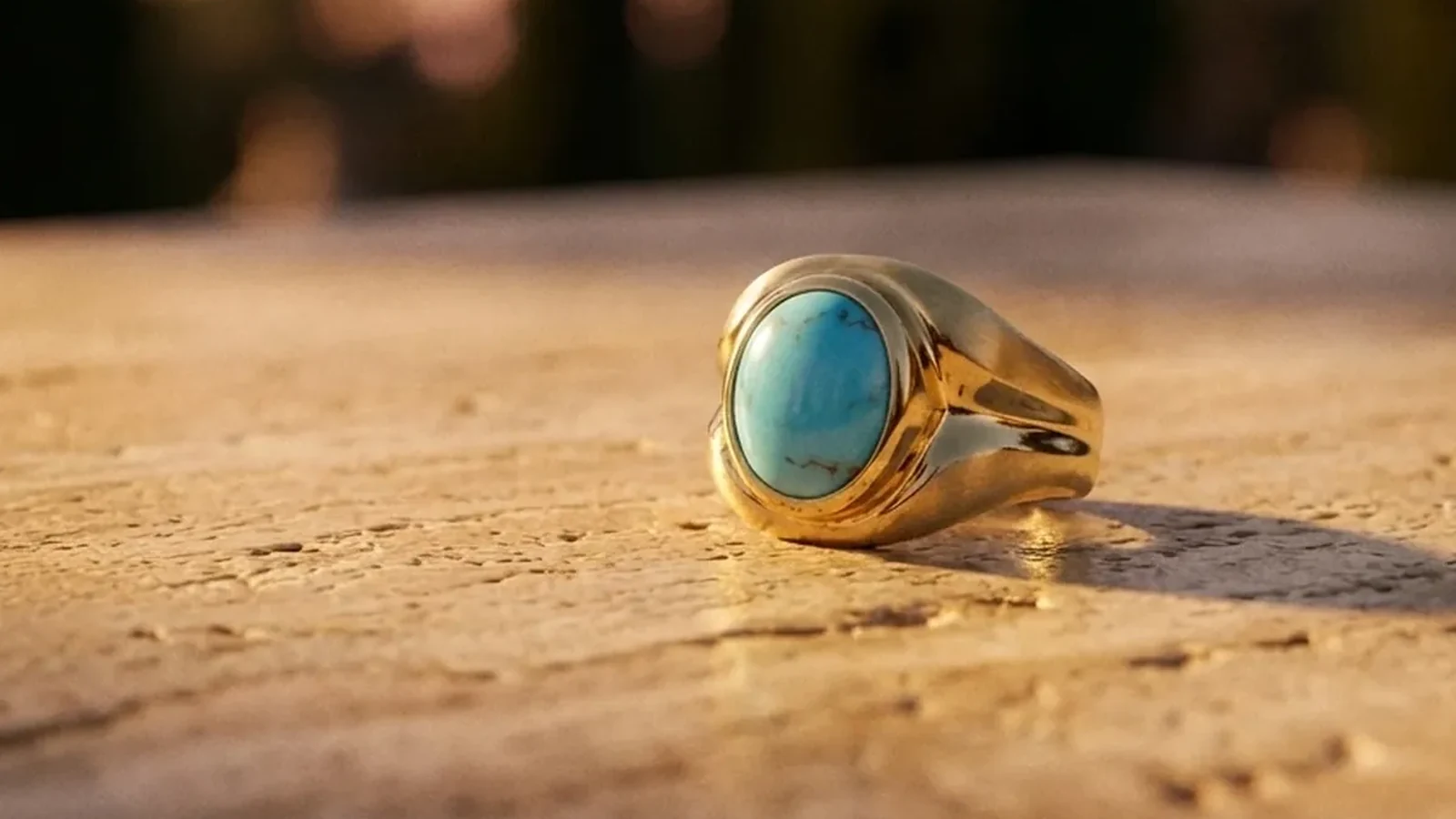
The rose has appeared in Persian decorative art for a very long time: tilework, manuscript illumination, carpet borders, Safavid metalwork. It is never simply decorative. It carries centuries of accumulated meaning, even when it appears as a small carved detail on the shoulder of a ring or the hollow at the back of a pendant.
From garden to gold
Every design decision in the collection traces back to a specific source. Stone arrangements echo the four-quadrant division of the Chahar Bagh, with a central stone standing in for the pool at the garden’s heart. Gallery and shoulder details draw from the flat, geometric rose of Persian tilework, deliberately distinct from the naturalistic rose of Western botanical jewellery. White gold and platinum evoke the cooling quality of water running through the garden’s channels and fountains. Yellow gold speaks to warmth, to summer, to the gold of illuminated manuscripts and the sun-drenched courtyards of Persian palaces.
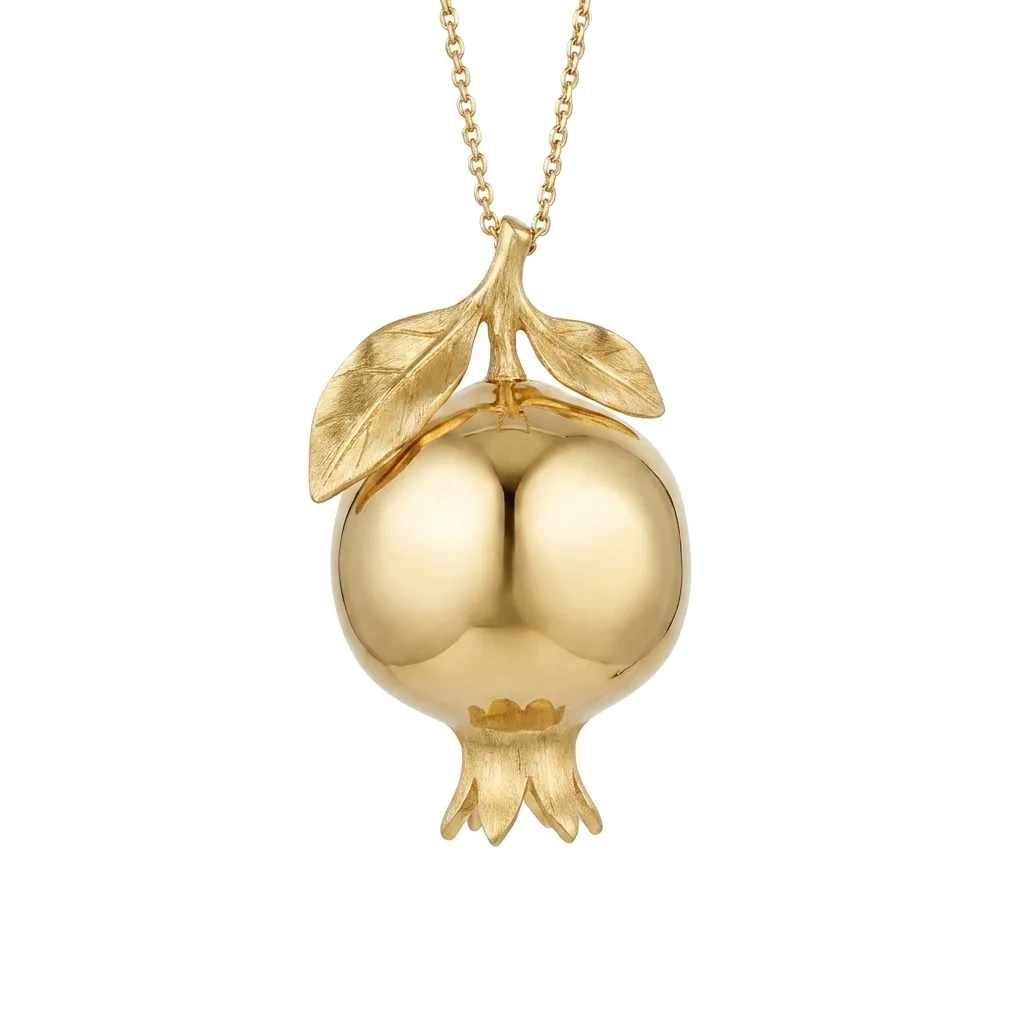
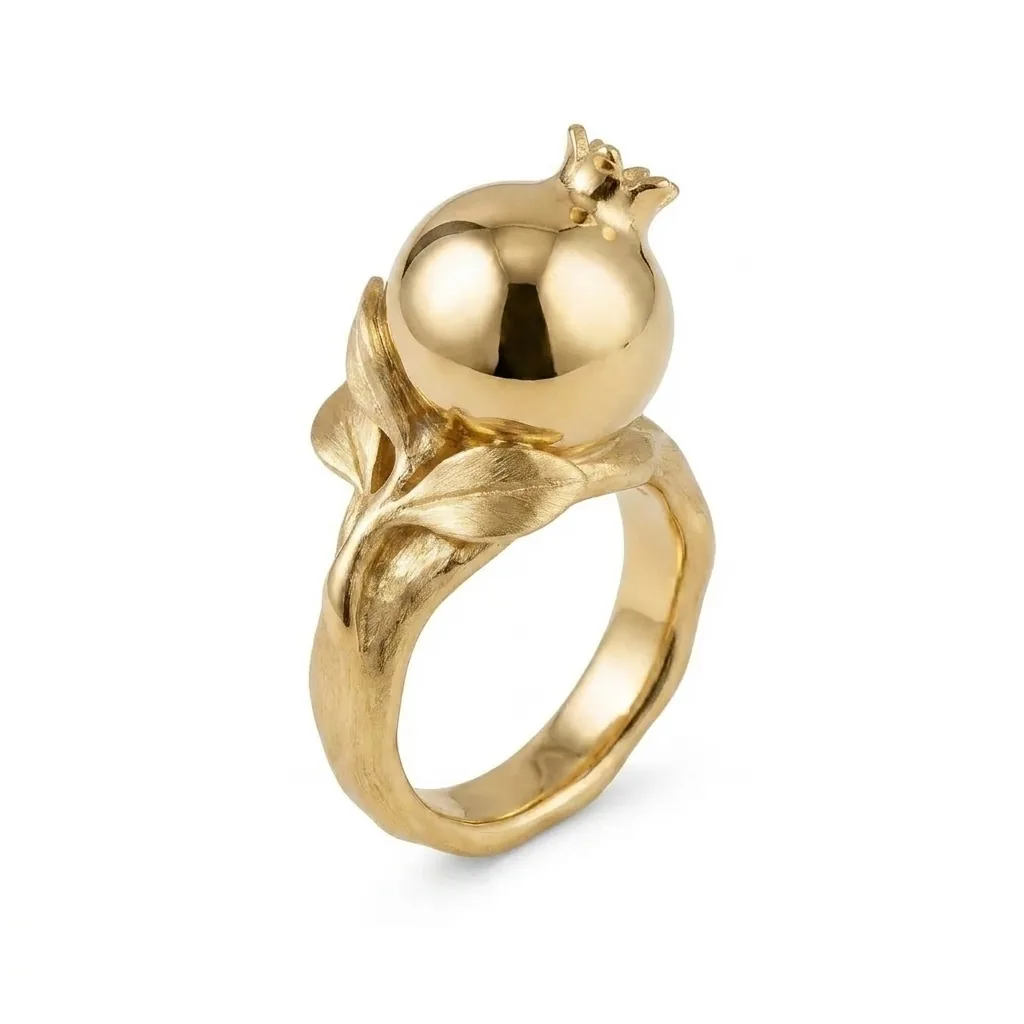
The pomegranate pieces in the collection carry this thinking at its simplest. Anar, pomegranate, is one of Persia’s oldest symbols of abundance, the fruit that has sat on every Iranian garden and every Nowruz table for centuries. Rendered in demi-relief, mirror-polished at the body and left matte at the crown, each piece hides a Persian girih lattice in the hollow at its reverse, a hidden signature found only by the wearer.
Carrying the meaning with the object
There is a risk in working with cultural heritage. Symbols stripped of context become mere decoration. A rose motif without knowledge of what the rose means in Persian poetry is just a flower. A four-quadrant setting without awareness of the Chahar Bagh is just a symmetrical arrangement.
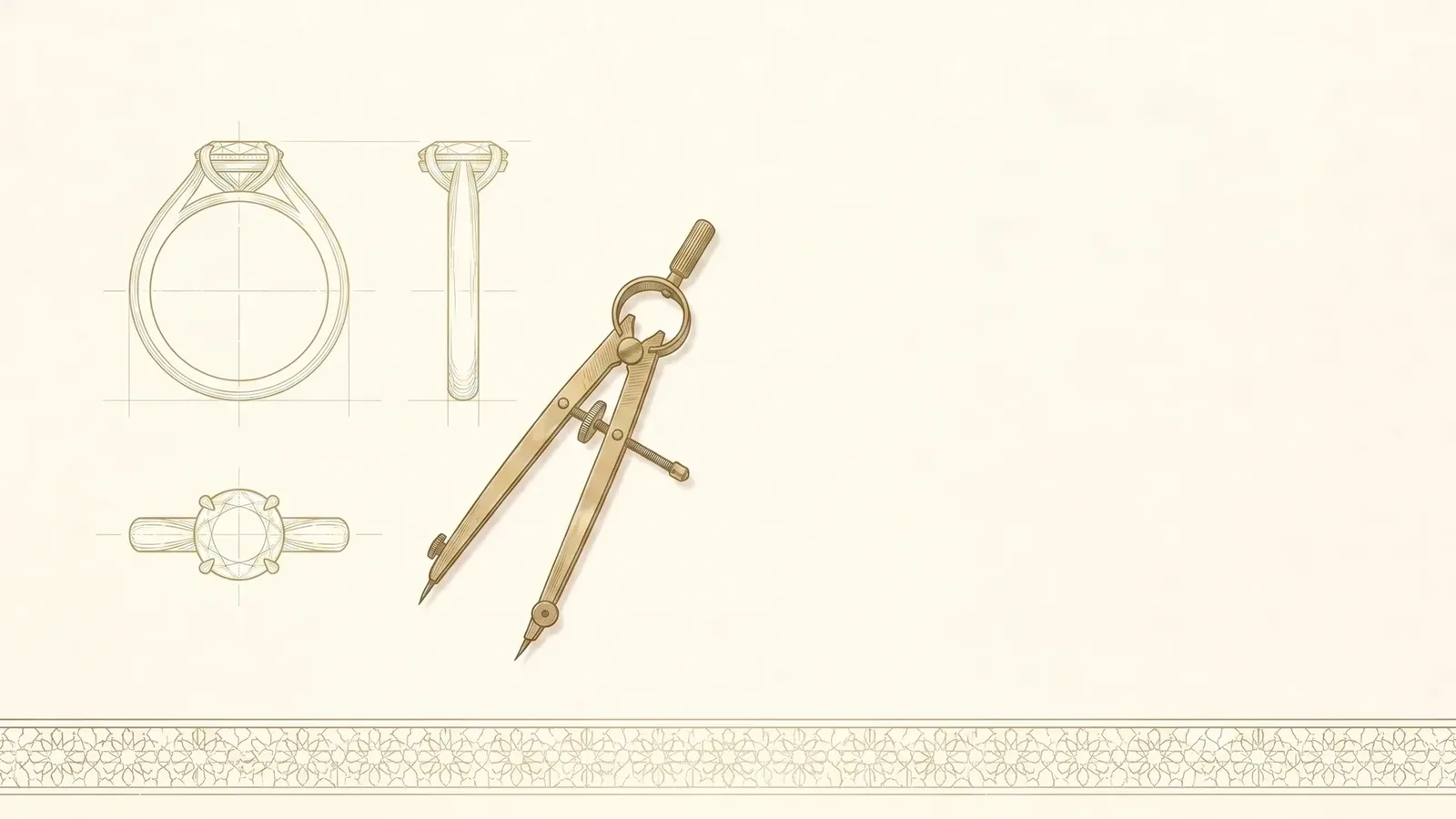
Silux London takes its name from the Silk Road, and Persia sat at the centre of that network, both geographically and culturally, adapting and transmitting metalwork, tilework, and manuscript illumination across the known world. The Golestan collection is a Silk Road object in miniature: a meeting of traditions, each enriched by the encounter, drawn in the Birmingham Jewellery Quarter studio and made only once it is ordered.
The jewellery is meant to be beautiful on its own terms first. But it should also reward the curious, someone who asks where a design comes from should receive an answer that deepens what they already see. The garden of roses is a very old idea. This collection is one way of tending it still.