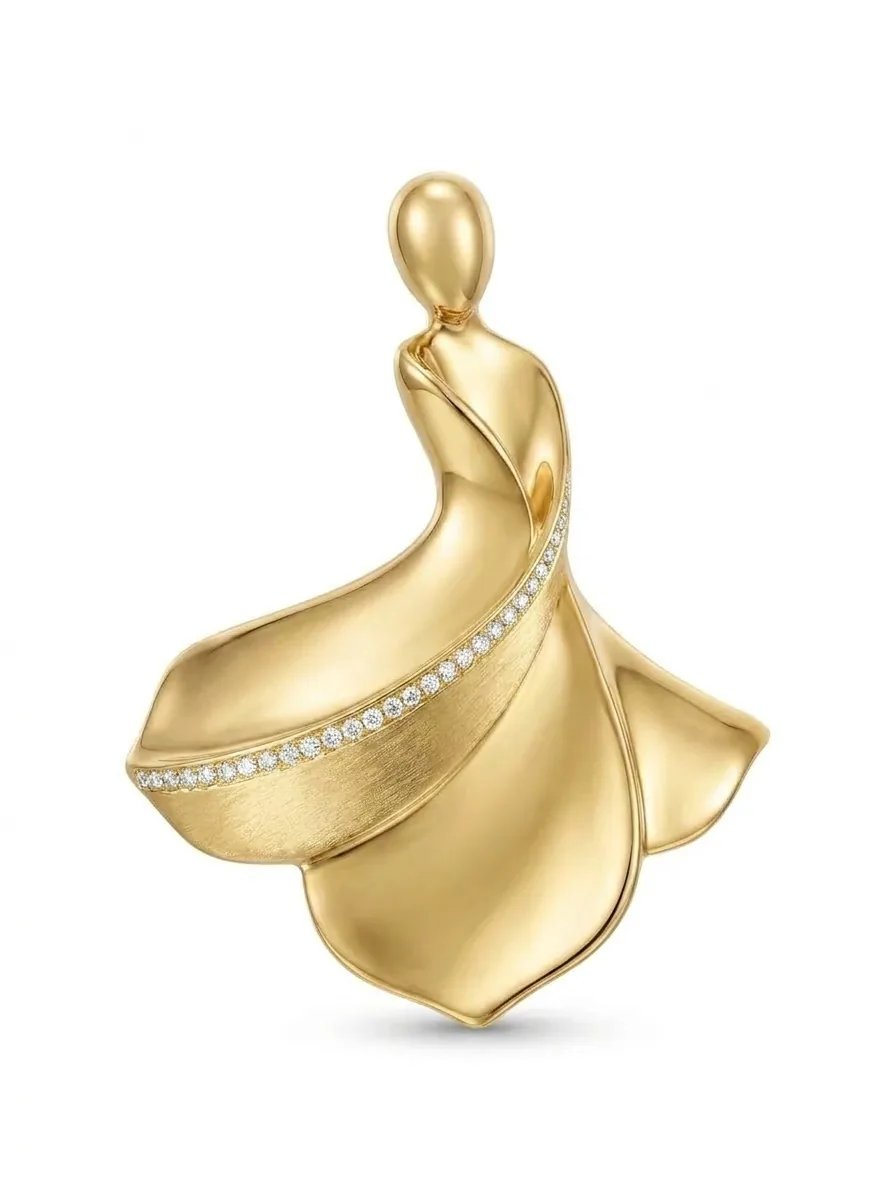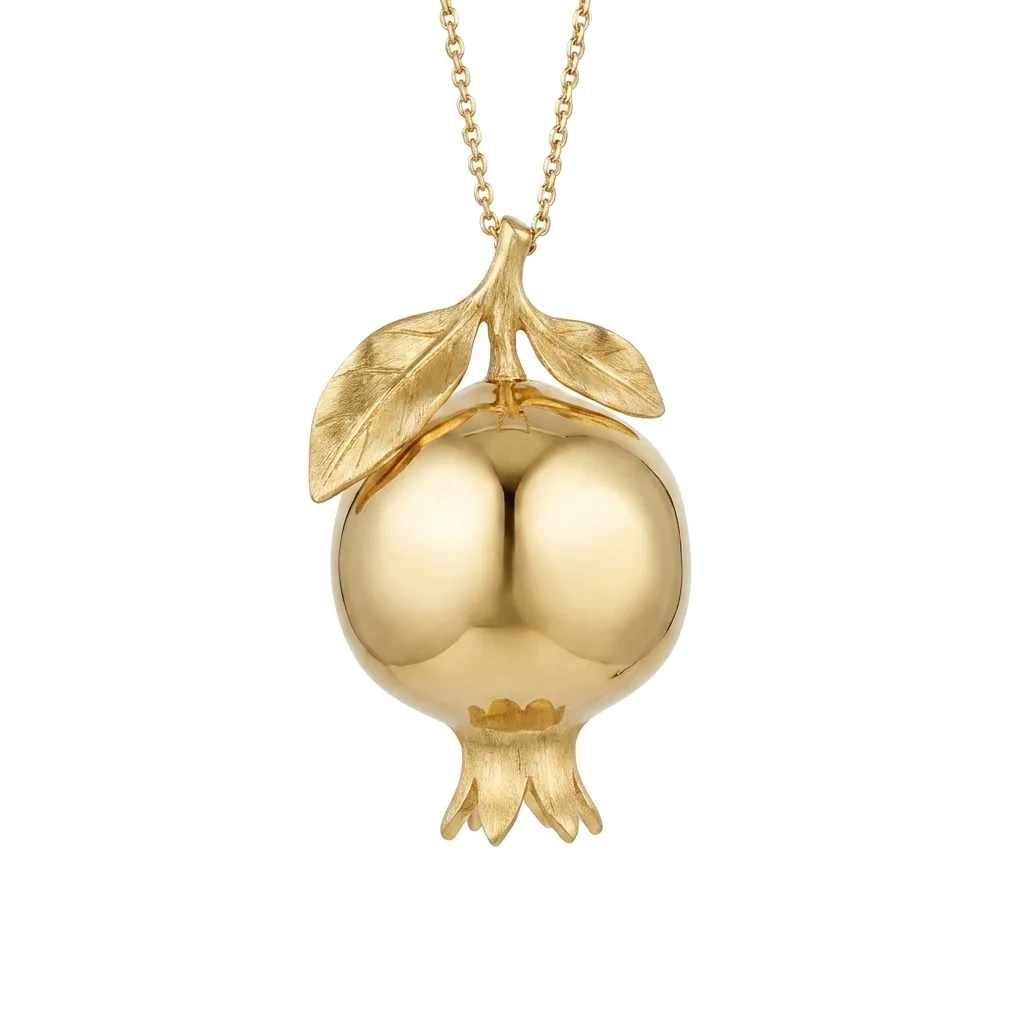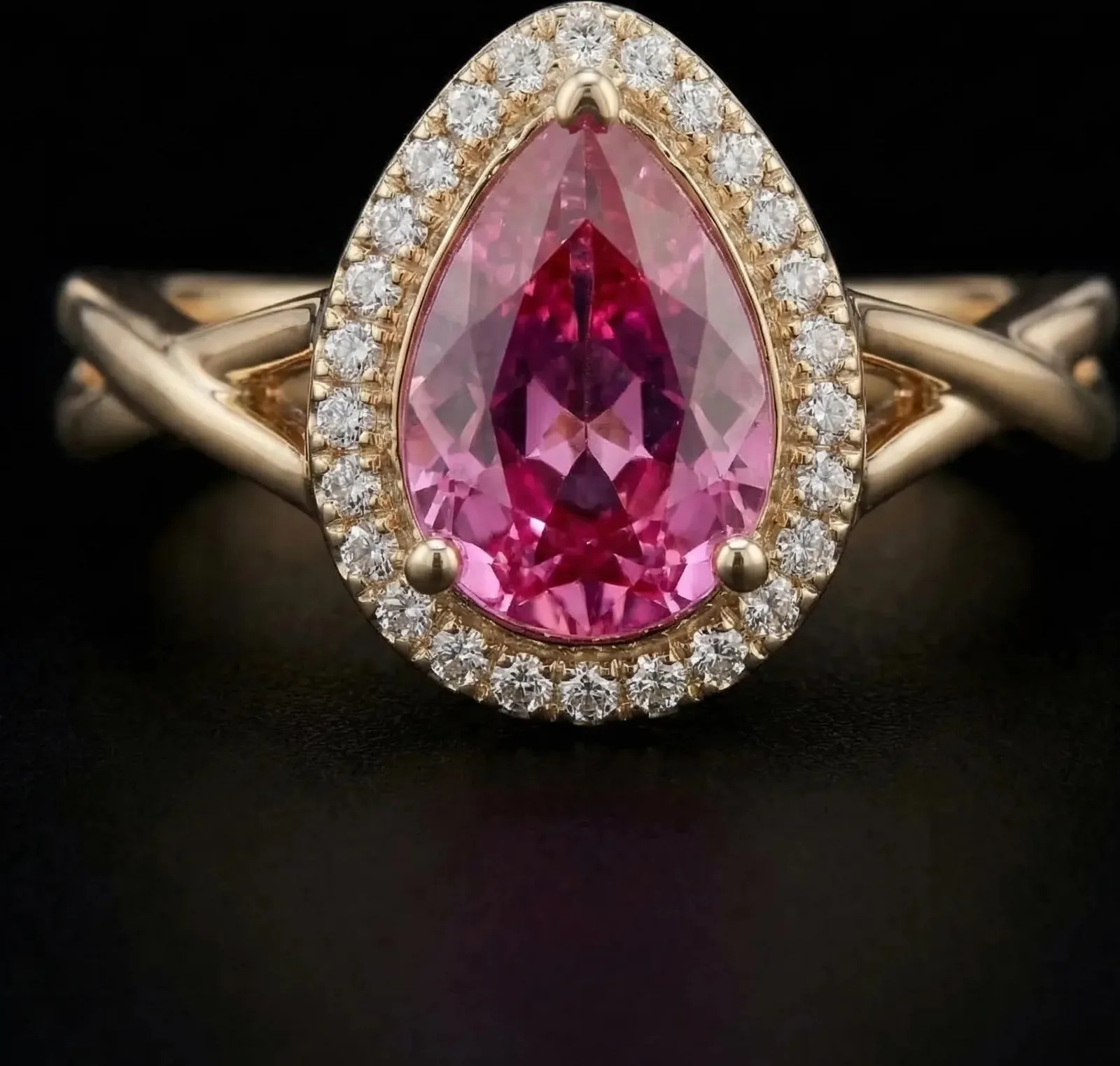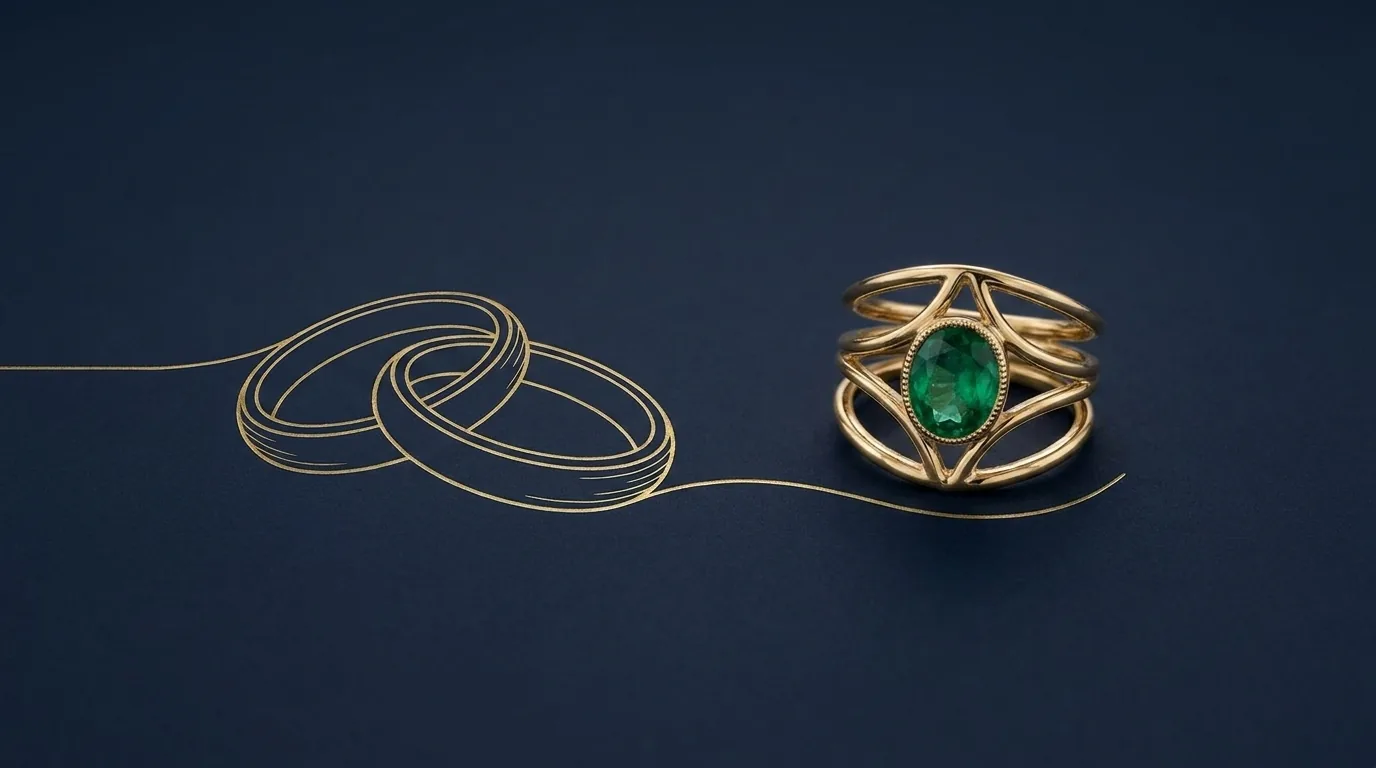
Long before a stone is set, a jewellery house draws. That has always been true, and it is worth asking why, since a photograph could show a client exactly what a finished piece will look like, and a photograph did not exist for most of the history of this trade. The drawing came first because it had to. What is less obvious is why the great houses kept drawing long after photography made it possible not to.

A technique built for gold and diamonds
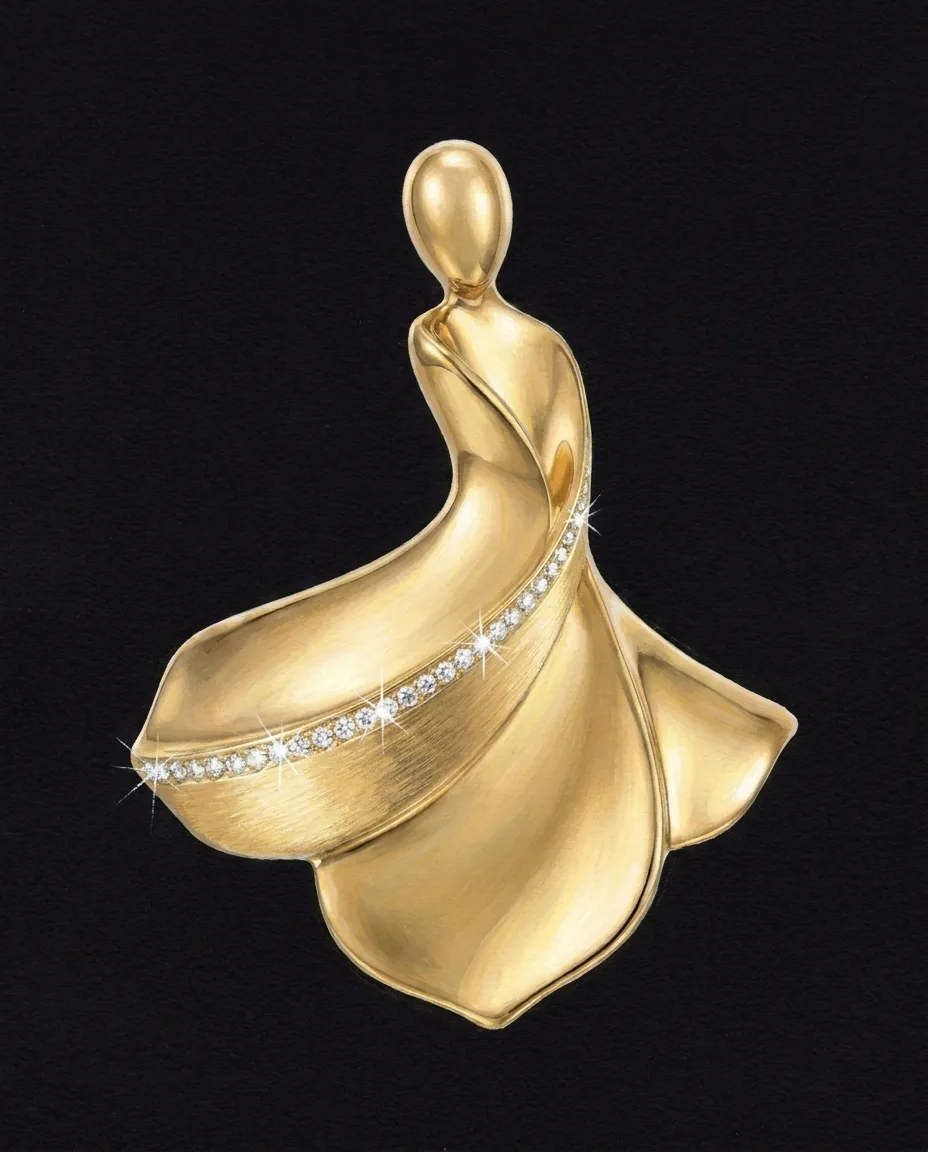
The classic atelier rendering is gouache built up on black card. Paint that would look muddy or flat on white paper does something different against black: layered ochre and pale gold gouache begins to glow, the way gold itself glows in low light, and grey washes worked up to sharp white highlights read as brilliance rather than paint. The black ground is not decoration. It is the reason the technique exists at all. Diamonds painted on white paper look like grey circles. Diamonds painted on black card, with a few precise sparkle ticks in opaque white, look like they are catching a room’s light.
The other classic surface is the ivory watercolour sheet, used for working studies rather than finished presentation: a large view of a piece alongside a smaller profile and a close-up of a single construction detail, loose pencil underdrawing still visible beneath the wash. This is the studio’s own record of how a piece is built, not a sales tool but a thinking tool.
Houses drew a piece before making it for a reason with real financial weight behind it. Gold is not a material you sketch with freely. A commission had to be agreed, a client had to say yes, before metal was cast and a stone was set into it. The rendering was the moment of commitment, made cheaply, in paint, so the expensive moment, made in gold, could follow with confidence rather than guesswork.
Painting a piece that already exists
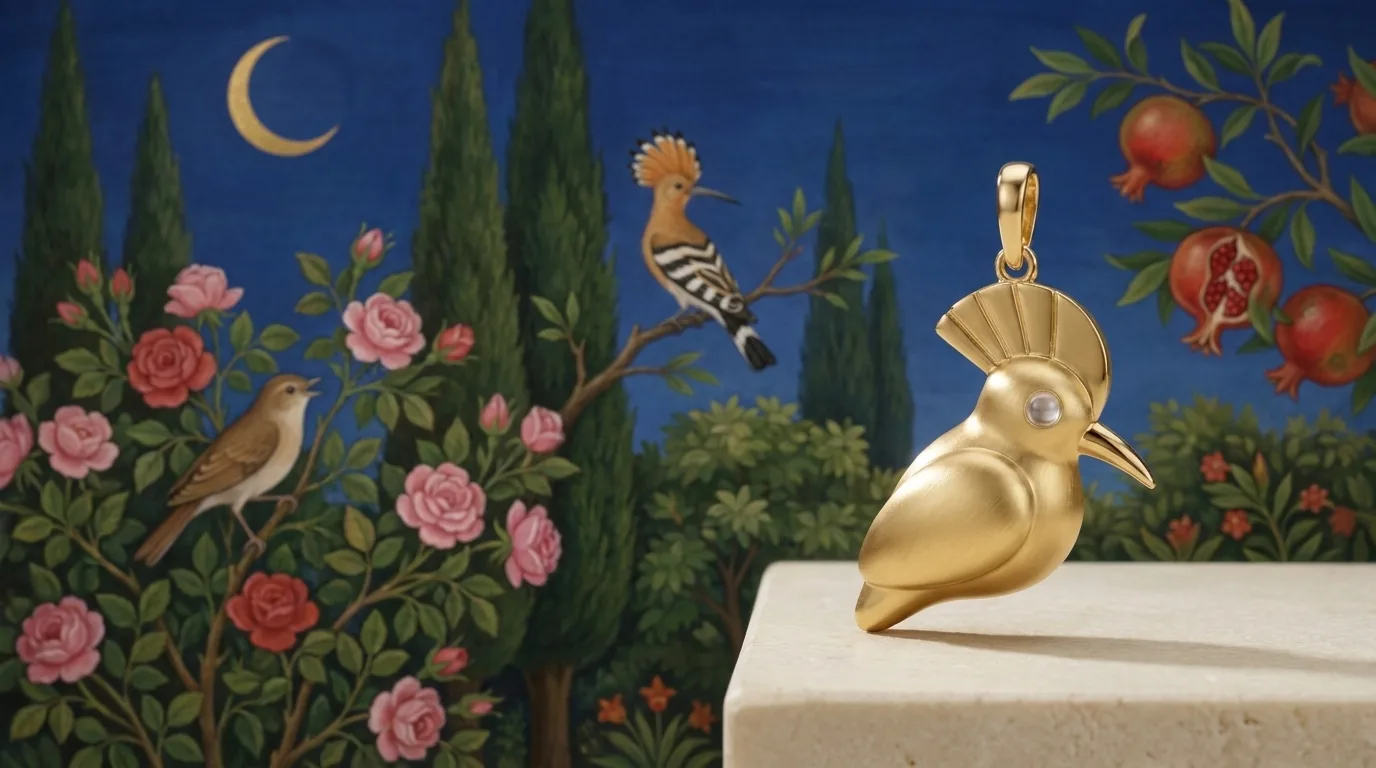
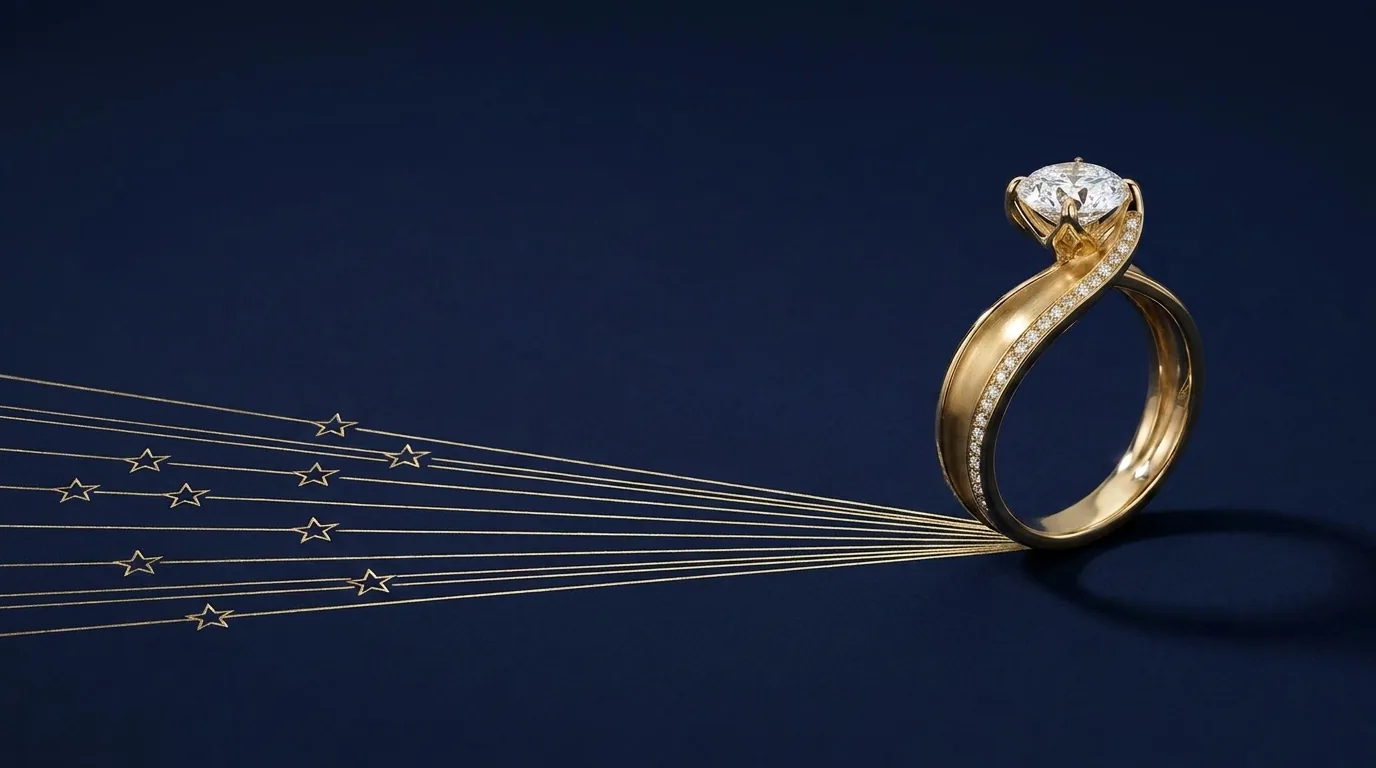
Silux works the other way round, and it is worth being plain about what that means. Every rendering here is made from a photograph of the piece as it actually exists, finished, hallmarked, real. The painting comes after the object, not before it, because the point is no longer to persuade a client to commission something unmade. The point is to hold the idea and the object side by side, and let a piece that already stands on its own be seen twice: once as gold and stone, and once in the older language the trade used to describe gold and stone before either photography or CAD existed.
That is honest to say plainly. The renderings are made in the studio, with the help of the studio’s own AI tools, worked in the traditional gouache manner, from the photograph of the finished piece. No painter’s name sits beside them, because there is no painter in the old sense: there is a studio deciding, piece by piece, that this technique still says something a photograph cannot. That is not a secret kept quiet. It is simply not the story being told. The story is the technique, and what it does to gold and diamonds set against black.
Where you will find it
Every product page at Silux London now carries a section called From the Atelier: the finished piece as photographed, and beside it, the same piece rendered in gouache on black card, so the two versions of the object sit in the same frame. It is a small thing to look for, and it changes how the piece reads. A photograph shows you what a piece is. A rendering shows you what a piece would have looked like described in paint, in a room lit by a single lamp, by someone whose job was to make gold glow on paper before it ever left the workshop.
Every collection page carries one further rendering: a single black-card gouache of a signature piece from that family, painted larger, treated as the collection’s own presentation piece, the way an atelier once kept one drawing on the wall to stand for a whole line of work.
Why keep drawing
A piece made to order, in solid gold, is already a slow object in a fast trade. The rendering does not speed anything up, and it is not meant to. It is a pause built into how the piece is shown, a reminder that gold was described in paint for centuries before it was photographed, and that the description is still worth making. The drawing does not replace the piece. It simply lets you see it twice, in two languages that were never really in competition, and were always, at the great houses, kept side by side.