Cut a pomegranate in half and the reason becomes obvious. No other fruit holds so much inside one skin: hundreds of seeds, each one separate and complete, packed into a single chamber and given nothing to hide behind. The Persians named it anar, انار, and gave it a place at the table long before they gave it a place in their poetry.

A fruit that never left the table
Tradition holds that the pomegranate has sat on the Haft-Sin table at Nowruz for as long as the Persian new year has been marked, one small fruit standing in for a whole year’s hope of plenty. Its image appears pressed into Achaemenid stonework and painted across Safavid tilework, always carrying the same three ideas: abundance, fertility, the promise of the paradise garden. Where other motifs in Persian art shift meaning across the centuries, the pomegranate has stayed remarkably still. It has always meant more than something that simply grows on a tree.
The Anar capsule takes its name directly from that fruit, and its place within the Golestan family, the flower garden, is deliberate. Where the wider collection speaks in the language of Persian gardens generally, the Chahar Bagh’s geometry, the rose’s centuries of meaning, the Anar pieces narrow the focus to one fruit and stay there. Nothing borrowed, nothing used as decorative shorthand.
The seed and the chamber
What makes the pomegranate worth this much attention is not only its history. It is its structure. A hard exterior gives way, without warning, to hundreds of seeds, each one distinct, each one whole, all of them held inside a single chamber until the fruit is opened. Persian poets read this as a description of life itself: countless separate possibilities, carried together, waiting.
A hard exterior, then hundreds of seeds, each one separate and complete, held together in a single chamber.
That is the idea the capsule begins from, not the fruit’s outer form but what is contained inside it. Every piece in the Anar capsule takes its shape from the pomegranate, but its real subject is what that shape holds.
Mirror polish against matte crown
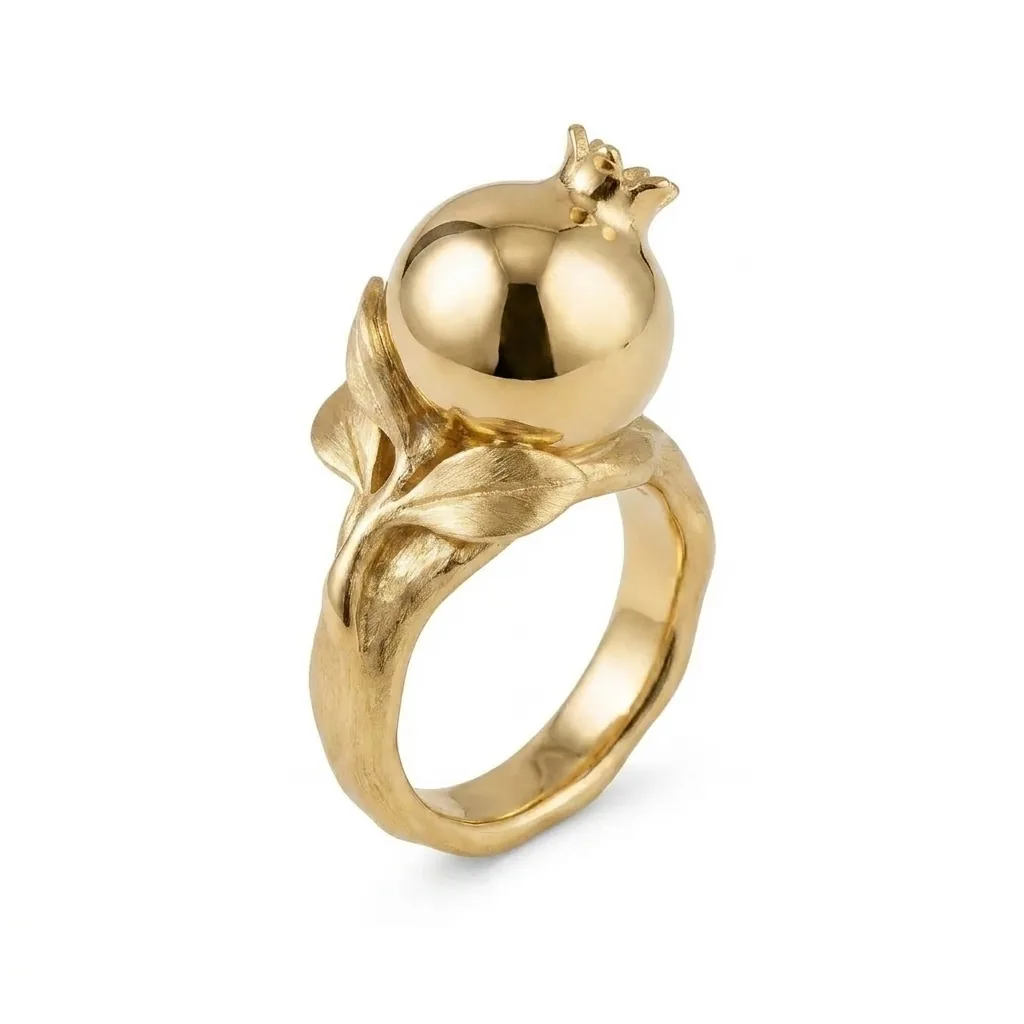
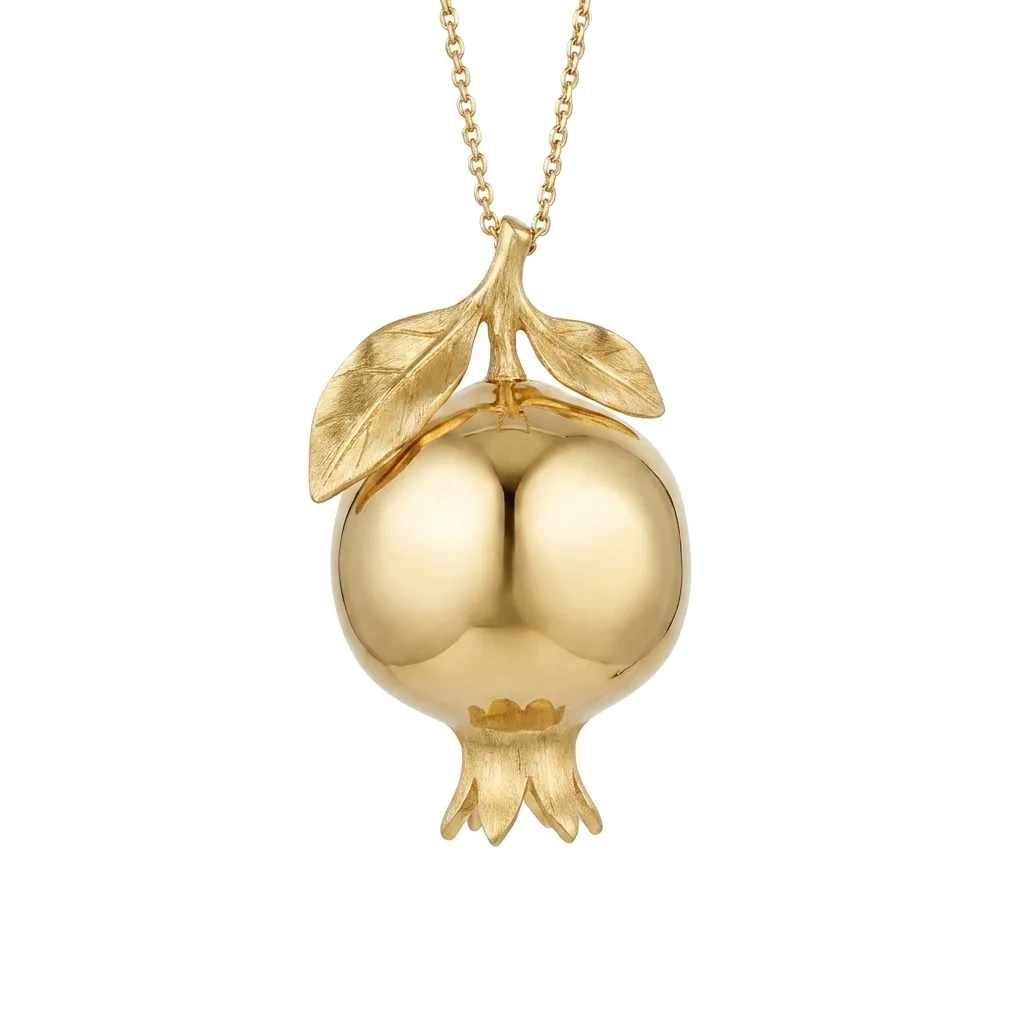
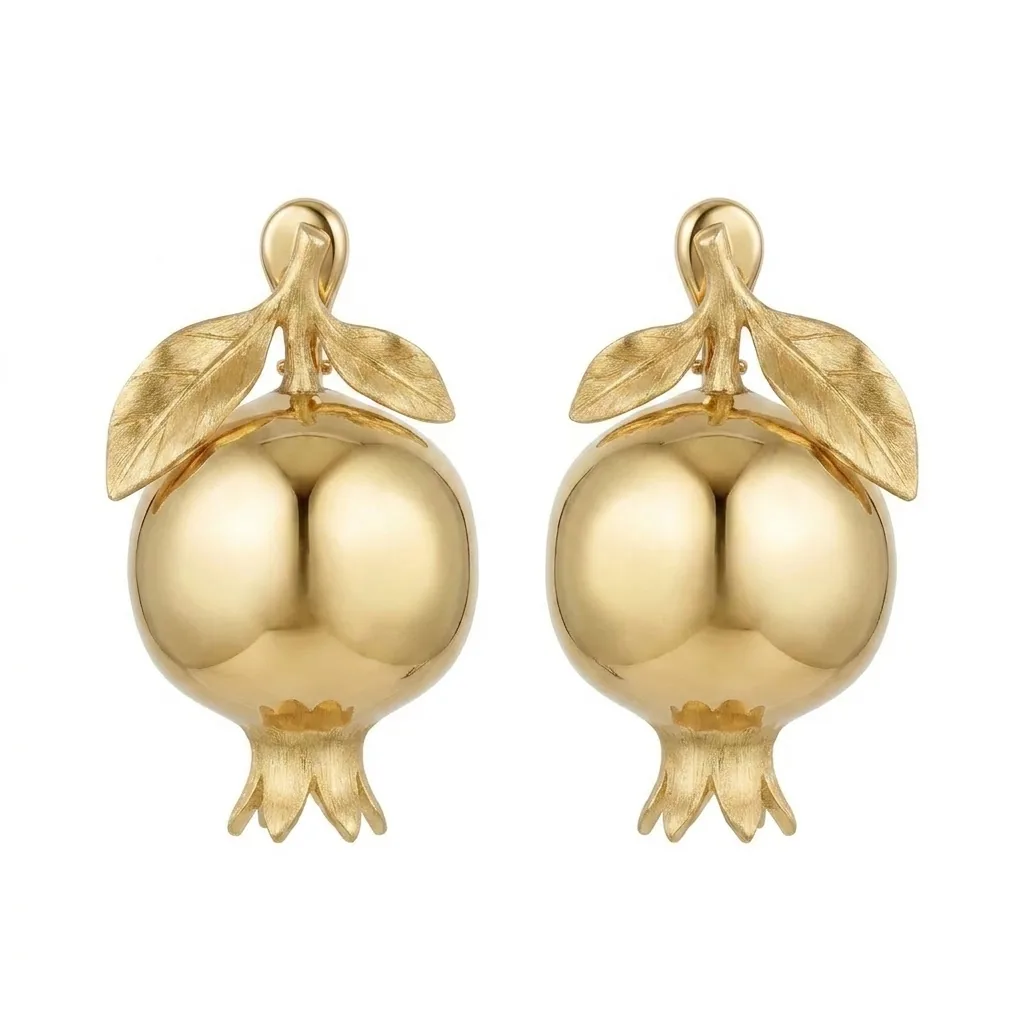
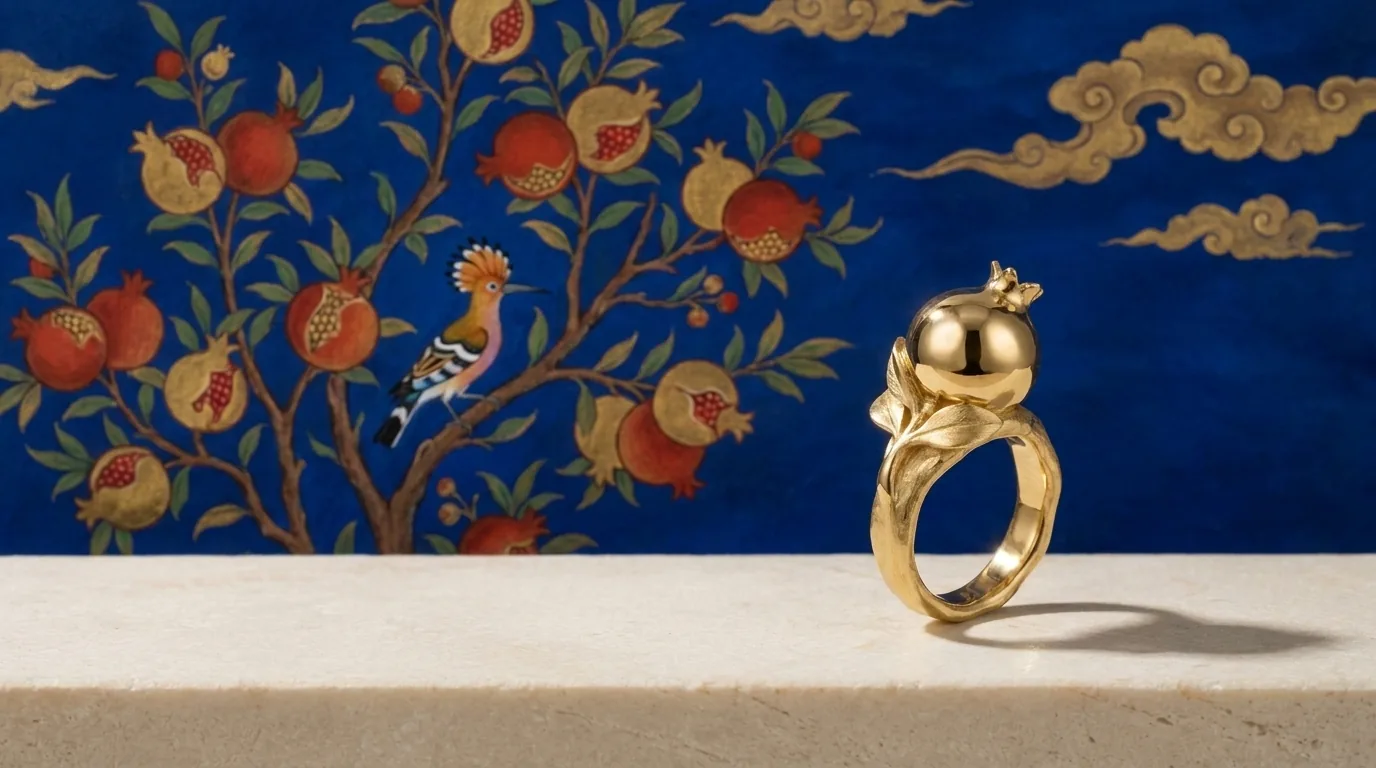
Each piece in the capsule is worked in demi-relief: a true half-dome, sculpted with full depth to the front, then hollowed beneath so the fruit sits close to the skin rather than swinging or catching. The body of the fruit is brought to a mirror polish. Its crown, the small coronet at the pomegranate’s top, is left matte and hand-brushed. The contrast is deliberate. One surface reflects, the other absorbs, and the fruit reads as sculpture rather than motif because of that tension. It is the same polished-against-raw language that runs through solid gold pieces built to be looked at closely, not glanced past.
A lattice only the wearer finds
Where most pendants and rings hide their construction, the Anar pieces turn it into a second design. The hollow left beneath each demi-relief fruit is not left plain. It is carved into a Persian girih lattice, the interlocking geometric strapwork of Isfahan’s architecture, reduced to the scale of a ring or a pendant and set where only the wearer will ever find it. Lift the pendant from the chest, or turn the ring on the hand, and the lattice is there. Everyone else in the room sees only the fruit.
This is what keeps a demi-relief piece this size genuinely wearable, light enough for a full day or a full evening, and it is also the capsule’s quiet signature: a piece of Persian architecture carried inside a piece of Persian nature, visible to no one but its owner.
Wearing abundance
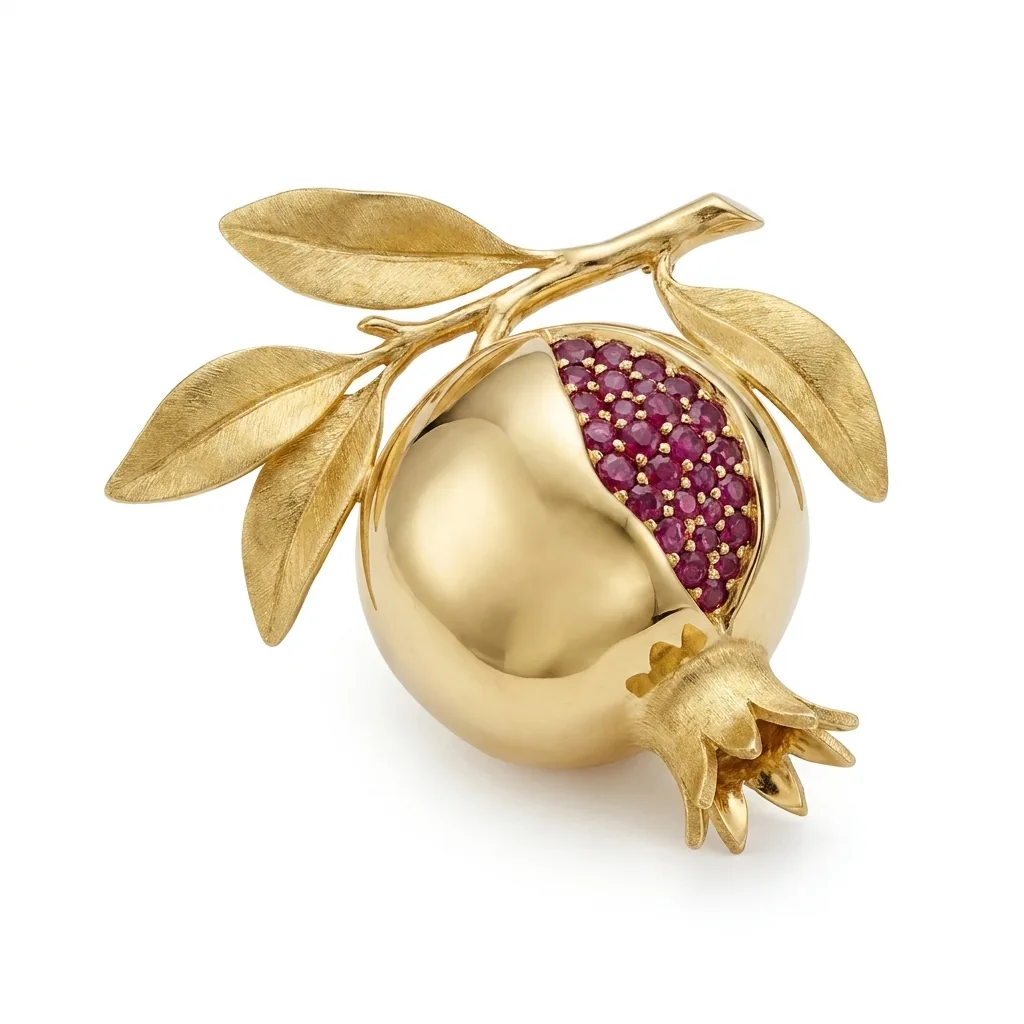
The capsule holds four pieces, each carrying the same construction at a different scale. The Golestan Anar Seed Ring, from £950 in 18ct yellow gold, states the idea most simply: one fruit, sculpted whole, worn as an everyday statement, no stone required. The Golestan Anar Pendant, from £1,150, carries it to the throat on a fine cable chain. The Golestan Anar Drop Earrings, from £1,450, set a matched pair, a small paradise for each side. And the Golestan Anar Hero Brooch, from £2,850, opens the fruit fully at its centre, its seeds rendered in some twenty-two grain-set rubies rather than merely suggested, the pomegranate at the exact moment Persian miniature painters loved to paint it.
Every piece is drawn in the Birmingham Jewellery Quarter studio and made to order in solid 18ct gold, finished by hand. To see the Anar capsule in full, or to begin a commission, visit the collection at siluxlondon.com, or write to the studio directly.