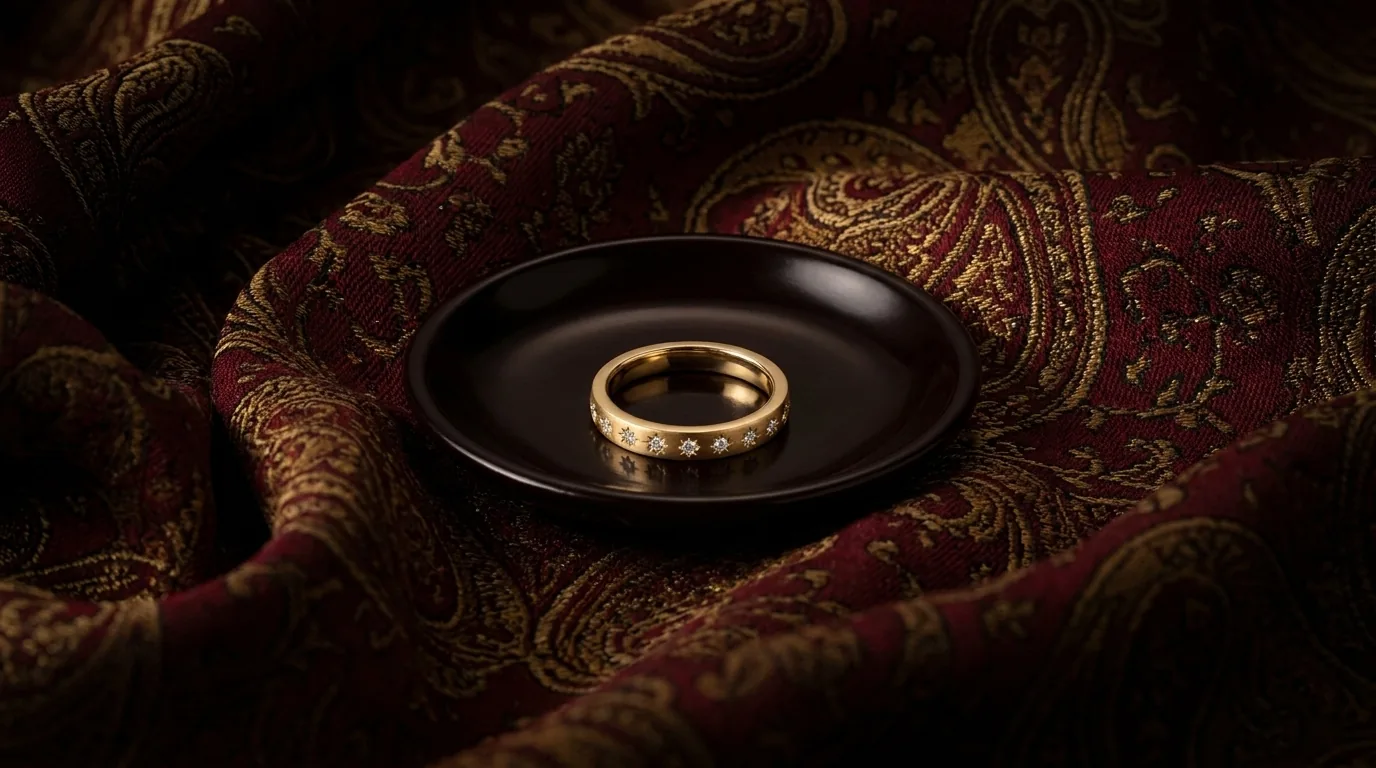
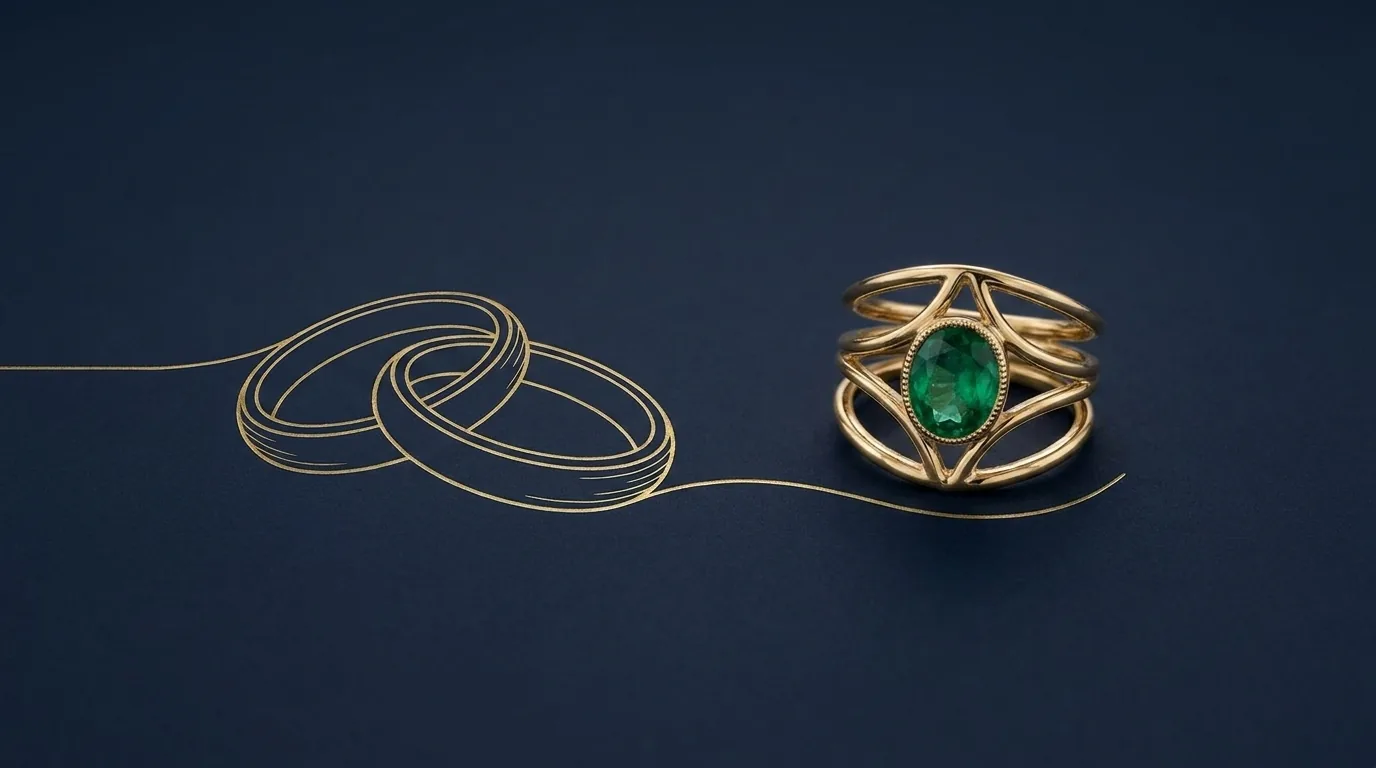
An engagement ring and a wedding band are separate pieces of jewellery worn at the same time, on the same finger, for years. That is a design constraint before it is anything else.
The obvious approach is to sell the engagement ring and treat the band as a later decision. The problem with the obvious approach is that the later decision is made after the stone is set and the setting is fixed, and the setting determines what can sit beside it. A high setting on the engagement ring leaves little room for a plain band. A wide profile on the engagement ring requires a shaped band that follows its contour, or there is a gap between the two pieces that catches on things and sits badly on the finger.
A finger is not flat. Neither is a ring designed to fit well on one.

What the setting determines
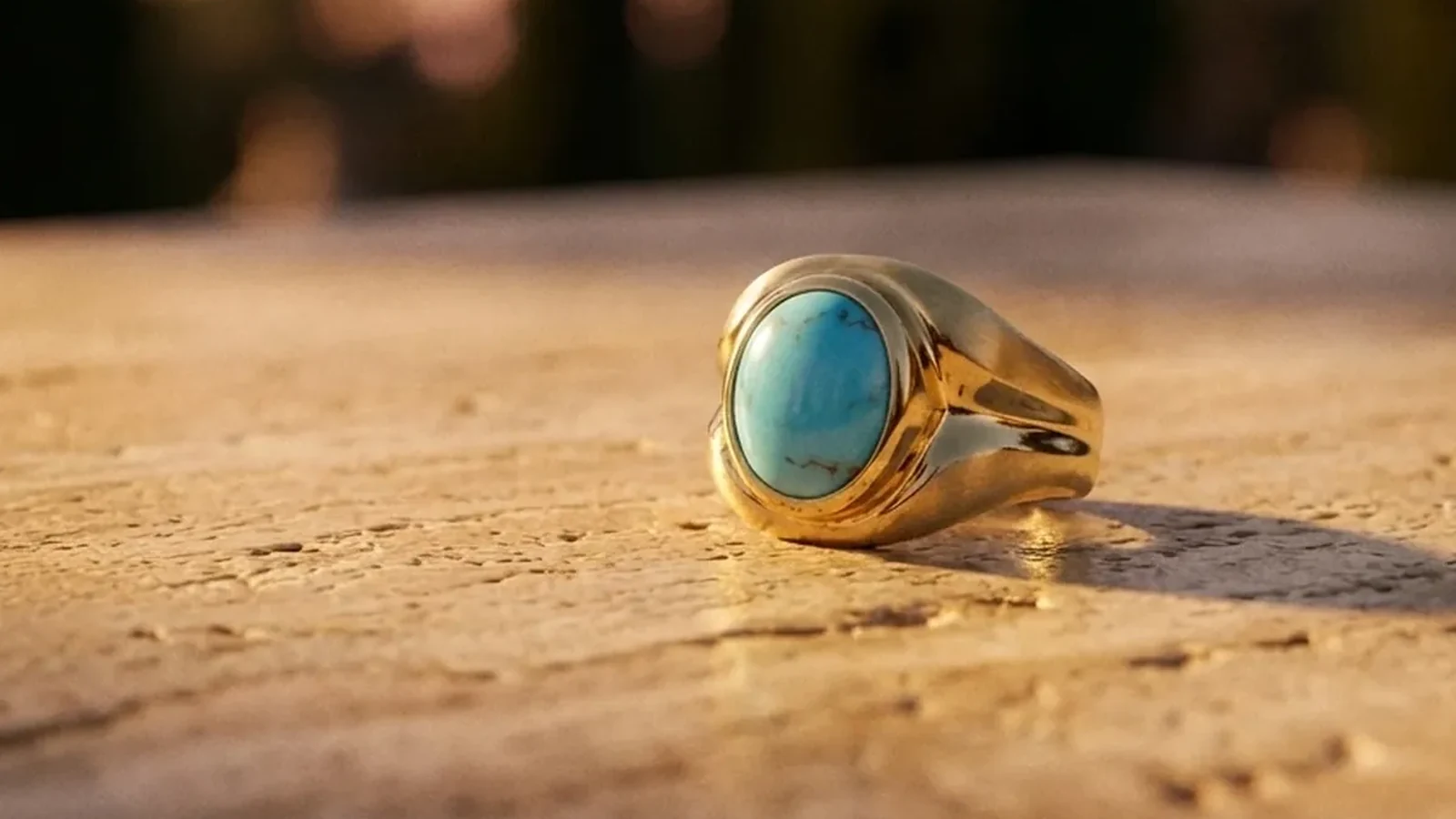
A rubover bezel, where the metal wraps over the stone’s edge rather than holding it with prongs, sits low on the finger. A simple flat band in the matching metal sits beside it cleanly. The pair has a natural logic: one low, one flat, the junction between them almost seamless.
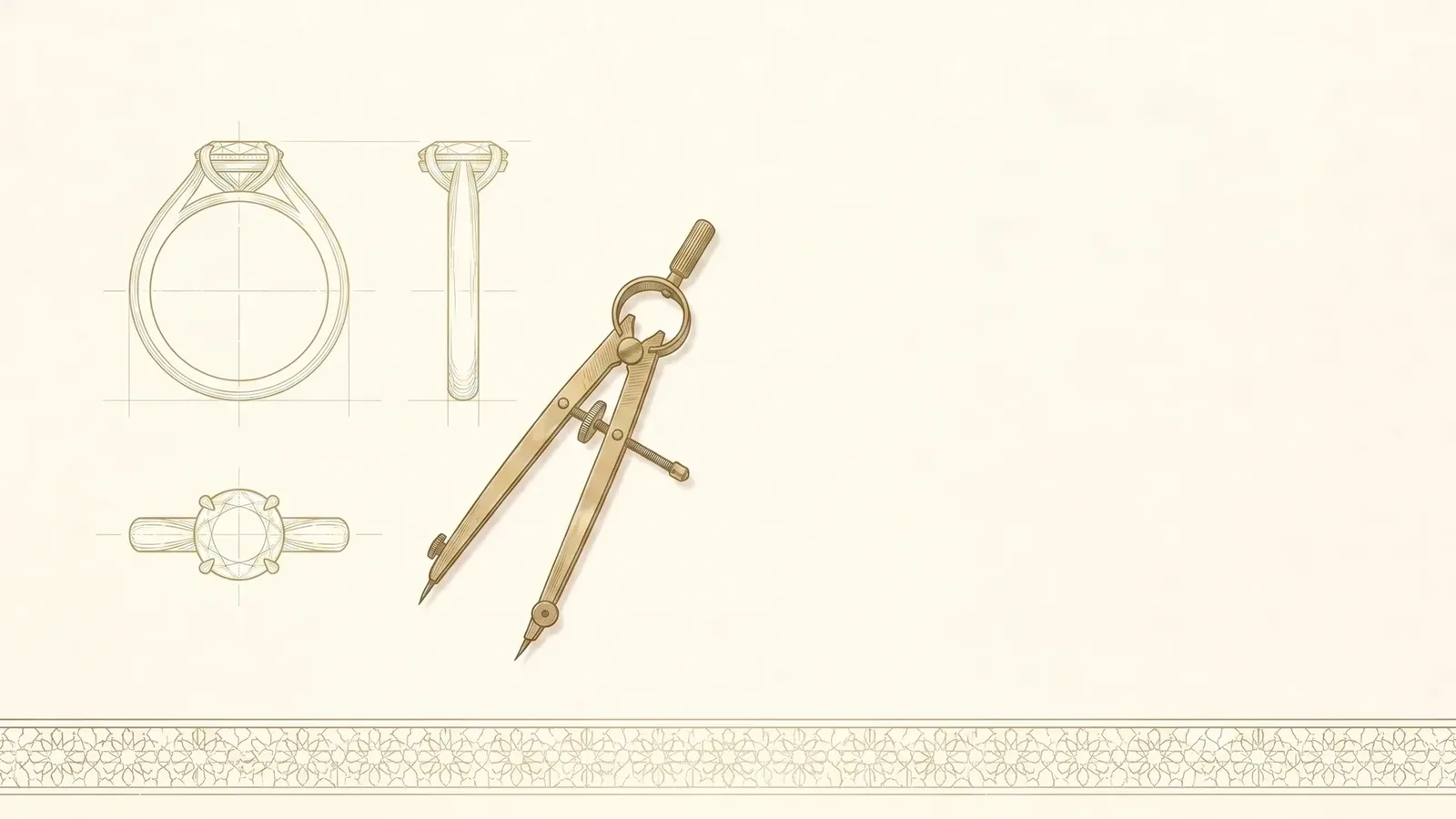
A high prong setting lifts the stone above the finger on a raised collet. A band that sits flush beside it must drop below the setting’s shoulders to clear the prongs, which means a shaped or stepped profile. Without that shaping, the band butts against the prongs and cannot sit flat.
An asymmetric setting, one where the stone tilts to one side or the mount runs at an angle across the shank, opens a more complex question. A band placed flatly beside it may look like an accident rather than a pair. One that reflects the same asymmetry, that mirrors or completes it, reads as designed rather than assembled.
What happens when they are designed separately
The band that was not designed with the engagement ring in mind may not sit flush against it. It tips away on the finger, leaves a gap, or twists to one side. These are not aesthetic problems. They are wearing problems: a piece of jewellery that is uncomfortable in the way it is supposed to be worn has failed its most basic requirement.
The more common failure is subtler. Two rings that are both well-made individually can look like they belong to different conversations when placed beside each other: different proportions, different finish levels, different weights. The pair looks like what it is, two separate decisions rather than one considered piece of design.
How pairs are designed at Silux
Bridal pieces are designed together from the first lines of the design. The engagement ring determines the profile, the height, the width of the shank. The band is drawn to that profile: the metals match, the finish matches, the junction between the two pieces closes. If the setting changes during the design process, the band changes alongside it, because the constraint changed.
The pair is delivered together. Not as a commercial bundle but because the pair is the finished work. The individual pieces are its components.
This is the design reason, not the sales reason, and it decides how the work is sequenced. You cannot design the band well without the engagement ring, in the same way that you cannot design the binding of a book without the pages. They are one object that comes apart.