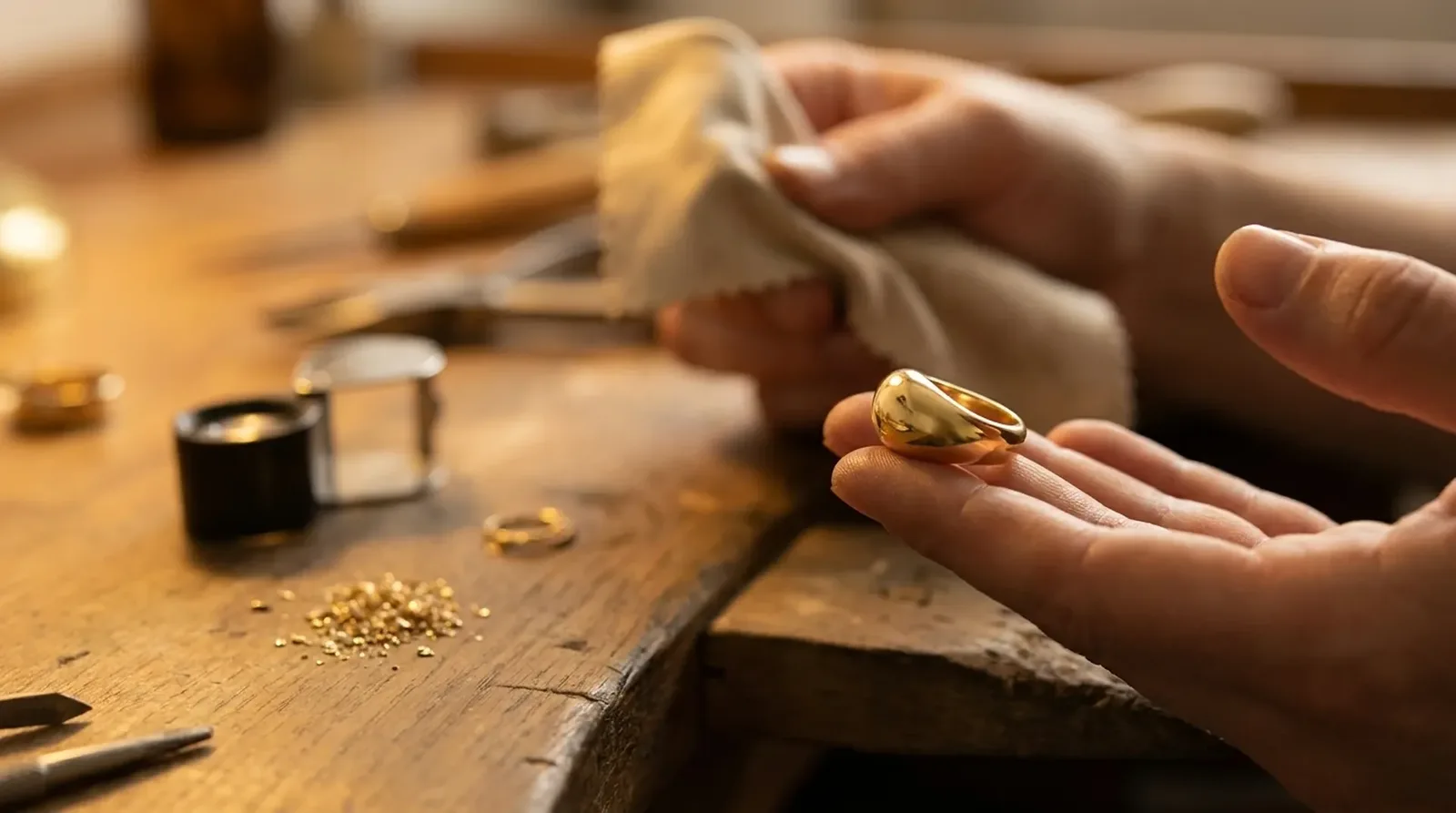
I am Hamed Arab, a jewellery designer from Iran who has built a life in Birmingham. Every piece I design starts as a conversation in my Jewellery Quarter studio, in person or by video call, and ends as a solid gold object made for one person. You sit with the designer, not with a salesperson. Nothing here is held in stock. Nothing is made until it is yours.
The Silux Promise
Everything below comes with one promise attached.
The process on this page is not a sales journey, it is a set of commitments. They start with a free hour.
Designed free
A private hour with the maker, then your design drawn up and sent with honest numbers. Yours to keep, commission or not.
Nothing cut until you say so
You approve the exact stone, certificate in hand, and the finished model before any metal is touched. Guaranteed, by name.
Made in 4 weeks
Made, set, finished and hallmarked within 4 weeks of your model approval. A written promise on your quotation.
No fee, no card details, no obligation. A young studio earns trust by proof, not promises.
What a commission is here
A commission, or a custom piece if that is the phrase you searched for, starts with what you want to say rather than with a catalogue. Some clients bring a design they have seen and ask for it in a different metal or stone. Some bring an heirloom stone and want a setting built around it. Some bring nothing but an idea, a date, a name, a feeling they want to wear.
I work from all three starting points the same way: conversation first, then design development, then a CAD model precise enough to check before any metal is touched. Every piece is made to order because that is the only way a ring, pendant or pair of earrings can actually fit the person wearing it, in size, in meaning and in cost.
What you can change
What you can customise: birthstones, engraving, a name in Persian
People arrive with a specific request far more often than with a blank page, so it is worth saying plainly what can be customised and what is normal to ask for. Any design in the collection can be remade in a different metal or carat, at a different size, or with its proportions adjusted. The centre stone can be changed outright, for a diamond natural or laboratory grown, or for a coloured stone chosen for depth rather than size.
Birthstones are a common starting point, either as the centre of a piece or set quietly into the shoulders where only the wearer knows they are there. Engraving inside a band is straightforward and is priced as part of the piece rather than as an extra. A name or a date can be carried in Latin letters or in Persian script, which is the one thing here that genuinely cannot be bought elsewhere on a high street.
A stone you already own is welcome, whether it was bought or inherited. It is assessed first, honestly, including the cases where the answer is that it should not be reset, and then the piece is designed around it rather than around a stone somebody else would have chosen.

The process
How it works
Conversation and brief
We talk before anything is drawn: what the piece is for, who it is for, what it needs to survive day to day, and what it should never look like. This conversation is what makes the brief, not a form.
Design development
Once we have spoken, I work the idea through as design studies before anything is fixed: shape, proportion and weight, tested at true scale. This is where the idea gets tested against what solid gold can actually do, and it comes back to you as a design proposal with honest numbers behind it.
Your stone, approved before it is ordered
Where the piece carries a centre stone, it is chosen before anything is modelled. You see the exact stone proposed, with its certificate, and it is ordered only once you approve it. The model is then built around that stone, not around a stand-in.
CAD model
The chosen design becomes a precise digital model, built around the exact stone you approved. Every dimension, from stone size to finger size to metal weight, is fixed and checked here, so nothing is guessed at once we move to metal.
Approval, and a prototype if you want one
Before anything is cast in gold, you approve the piece from renders of the finished model, seen from every angle and at true proportion against the stone. If you would like to hold it first, a resin prototype can be printed: tried on here in the studio, or posted to you wherever you are. This is the last point at which proportion, spacing or scale can change, and changing them now is far cheaper than after casting.
Casting and stone setting
The piece is cast in solid gold, then the centre stone and any accent stones are set by hand. This is the stage with the least room for error and the most skill involved.
Finishing and hallmarking
The piece is finished to the surface you chose, then sent for UK hallmarking, the legal mark confirming the gold content is what it claims to be. Only then is it yours.
Pricing
What it costs
I would rather explain what a price is made of than quote a single number with nothing behind it. A commission is priced on four things.
- The metal
- By weight and by karat. 18ct is standard and 22ct is available on some designs, in yellow, white or rose gold. A heavier, more sculptural piece carries more gold, and the weight is known from the CAD model before anything is cast.
- The centre stone
- Usually the largest single cost, and the one that moves a quote most, often by a wide margin. Diamond or coloured stone, natural or laboratory grown, the choice is yours and I will explain the trade-offs for your brief. You see the exact stone proposed, certificate and all, and it is ordered only once you approve it.
- Design and CAD
- The conversation, the design studies, and the digital model precise enough to check every dimension. This is the work that happens before any metal is touched, and it is where a commission is really decided.
- Making, setting and hallmarking
- Casting, setting each stone by hand, finishing to the surface you chose, and the UK hallmark. The making itself takes days. Everything before it takes longer, and matters more.
I give a starting figure in our first conversation, based on what you are describing, and nothing is charged at this stage. Once the design is approved, I confirm the full price in writing before any work begins, so you know exactly what you are paying and what for.
The published "from" prices in the collection are a fair guide to where a comparable commission starts.
The centre stone moves that total more than anything else on the list. How to choose the stone against a fixed budget sets out which characteristics you will actually notice, and how the setting you pick changes which of them is worth paying for.
Already holding a quotation from another jeweller? A second opinion is free: a plain-English reading of what it actually says, even if you never commission here.
Where commissions start
Timing
How long it takes
The clock starts on the day you approve the design, not the day you first write to me. That distinction matters more than the number: the conversation, the design studies and the model can take as long as you need them to, and none of it is a countdown.
Delivery
Ordering from outside the UK
Ordering from outside the UK is straightforward. Every piece is designed in Birmingham's Jewellery Quarter, then shipped worldwide, fully insured and tracked. Approval happens on renders, with the same guarantees as a client in the room: nothing is cut, cast or set until you have approved the exact stone and the finished 3D model. If anything ever needs the bench after delivery, a remote video inspection comes first, so nothing crosses a border unless it genuinely needs to.
- Fully insured, tracked, signed for
- Hallmarked at a UK assay office
- Duties and taxes settled through us, quoted before you approve the design.
Heritage
The Persian element
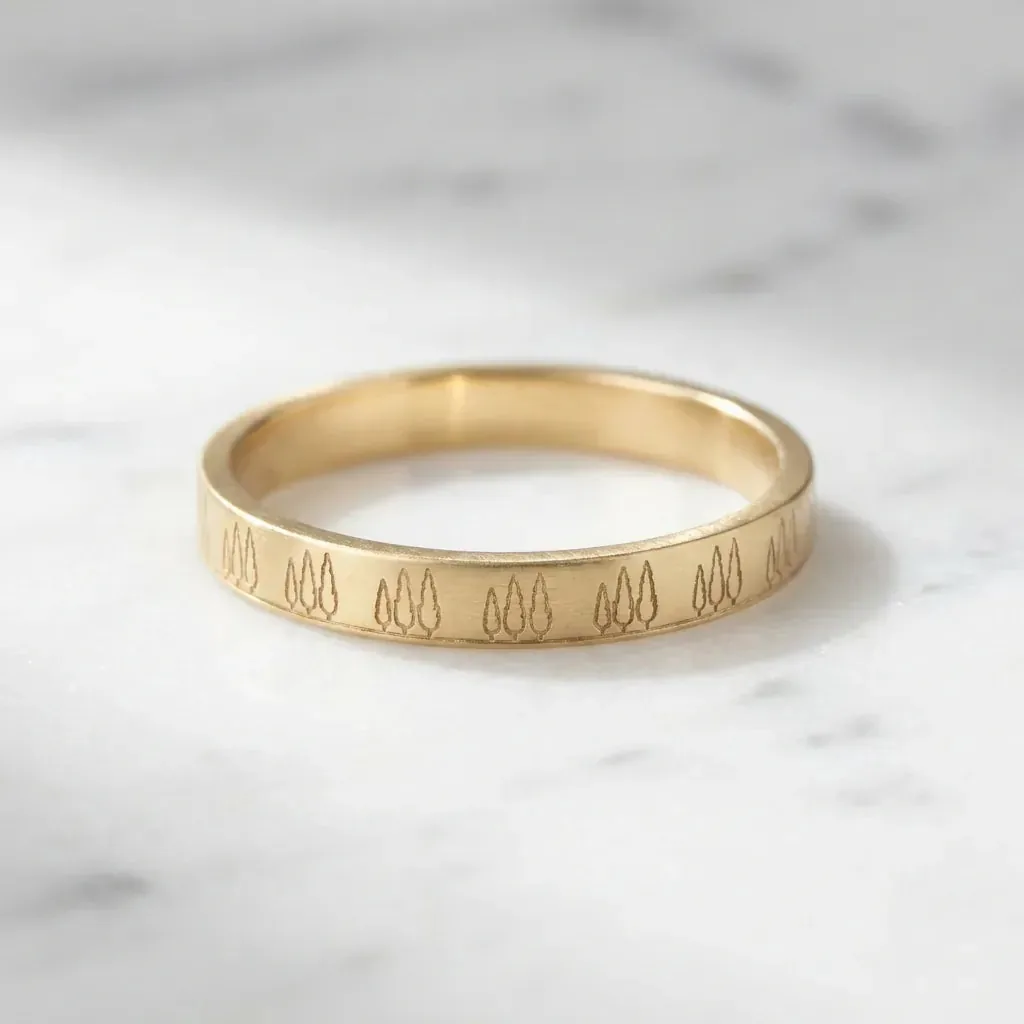
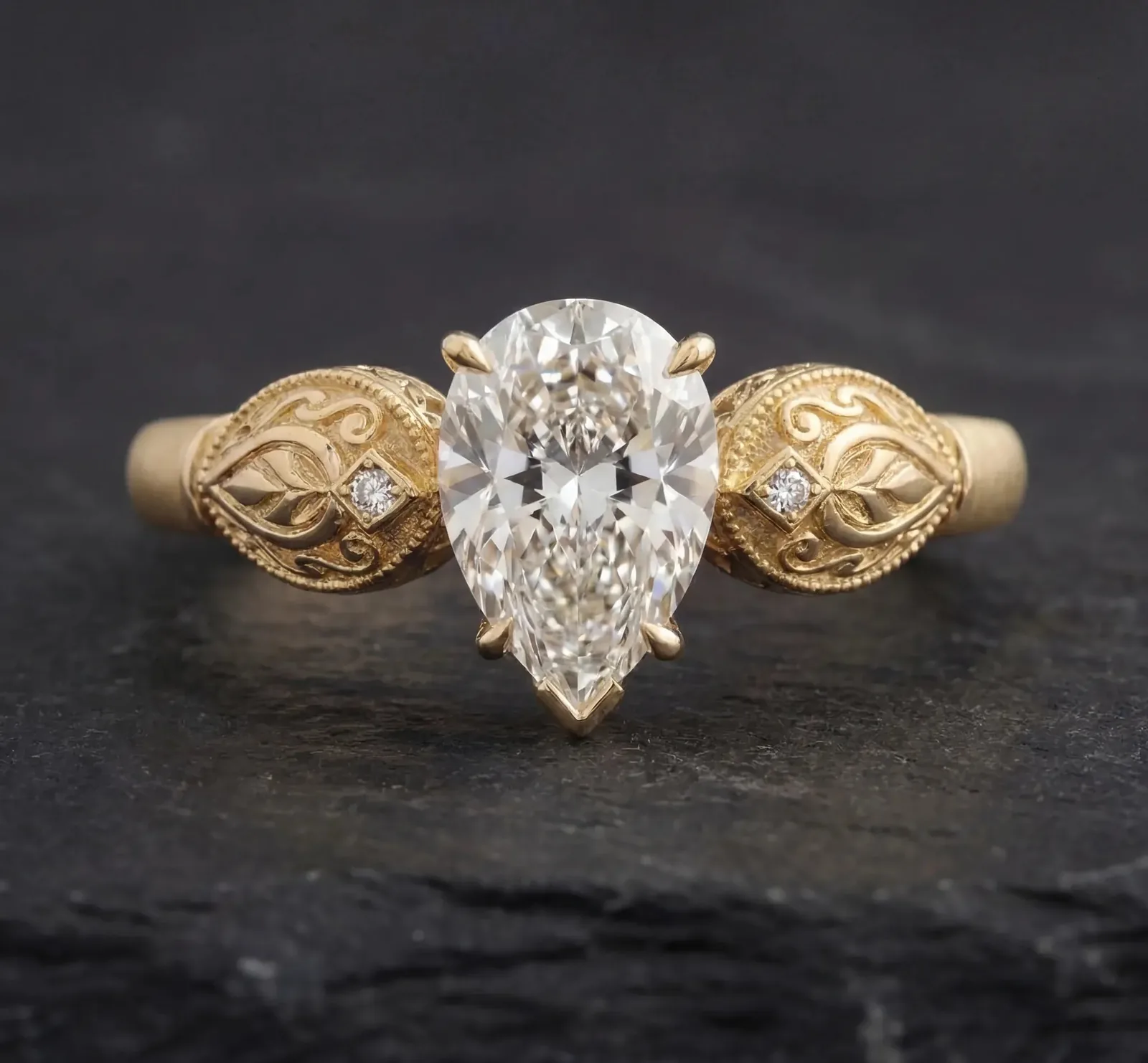
The ornament on a Silux London piece is never decoration for its own sake. Boteh, the paisley form, carries centuries of meaning around growth and continuity. Girih is the interlaced geometry found across Persian architecture, translated here into gold. The pomegranate, the nightingale, the cypress and the Simorgh each carry their own story, drawn from that tradition rather than invented for effect.
A commission can carry your own story inside this language: a name written in Persian script, a date that matters to you, a motif that belongs to your family rather than to mine. Tell me what the piece needs to say, and I will find the right form for it, rather than fitting your story to a design that already exists.
Frequently asked
How do I commission a bespoke piece, and where do I start?
You start with a conversation, and it costs nothing. Tell me what the piece is for, who it is for and what it should never look like, and that conversation becomes the brief rather than a form. From there it runs in seven stages: the conversation and brief, design development where the idea is worked through before anything is fixed, your centre stone shown to you with its certificate and ordered only once you approve it, a precise CAD model built around that stone with every dimension fixed, your approval from renders at true proportion with a resin prototype if you would like to hold it first, casting in solid gold and hand stone setting, then finishing and UK hallmarking. You approve the design before any deposit is taken, and nothing is cast until you have seen the finished model from every angle.
How long does a bespoke piece take?
From design approval, four to six weeks is the honest working range for most commissions, and delivery sits inside that range rather than being added to it. The clock starts the day you approve the design, not the day you first write to me: the conversation, the design studies and the model take as long as you need them to, and none of that is a countdown. It runs longer when a particular centre stone needs sourcing, when the setting is unusually complex, or when the hallmarking office is in a busier period. The making itself is firmer: once you approve the model, the piece is made, finished and hallmarked within 4 weeks, and that promise is restated in writing on your quotation. If you are working towards a date, tell me at the start and I will work backwards from it and say plainly, before you commit to anything, whether it can be met.
What does "made to order" mean, and how is that different from bespoke?
Made to order means every piece is made only once it is commissioned. Nothing sits in a stock room waiting for a buyer. Some made-to-order pieces come from an existing design, published or lightly adapted. Bespoke, in the fullest sense, means designed from nothing, for you specifically. I offer both: an existing design remade in your metal and stone, or a piece designed entirely from your brief.
Can I adapt an existing design from the collection?
Yes. Most pieces in the collection can be remade in a different metal, a different centre stone, a different size, or with proportions adjusted to suit you. Tell me which piece you are drawn to and what you would like to change, and I will tell you honestly what is straightforward to alter and what would mean designing something closer to new.
Can I use my own stone, or one I have inherited?
Yes. Bringing your own stone, whether bought elsewhere or passed down in your family, is common, and I am glad to work with it. I will assess the stone, discuss what setting suits it, and design around it rather than around a stone I would otherwise have chosen. This is often the starting point for the most personal commissions.
Should I choose a natural or a laboratory-grown stone?
That choice is entirely yours. Natural and laboratory-grown stones can look identical to the eye and both are used across my commissions. Laboratory-grown stones are generally lower cost for an equivalent size and quality, whilst natural stones carry their own history and rarity. I will explain the trade-offs for your specific brief, but the decision is always yours.
Are bespoke rings more expensive than buying one from a shop?
Not for the reason most people expect. The centre stone is usually the largest cost in any fine ring, and a stone costs close to what it costs wherever you buy it. The difference is everything around it. A ring in a shop window was made before anyone wanted it, and its price carries the stock, the shop floor and the margin that pays for both. Nothing here is made until it is commissioned, so none of that is in your price: you are paying for the metal by weight, the stone you chose, and the hours of design and hand work. A commission costs more when you ask for more, a heavier piece or stones set by hand into a one-off setting, and you decide that with the numbers in front of you before anything is made.
Can I return a bespoke piece, and what happens if something goes wrong?
The honest answer first. A piece made to your own specification does not carry the usual fourteen-day right to change your mind, because that right does not apply to goods made to a customer’s specification or clearly personalised. Your ring cannot be offered to anyone else, which is exactly why the process front-loads every decision instead. Nothing is charged for the first conversation. You approve the design before any deposit is taken. You approve the piece from renders of the finished model before anything is cast in gold, and a resin prototype can be printed and posted, or tried on in the studio, if you would rather hold it first. That stage exists so proportion, spacing and scale can still change whilst changing them is easy and cheap. The deposit is 50% at design approval rather than the full amount up front, and the balance is only invoiced once the finished piece is ready to dispatch. If a piece ever reaches you faulty, not as described, or not of satisfactory quality, your statutory rights are unaffected and I will put it right. And if you decide not to continue after the model has been made but before you approve it, your deposit is refunded less £250 for the design and modelling work already done. Nothing will have been made at that point.
Do I get the CAD file of my design?
No, and it is worth saying plainly rather than leaving it to be discovered. You are shown renders, photographs and screenshots of the model, which is what the approval conversation actually needs: the proportions, and the relationship between the stone and the piece, seen properly before anything is made. The model file itself stays with the studio. It is the design work you are commissioning me to apply to your piece, not a drawing to be taken elsewhere, and no jeweller who designs their own work releases it.
What if I want to change the design after I have approved it?
Changes divide into two kinds and they are treated differently. If what I model does not match the design you approved, that is my error and I correct it at my cost, for as long as it takes. If you decide you would like something different from what we agreed, that is new design work and it is quoted before anything is done, never added quietly to your invoice. The reason the process front-loads the conversation, the design work and the approval is precisely so the second kind is rare.
How does ring sizing work, and can a ring be resized later?
Rings are made to your UK letter size from the outset, taken and confirmed before the piece goes into production. Most designs can be resized afterwards within a reasonable range, though heavily set or textured bands are more limited. If your size may change, or you are buying for someone else without their size, tell me and we will plan for it.
What happens in the first conversation, and does it cost anything?
Nothing is charged for a first conversation. We talk about what you have in mind, who the piece is for, and any date you are working towards. I will ask enough questions to understand the brief properly and give you an honest starting figure. There is no obligation to proceed, and no payment is due until you decide to go ahead.
Do you deliver internationally?
Yes. International delivery is available, and every piece is arranged and insured individually for its journey rather than sent through a standard shipping service. Once your commission is complete, I will discuss the delivery method and cost for your destination, and confirm insurance cover before anything leaves the studio.
Can I collect the finished piece in person?
Yes, and it is my favourite way to finish a commission. The studio is in the Jewellery Quarter, on Hall Street, and you are welcome to come and be handed the piece rather than have it couriered to you. It is by appointment, so we arrange a time once the piece is finished, and it costs no more than delivery, which is included either way. It also means any final question about fit or wear gets answered there and then, with the piece on your hand rather than in a photograph.
What guarantee comes with the finished piece?
Four, published in full in the terms of sale, and none of them needs a registration card. The What-You-Approved Guarantee: the piece that reaches you is checked against the model you approved, and remade at my cost if it is not the piece you said yes to. The Maker's Lifetime Guarantee: any fault in the making, put right at my cost, for the life of the piece. Set Stones, Guaranteed: for the first two years an accent stone that loosens or falls in normal wear is replaced and reset free, with a free first-anniversary check and clean so a loosening stone is caught before it is a lost one; for clients overseas that check begins as a guided inspection by video call, so nothing crosses a border unless it genuinely needs the bench. And The File for Life: your piece keeps its studio file for as long as you own it, so repairs are quoted from the file and the design work is never charged twice. Every guarantee here is in addition to your statutory rights, never in place of them.
Is every piece hallmarked?
Yes. Every piece is sent for UK hallmarking, the independent legal mark that confirms the precious metal content is what it is described as. This happens after casting and setting, as one of the final stages before a piece is finished and dispatched to you.
Start the conversation.
A commission begins with a conversation, not a decision. Book a free design session for honest numbers on the call and a written summary of the design direction afterwards, whether or not you go further.
Book a free design session