Most people learn that a ring cannot be resized only once it needs to be: a few years in, a jeweller looking it over and explaining, gently, that this particular design will not allow it. By then the setting was chosen long ago, for reasons that had nothing to do with sizing, and the only options left are living with a ring that no longer fits or starting again from nothing. It is worth knowing much earlier than that. Whether a ring can be resized is decided at the point it is designed, not the point a finger changes.

How a ring is actually resized
Resizing works on one simple mechanical operation. A jeweller cuts the band at the back of the shank, opposite the stone, then either adds a small section of metal and rejoins the ends to make the ring larger, or removes a small section and rejoins them to make it smaller. The join is filed, shaped and polished until it disappears into the rest of the band. On a plain ring this barely counts as a repair. It is one of the most routine jobs a working bench does.
Everything that follows from this article follows from that single fact. A ring can only be resized where there is plain metal to cut. Nothing about the stone, the metal, or how the piece was made matters nearly as much as whether that plain section exists, and how much of the band it actually covers.
Why a plain shank needs a little metal in reserve
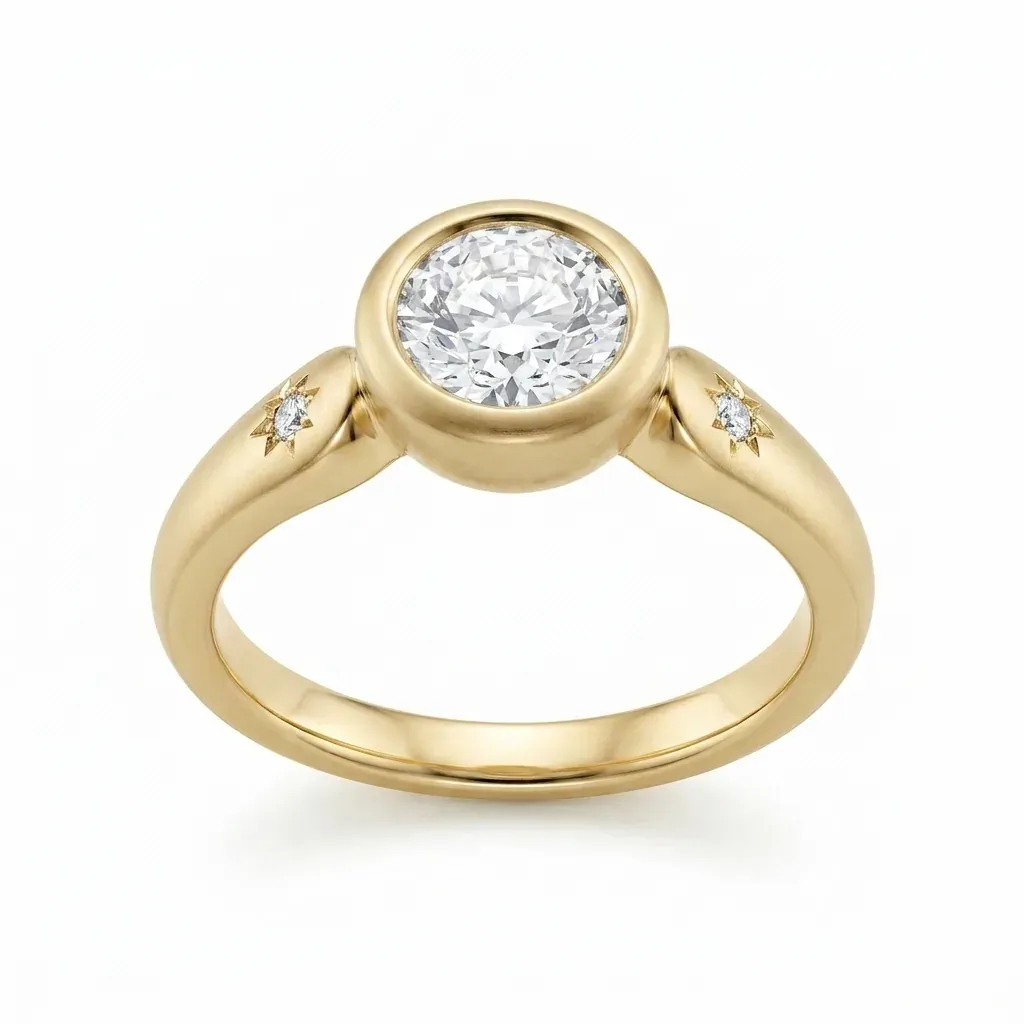
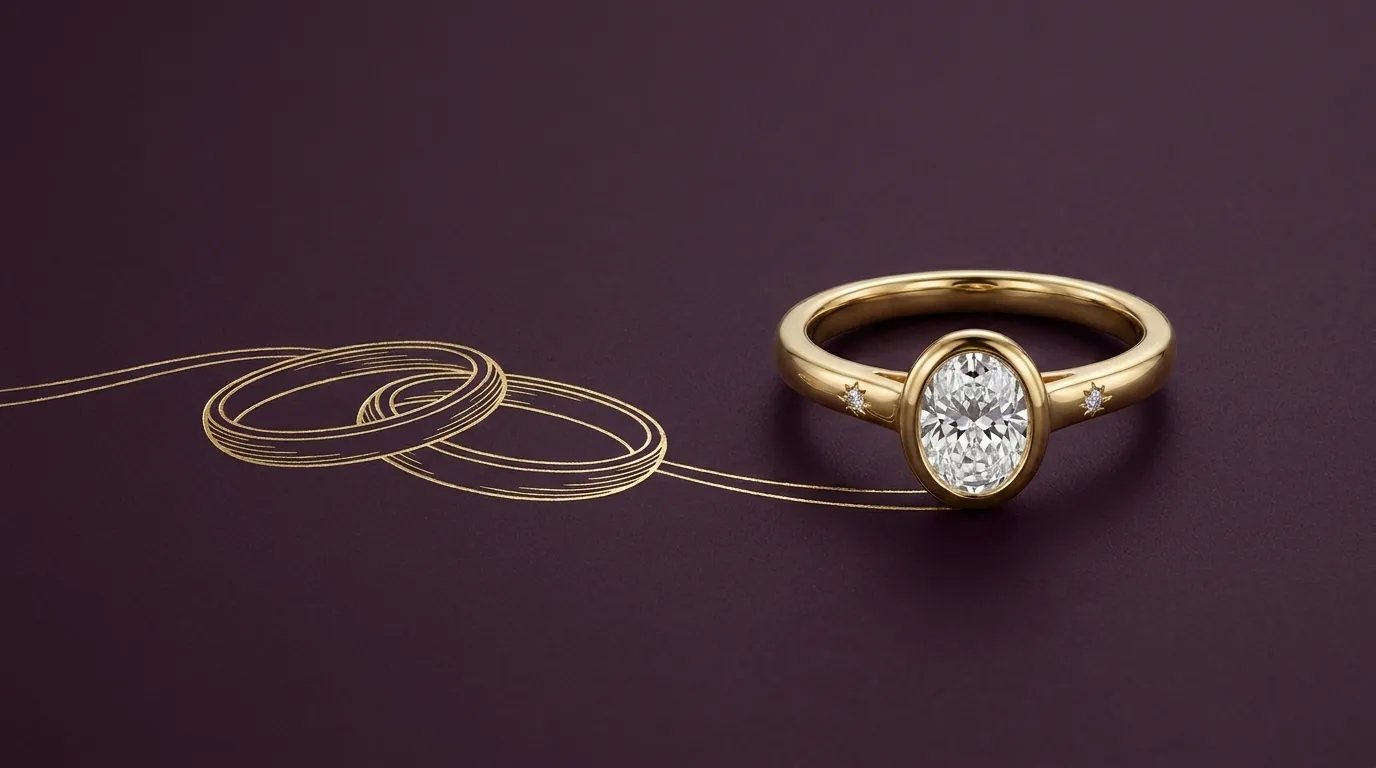
A single stone, held above the band by claws or wrapped in a collar of metal, leaves the rest of the shank free. Cut it anywhere at the back, adjust, rejoin: the operation never comes near the setting, because the cut and the stone are nowhere near each other.
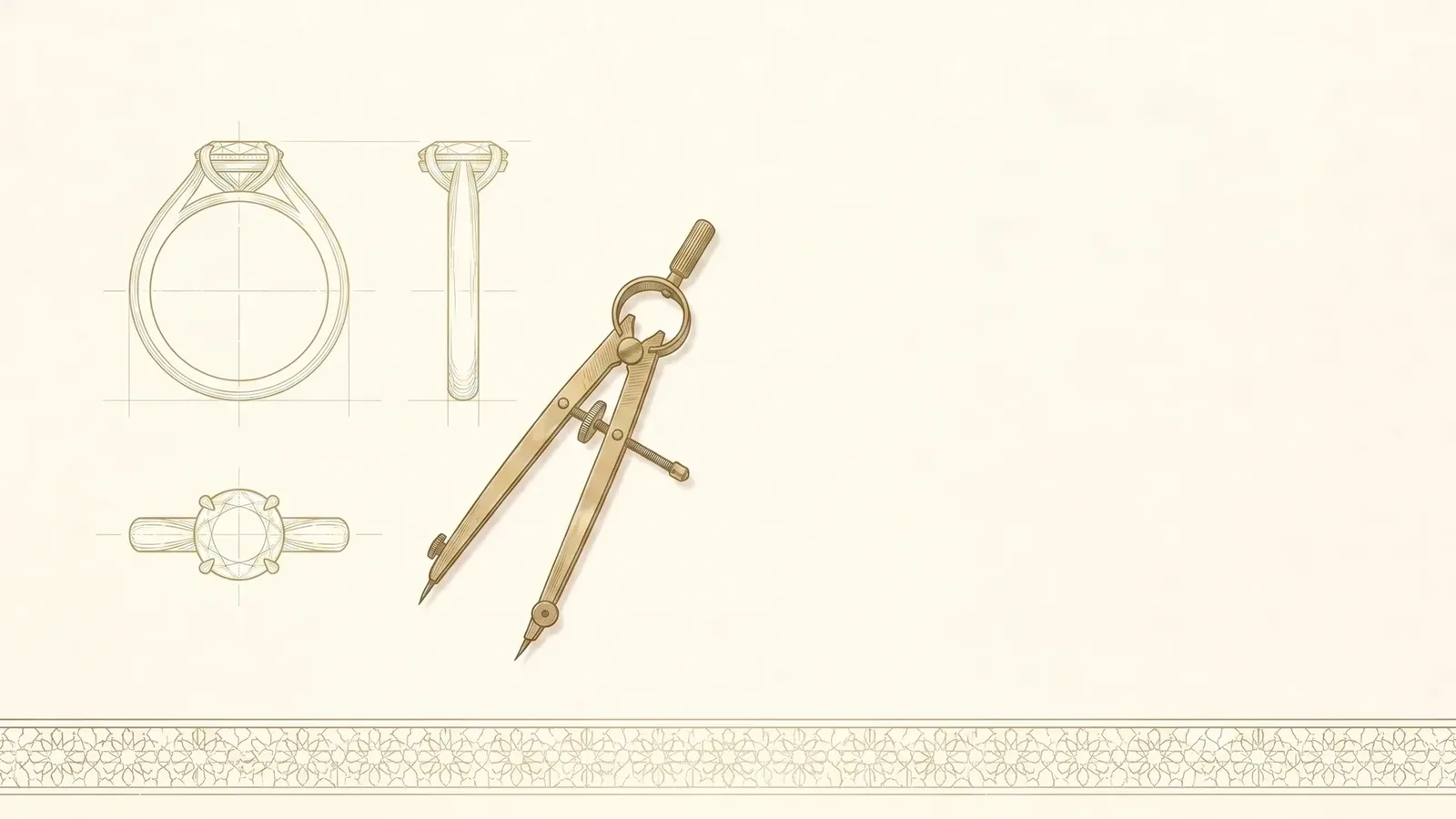
This is also why a plain shank is not made as thin as it could get away with on a screen. Working tolerance puts a plain shank at no less than 0.80 millimetres, with 1.00 millimetre preferred, not because anything thinner looks wrong, but because the band needs enough metal in reserve to be opened, adjusted and closed again without the join coming out visibly weaker than the rest of the ring. A shank built right at the edge of what looks acceptable in a render can have nothing left to give a jeweller when the resize actually comes.
Where the metal runs out
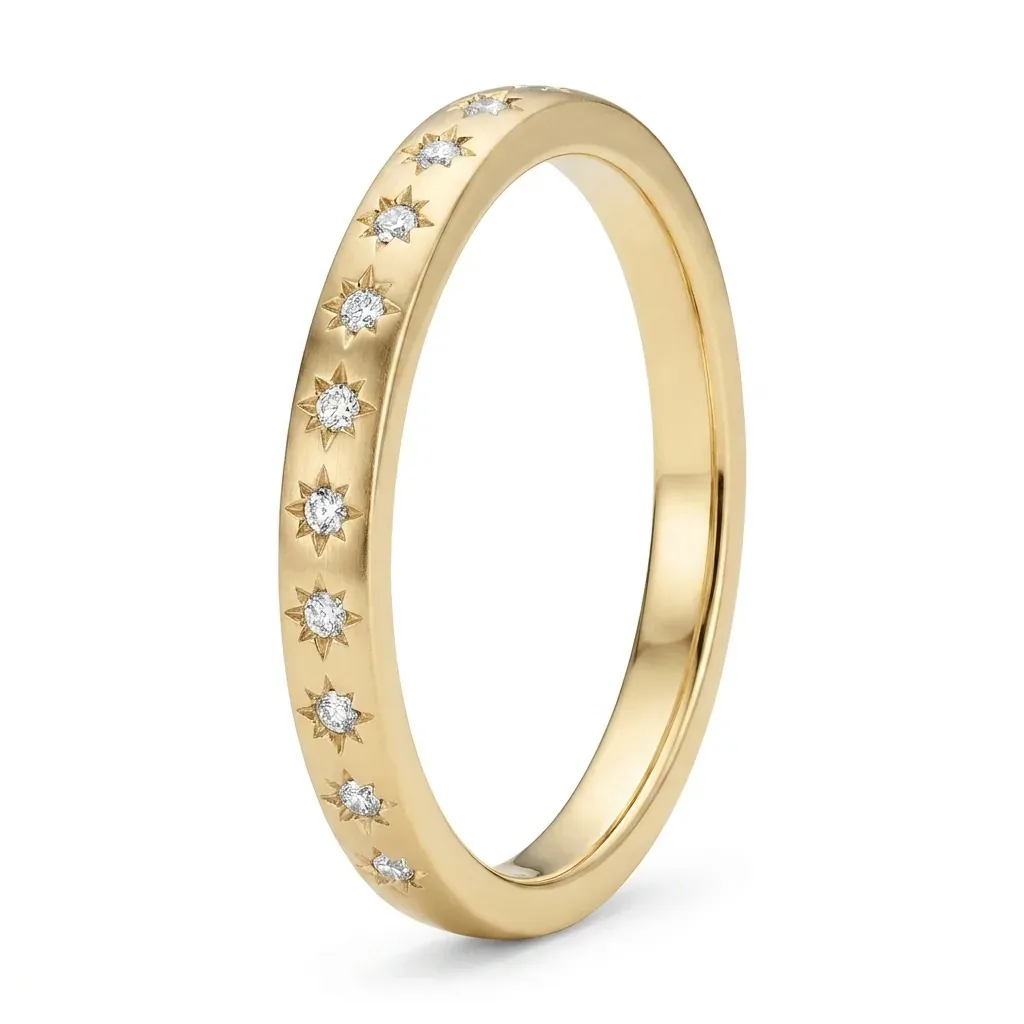
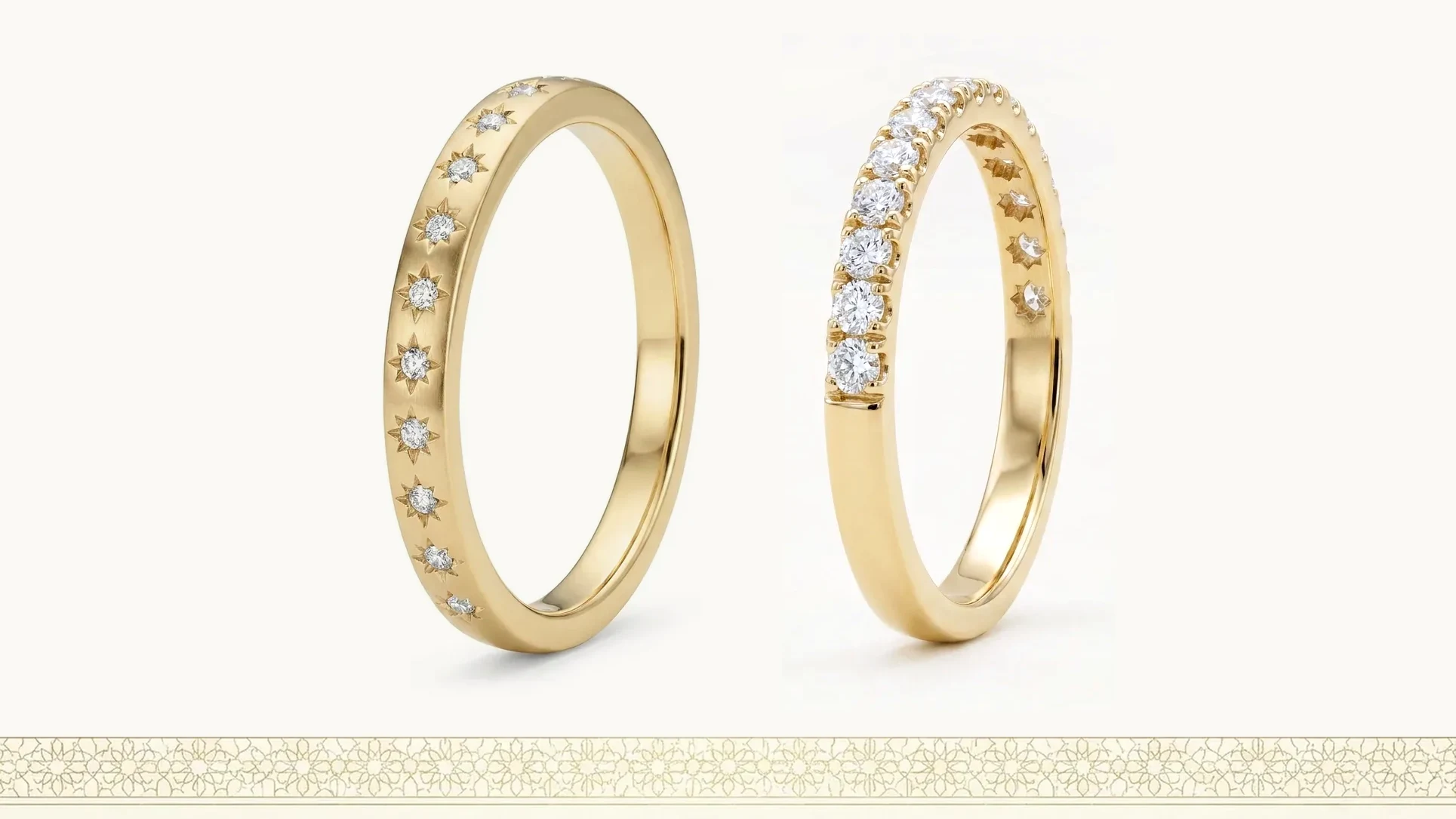
The same logic, applied without needing a separate rule for each case, explains why some rings resist resizing almost entirely. A full eternity band, with stones set the whole way round the shank, leaves no plain metal anywhere on the ring. A band pavé-set all the way round is the same problem in miniature: dozens of small stones, each set edge to edge with the next.
Pavé work does leave a sliver of space between adjacent stones, generally around half a millimetre, but that gap exists so the setting can be cleaned properly, not to leave room for anything larger. It is nowhere near enough to cut and rejoin metal safely. There is simply no point on either band where a cut avoids disturbing a stone that is currently held in place.
That does not make it impossible in every instance. A jeweller can sometimes work close to a fully set band by carefully lifting and resetting the stones nearest the cut, but it is a delicate, visible operation each time it happens, not the quiet routine job a plain section allows, and it disturbs stones that were sitting correctly. Worth asking about directly, never assumed.
The half-set band: the useful middle case
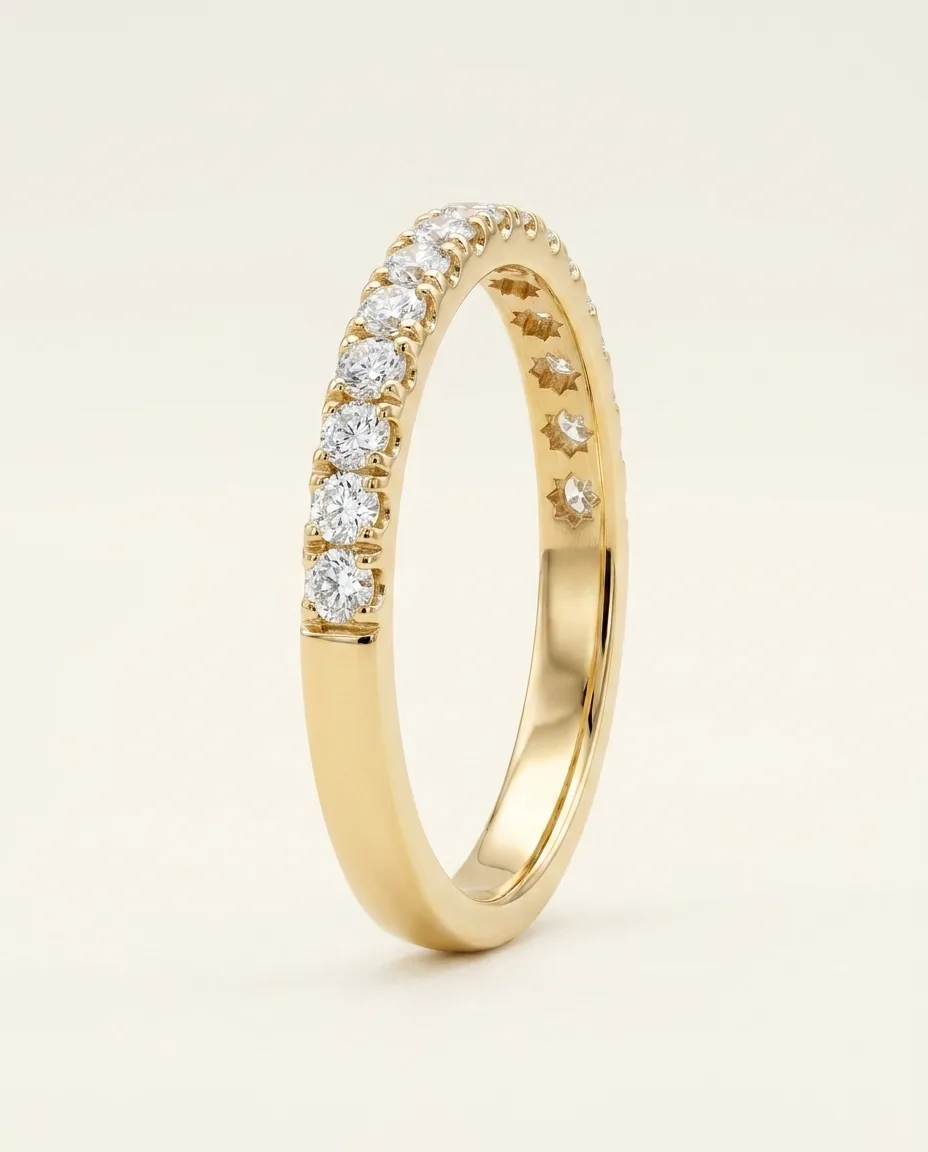
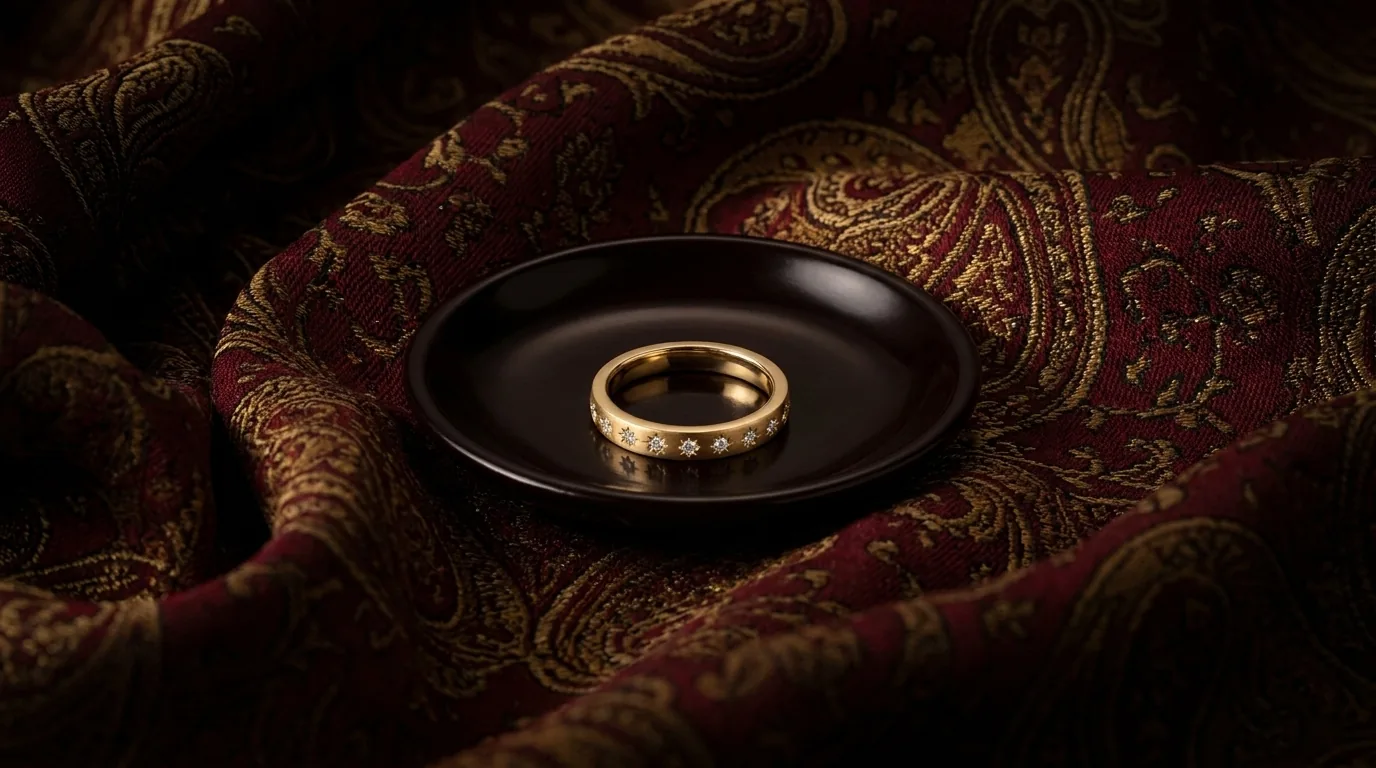
Between a fully plain shank and a fully set one sits a design worth understanding on its own terms: stones that stop partway round the band, with plain, unset metal carrying on to complete the circle underneath. Seen from directly above, the front of a half-set band can look almost identical to a full eternity band. Seen from the side or from underneath, where the setting actually stops and the plain metal begins is the one detail that decides which of the two cases this ring behaves like.
A half-set band, or a solitaire with a partial halo that ends before it reaches the back of the finger, keeps the same plain section at the back that a fully plain shank has. The stones at the front are never touched during a resize, because the cut is made well clear of them. This is worth asking to see specifically, underneath and from the side, rather than assumed from a single photograph taken square on from above.
Tension settings: a different kind of limit
A tension setting holds its stone with no seat and no claws at all. The stone is gripped purely by the spring pressure of the metal itself, pushing in from two opposing points, calculated precisely for that stone at that exact diameter of band. This is not a case of running out of plain metal to cut, the way a fully set band does. There is plenty of plain metal on a tension ring. The problem is that cutting it changes the very dimension the grip was calculated around.
Resize a tension setting and the metal’s spring characteristics change along with it. A slightly different diameter is not the same ring with a different circumference: it is a different mechanical calculation entirely. What would be a routine cut-and-rejoin on almost any other shank becomes, on a tension setting, closer to rebuilding the piece that actually holds the stone.
If a ring already resists resizing
None of this is useful only before a ring exists. A jeweller working with a design that will not take a conventional cut has other adjustments available, generally described as sizing beads or similar internal adjusters: small additions fitted to the inside of the band that change how it sits on the finger without cutting the band itself. What these can achieve depends entirely on the specific ring, how much adjustment is actually needed, and how the piece was built in the first place, so this is worth raising as a direct question with whoever examines the ring, rather than assumed to solve every case before anyone has looked at it.
Deciding this at the point of commission
None of this argues for one setting over another. A full eternity band, an all-round pavé line and a tension setting are all chosen for good reasons that have nothing to do with sizing, and resizing difficulty does not make any of them a worse ring on its own terms. What it does mean is that the decision is worth making with the mechanics in view, at the stage when a plain section can still be built in if it matters, rather than discovered afterwards, when it cannot. How a bespoke ring is actually made sets out where in that process this question fits, and it is worth raising early rather than late.
It is also worth raising alongside any decision about what will sit next to the ring. If a wedding band still needs to be designed to sit against it, the two choices affect each other in more ways than fit on the day alone. Ask, plainly, before anything is made: where does the setting stop, and where does the plain metal begin. It is a fair question for a commissioned piece, and for a ring bought anywhere else too.