A sculptural engagement ring is one where the metalwork is part of the design rather than a means of holding a stone up in the air. The band is not only a band. The setting is not only a set of claws. The whole piece has been considered as one three-dimensional form.
The useful comparison is a frame against a sculpture. A conventional ring frames a diamond. A sculptural ring surrounds it, flows beneath it, grows around it. The metal has volume, direction and a shape of its own, and the stone sits inside a composition instead of on top of one.
In practice that shows up as twisted or braided shanks that give a band movement, galleries that cup the stone from below in an architectural form, flowing metalwork drawn from natural structure, or geometry borrowed from architecture and mathematics rather than from nature.

Why it is being talked about now
Part of the answer is a reaction. The last decade of fine jewellery was dominated by the barely-there aesthetic: thin bands, floating solitaires, a great deal of negative space. It was elegant and it was also safe, and taste eventually corrects.
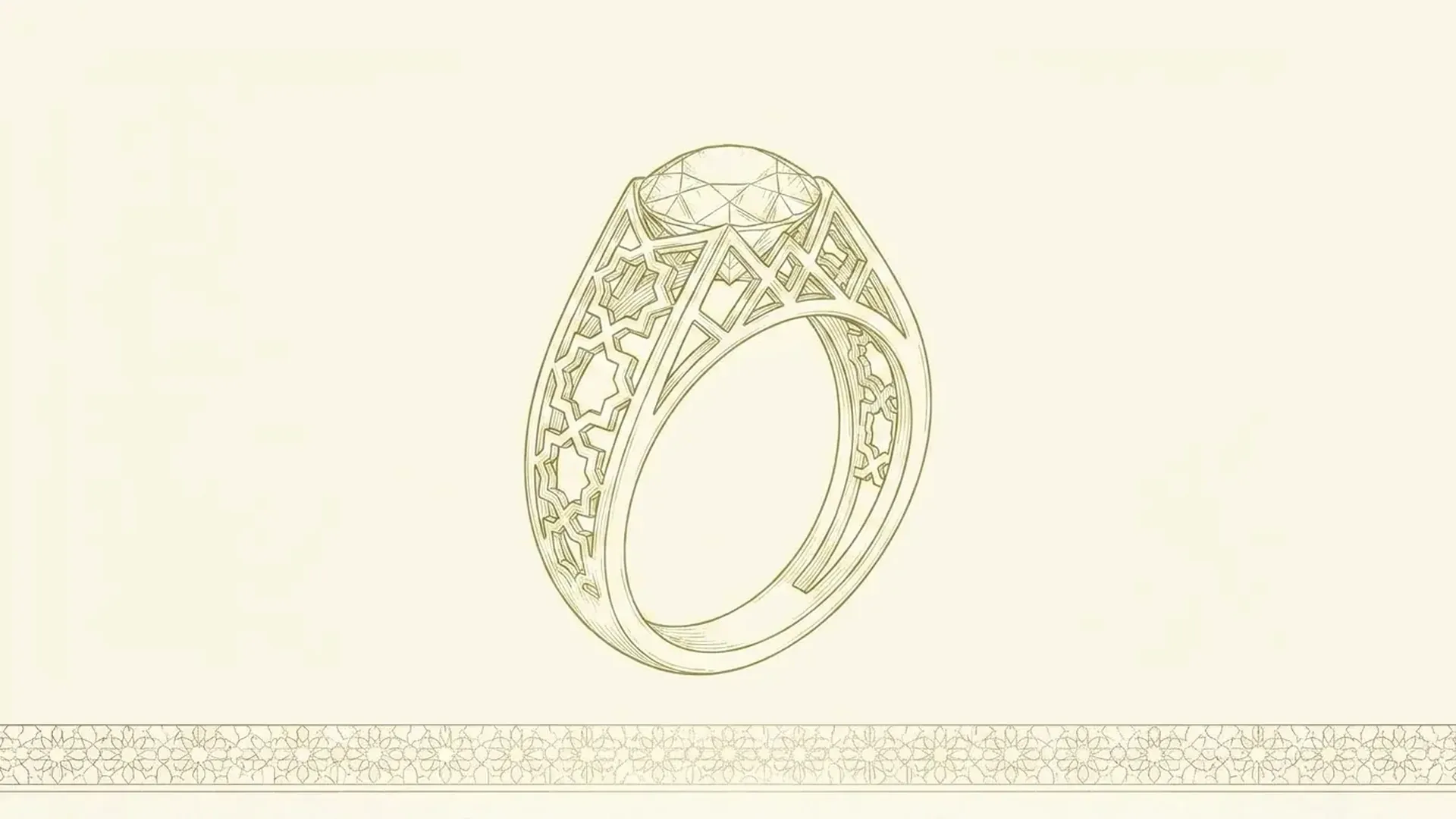
The other part is technical, and it is less often mentioned. Precision modelling and modern casting have made forms achievable that would once have been either impossible or expensive enough to be theoretical. A pierced lattice that carries a stone inside it is difficult to fabricate by hand and straightforward to cast from an accurate model. The ambition was always there. What changed is that the making caught up with it.
The part that is not new at all
Calling this a 2026 trend is a small historical joke, because sculptural metalwork is one of the oldest ideas in the craft.
Persian decorative traditions, from Achaemenid goldsmithing through to the geometric ornament of Islamic architecture, were built on the principle that a made object should have depth and dimension rather than a decorated surface. Muqarnas, the honeycomb vaulting found in mosques and palaces across Iran, is a sculpture at architectural scale. Girih, the interlocking geometric strapwork of Safavid-era tilework, is a system for generating three-dimensional order out of a flat rule.
Translating those forms into jewellery is not an invention. It is a continuation, and it is the reason the sculptural direction is the natural one here rather than a style adopted because it is current.
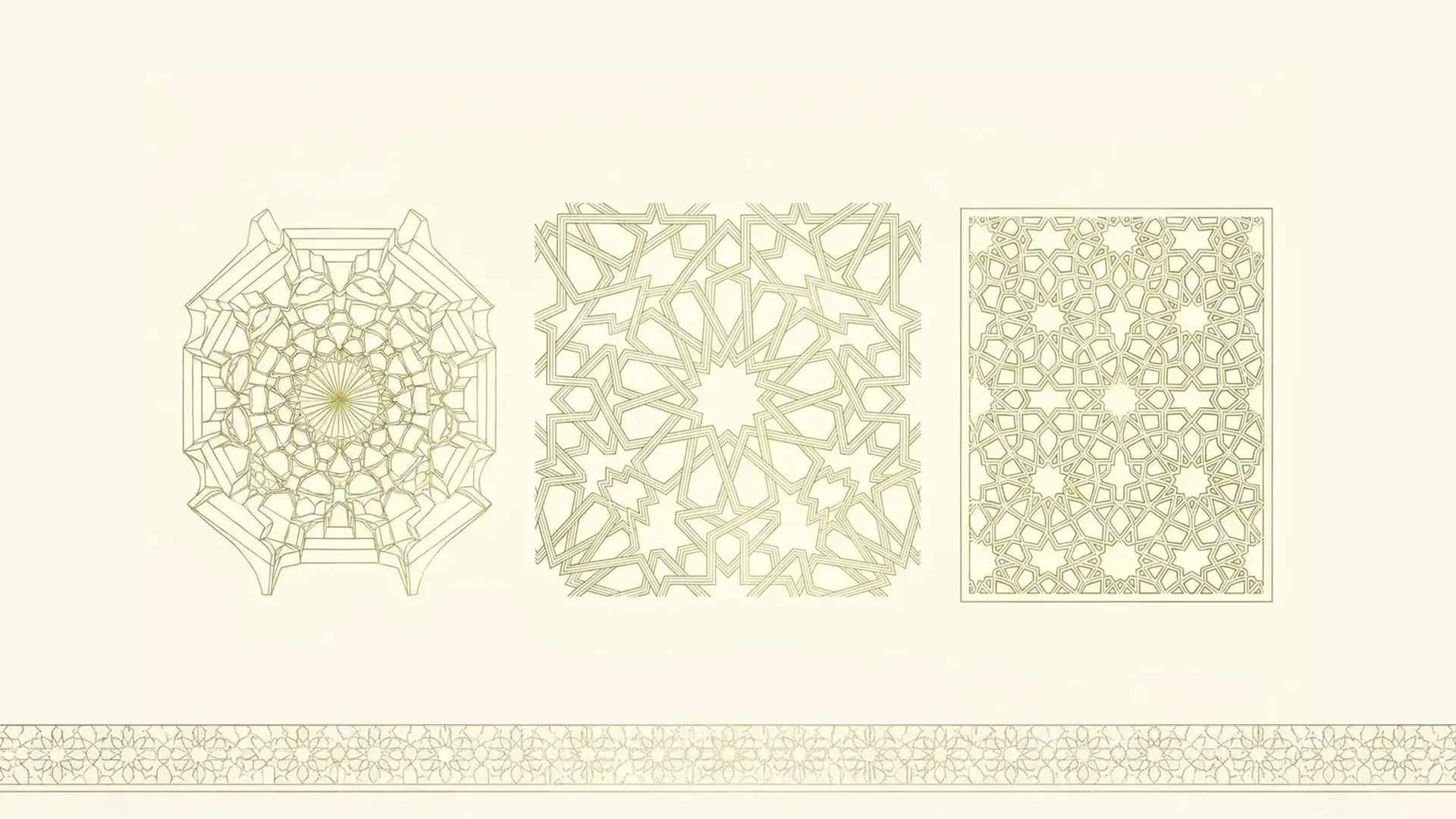
What separates a sculptural ring from a merely complicated one
Not every unusual shape qualifies. Four things tend to separate the two.
The form has a logic. Every curve, angle and surface should be there for a structural, narrative or aesthetic reason. A ring that looks complicated with nothing underneath it is fussy. A ring that looks complex and then reveals its rule on closer inspection is sculptural. The difference is visible within a few seconds of picking one up.
It is still wearable. The most beautiful object in the world fails as a ring if it catches on a jumper, presses into the neighbouring finger, or feels heavy after an hour. Good sculptural design puts the dimension where it earns its place, in the band profile and the setting, and keeps the underside and the inner profile smooth. Nothing should rise above the top of the centre stone, which is the check that catches most snag-prone designs before they are made.
The stone belongs to the composition. In a sculptural ring the stone is not the entire point, it is one element of several. This is the strongest practical argument for designing a piece around a specific stone: when the setting and the stone are drawn together, the result is different in kind from a standard setting with a stone dropped into it.
It is not tied to a moment. Sculptural does not mean fashionable. The reference points that hold up are architectural, natural or cultural ones, which do not move on a two-year cycle. A ring built on the geometry of a garden pavilion will still make sense in thirty years. A ring built to resemble a particular image on a particular feed will not.
How it looks in our own pieces
Three pieces show the approach taking different routes to the same idea.
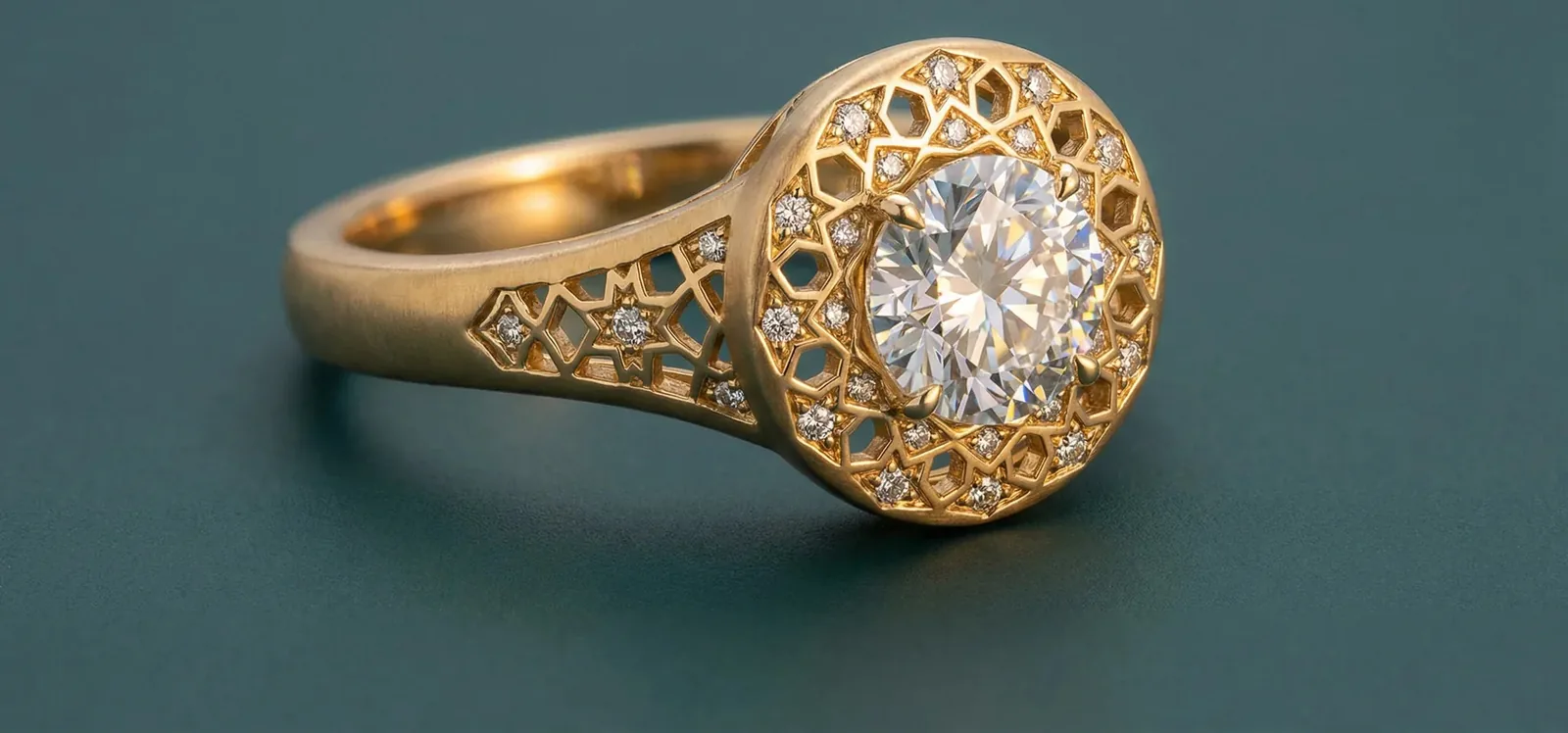
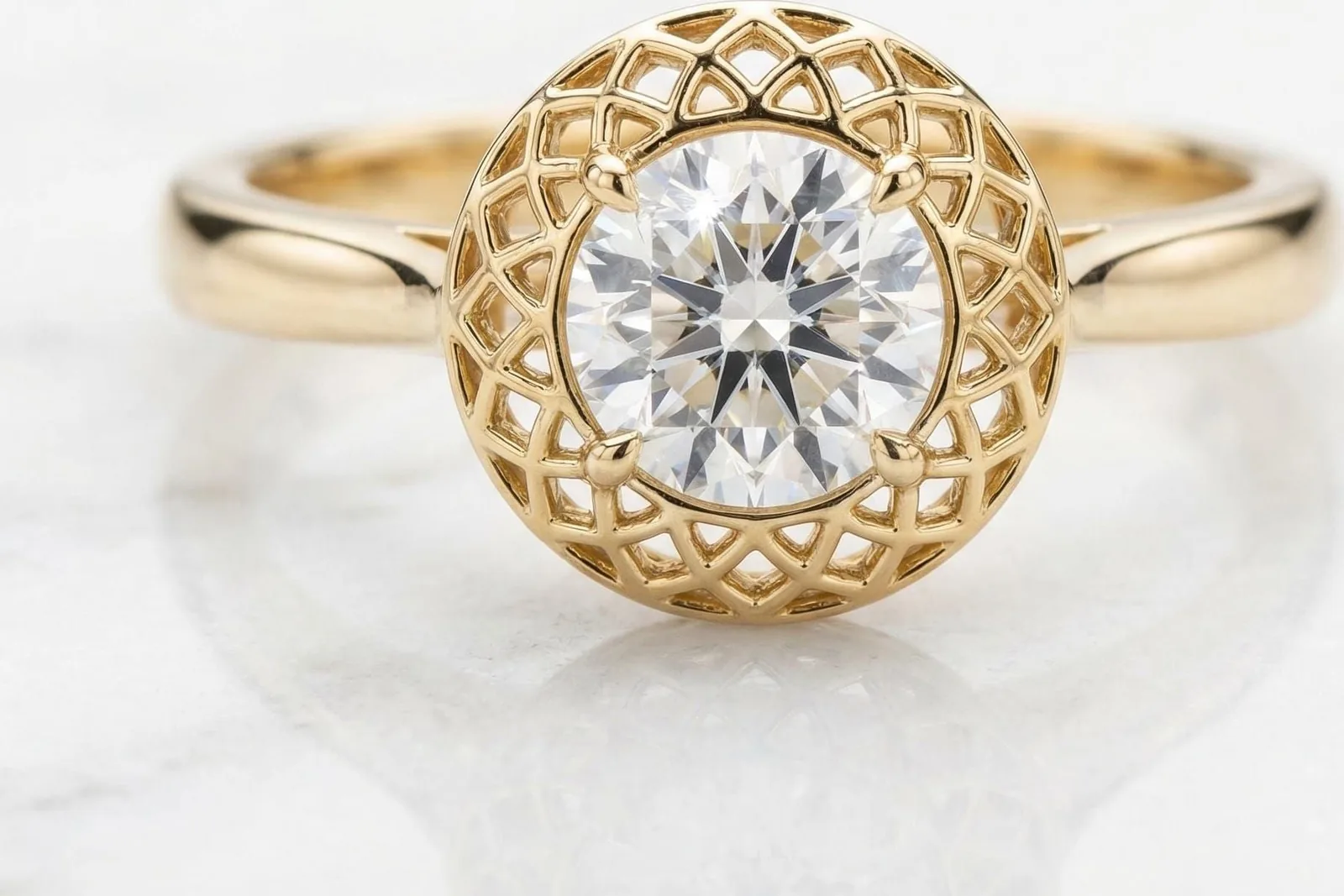
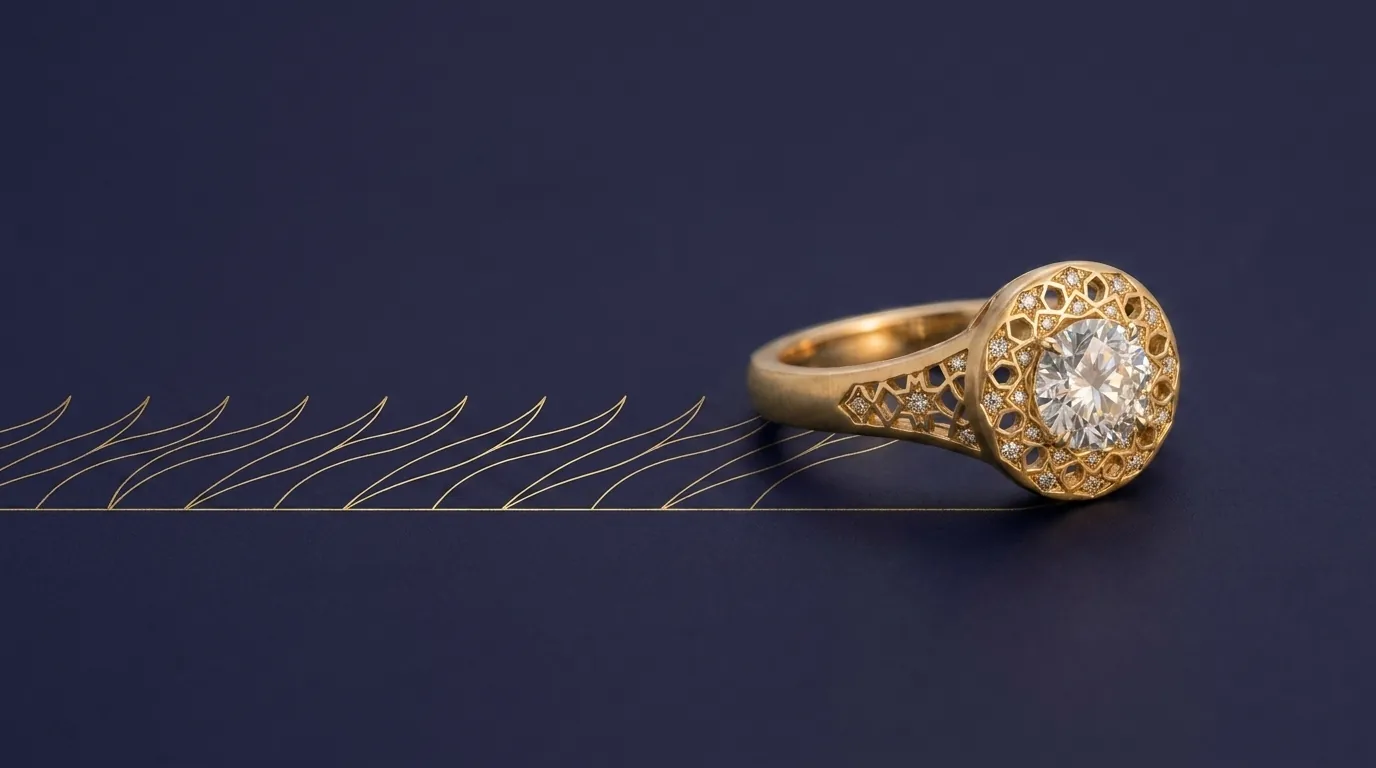
The Azar ring takes its name from the Persian word for fire. Its lattice halo is designed as a geometric lantern around the centre stone, drawing on the pierced screens found in Islamic architecture. The diamond sits within the lattice rather than above it, which changes the relationship between stone and setting in a way that is obvious even to someone who has never heard of a jaali.
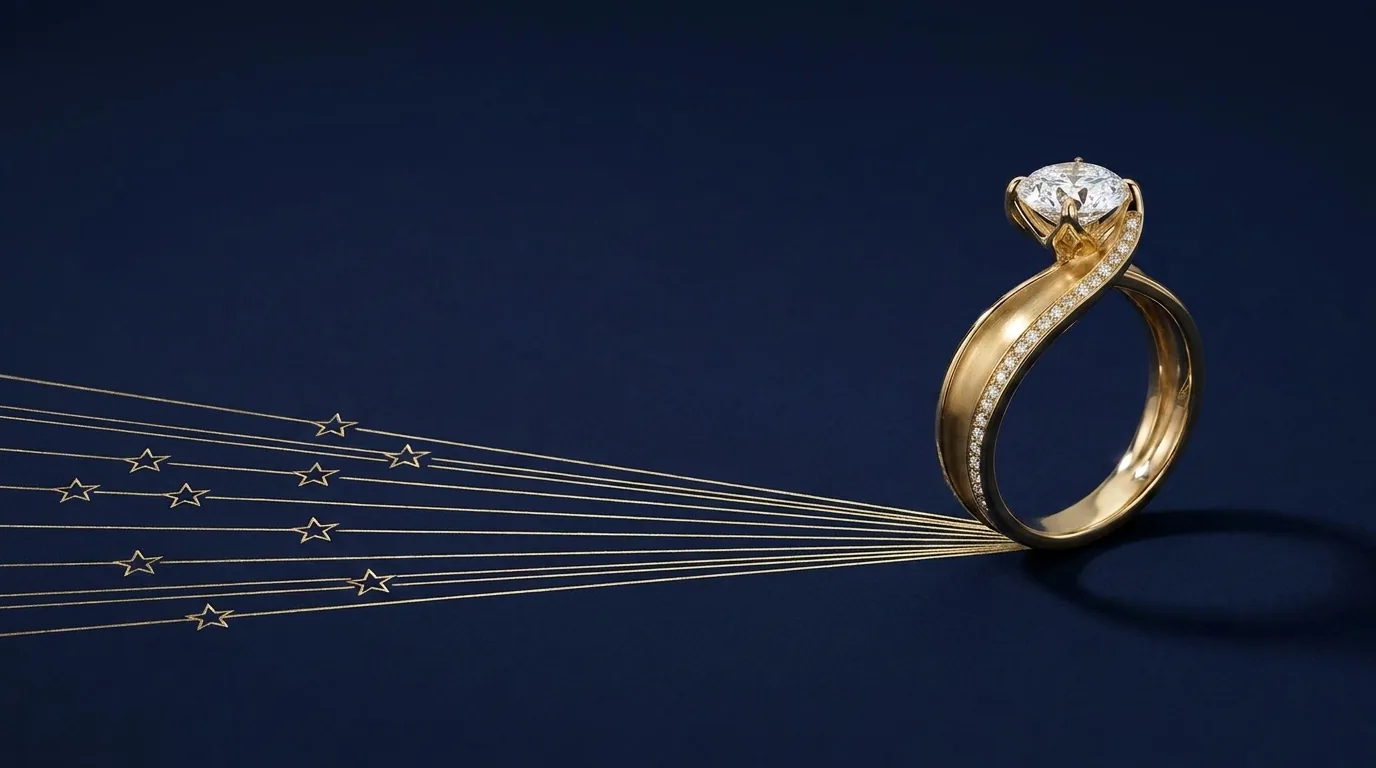
The Atash ring reads the same fire motif differently, flowing rather than geometric, with the smaller stones set so that they climb around the centre.
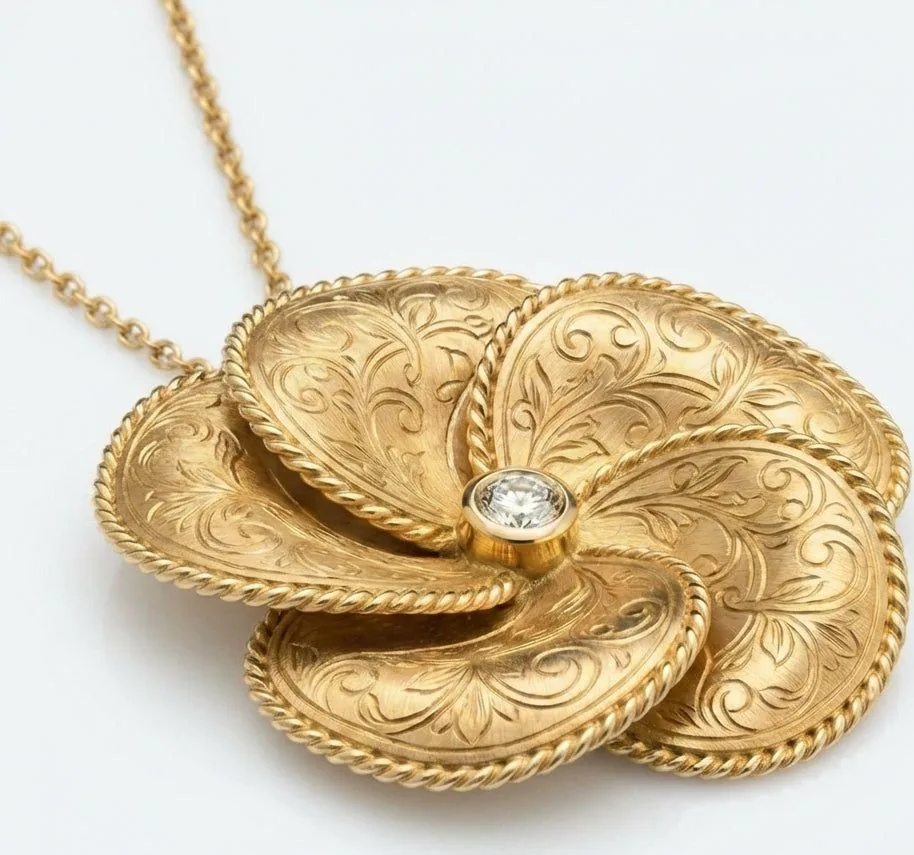
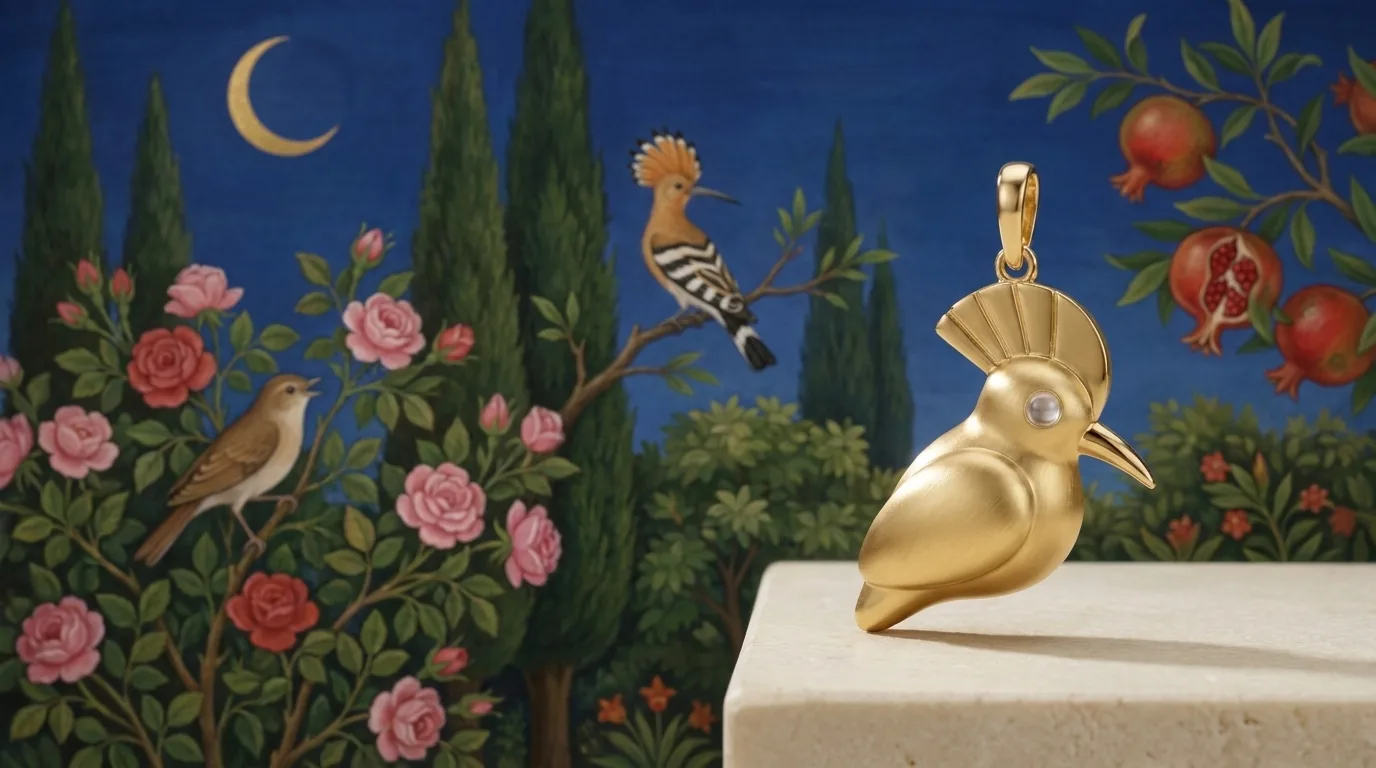
The Golestan Rose Pendant comes at sculpted form from another direction entirely. The rose is not a picture of a rose. It is a geometric interpretation, its petals arranged on the same mathematical principles that govern the tilework of a palace floor.
Whether it suits the person it is for
A sculptural ring is not for everyone, and the honest answer here matters more than the sale.
If the person wearing it tends towards understated jewellery, plain bands and small studs and nothing that asks for attention, a sculptural piece may be too much whatever its quality. If they are drawn to objects with depth, to things that reward a second look, to pieces that are recognisably individual rather than chosen from a range, the direction is likely to suit them.
The way to find out is to describe them. Bring reference images, say what they already wear, and let the design respond to that rather than to a category.
Commissioning one
The sculptural approach benefits more than most from being designed rather than selected. A stock setting cannot be sculptural in any meaningful sense, because it is built to accommodate many different stones and many different tastes. The form only resolves when the stone, the setting and the band profile are conceived together.
The process starts with a conversation about the stone, the direction, any cultural reference that matters, and the taste of the person who will wear it. Renders of the model are produced and revised until the design is signed off, and nothing is made before that point. Solid pieces are hallmarked at a UK assay office where the Hallmarking Act 1973 requires it, before dispatch.
If you would like to explore the direction, the commission process is set out in full here, and the engagement rings already designed are a reasonable place to start looking.
A sculptural ring is not a ring with a stone in it. It is a piece of architecture small enough to wear.