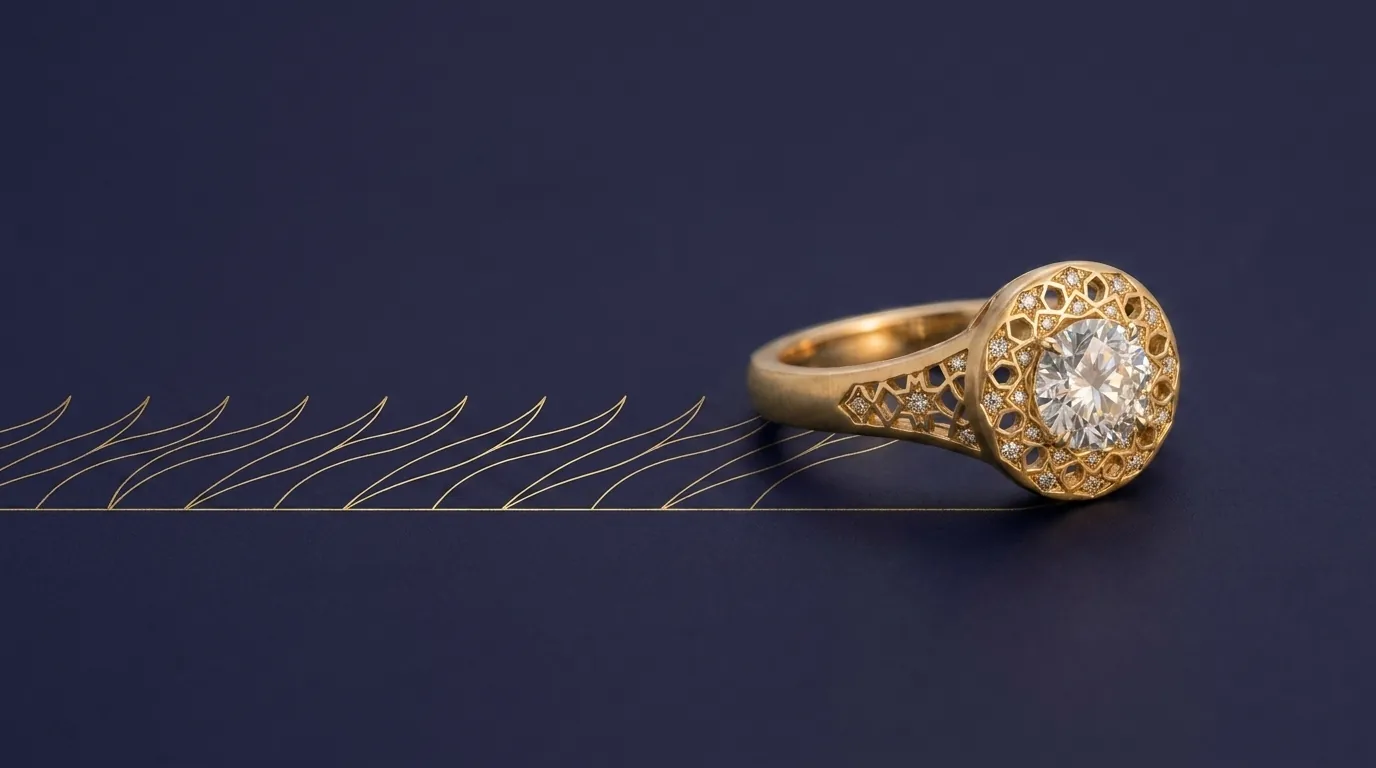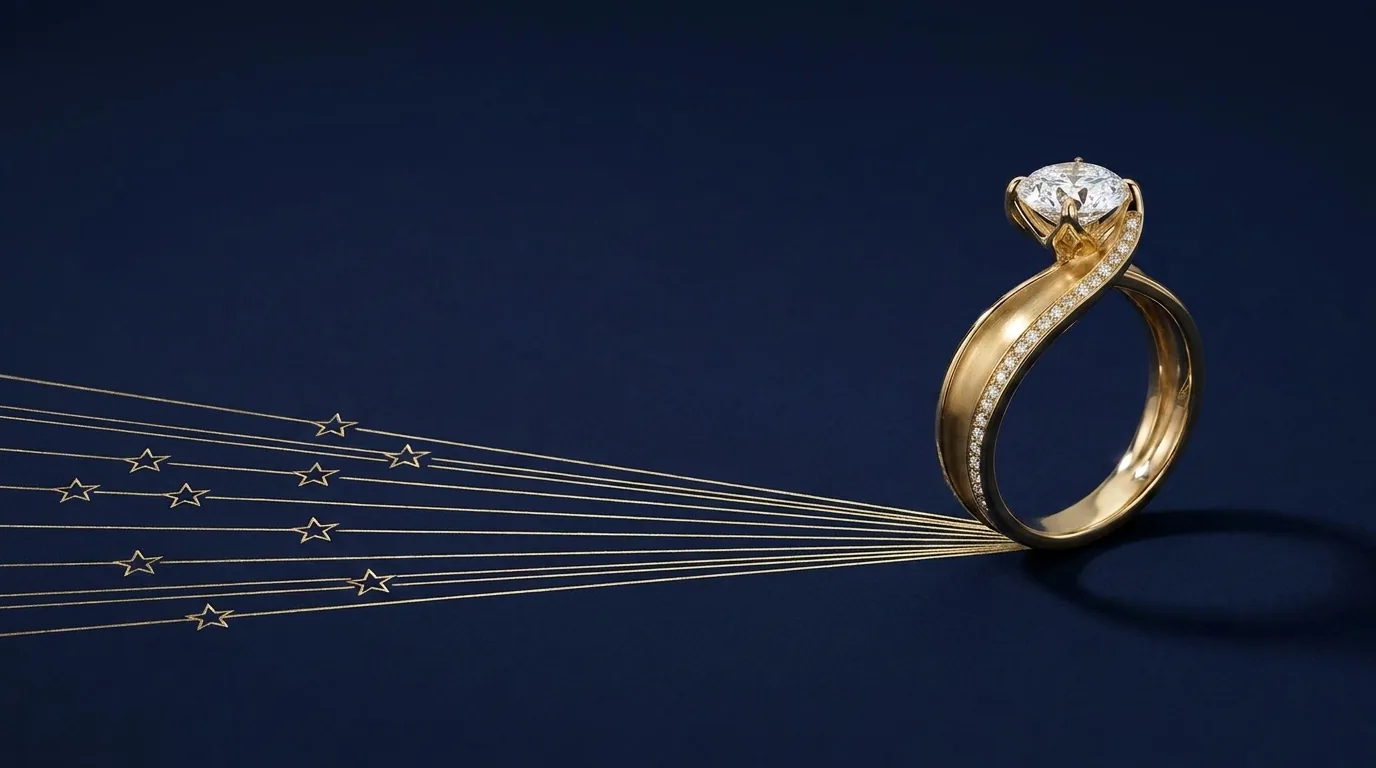
Made to order means exactly what it says: the piece does not exist until you order it. There is no stock. Nothing sits in a drawer waiting. When you place an order, the piece is made for you, in your size, with your stone, from the material we would actually use, not from a lesser alloy kept back for catalogue fulfilment.
That is a choice, not a limitation.


Why it matters for the piece
Gold is not stable in storage. Not because it degrades, but because the economics of holding hundreds of pieces in finished form pushes every cost decision toward the thinner side. Thinner shanks, lighter settings, smaller melee, softer alloys. Made-to-order removes that pressure entirely. Every piece is made to its own specification, once, for the person wearing it.
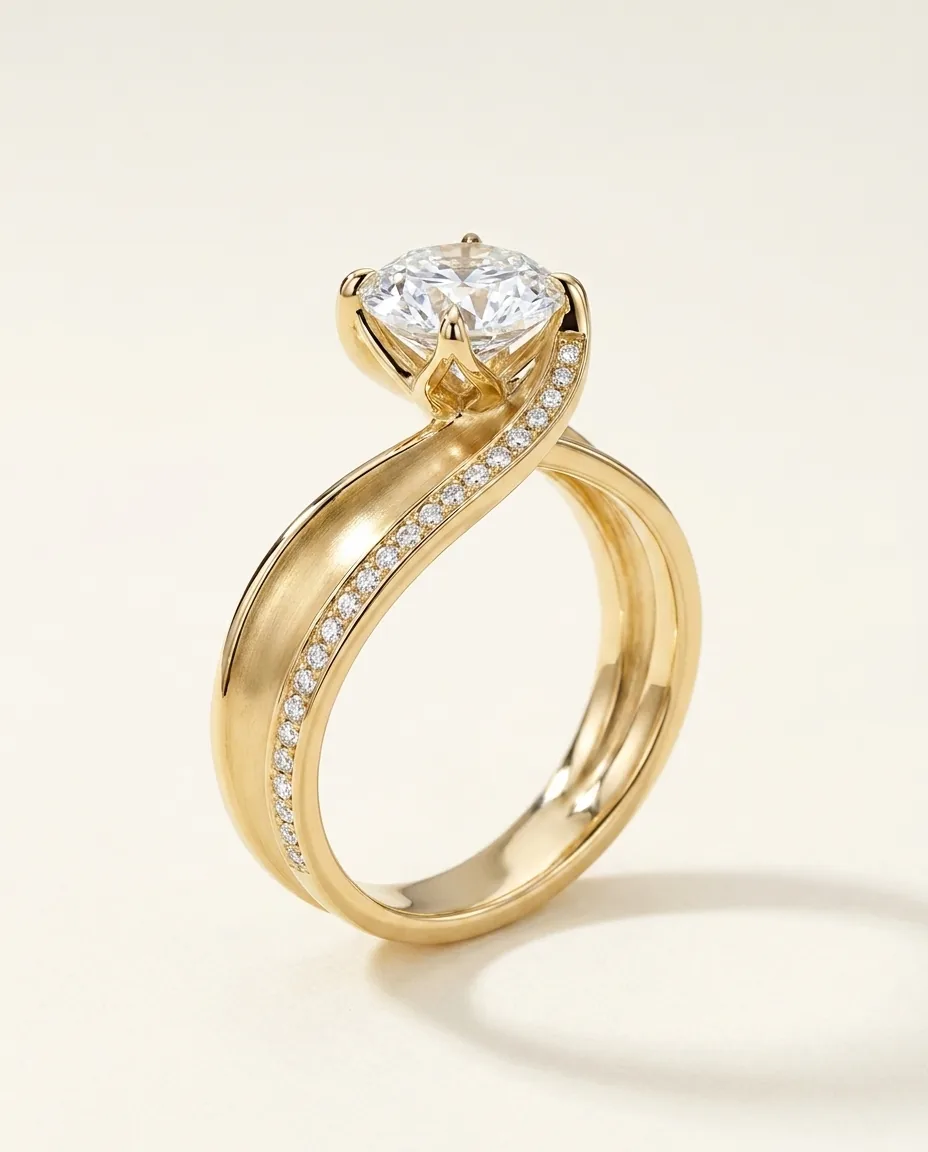
The difference is most visible in settings. A pavé row in a piece made to stock is set to survive handling during the fulfilment process. A pavé row in a piece made for you is set to the tolerances the design calls for, because there is no logistical handling between completion and delivery.
Why it matters for you
A made-to-order piece can be made in your size without alteration. Alteration weakens a shank and, on more complex designs, risks the setting. If a piece is made for you from the start, the shank is drawn at your finger size and cast at that dimension. There is nothing to alter.
It also means that if a design does not exist in a configuration you want, we can often discuss it. The piece is being made anyway. The conversation about what it should be happens before the metal is cast, not after.
What it means in practice
Lead time is real. A made-to-order piece takes time because it involves real manufacturing: CAD if required, wax or resin printing, casting, finishing, setting stones, polishing, and hallmarking. The estimate shown with each piece runs from the day your order is confirmed, and it varies with the design: a plain band and a pavé-set halo are not the same job. A bespoke commission is quoted separately. We do not adjust an estimate downward under pressure.
The hallmark at the end of that process is an independent statement of fineness, struck by an assay office rather than by us. It can only be struck on a finished article, which is another reason the process has the length it does. How to read one.
Made to order is not slower than stock. It is differently timed: you commit earlier and receive something that was not possible to produce any other way.
The honest case for the other approach
Stock jewellery exists for good reasons. If you need something this week, made-to-order cannot help you. If you want to try a piece on before committing, stock has an answer that made-to-order does not. These are real limitations and worth naming.
The question is what you are buying and what you want it to be. A piece bought from stock was made for everyone who might order it. A piece made to order was made for you. That distinction is not always worth the difference in time. Sometimes it is the whole point.