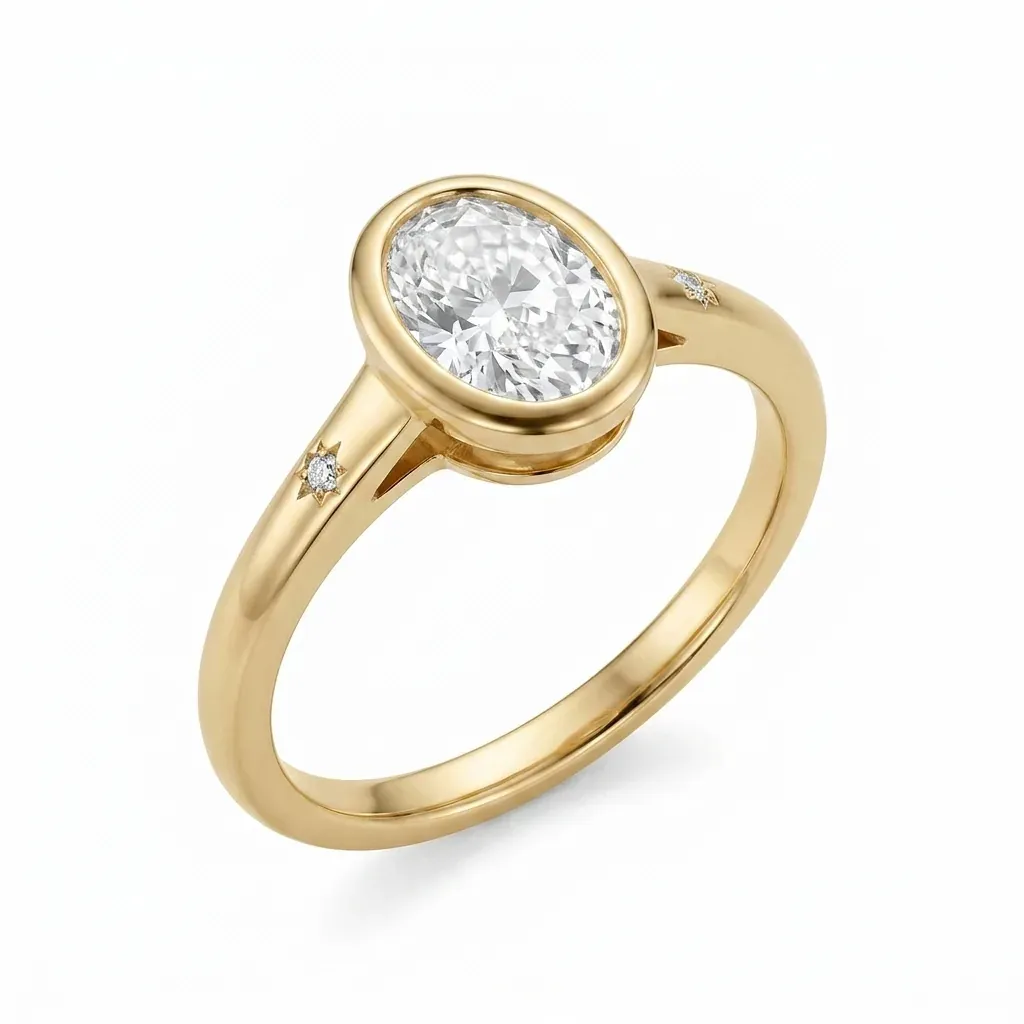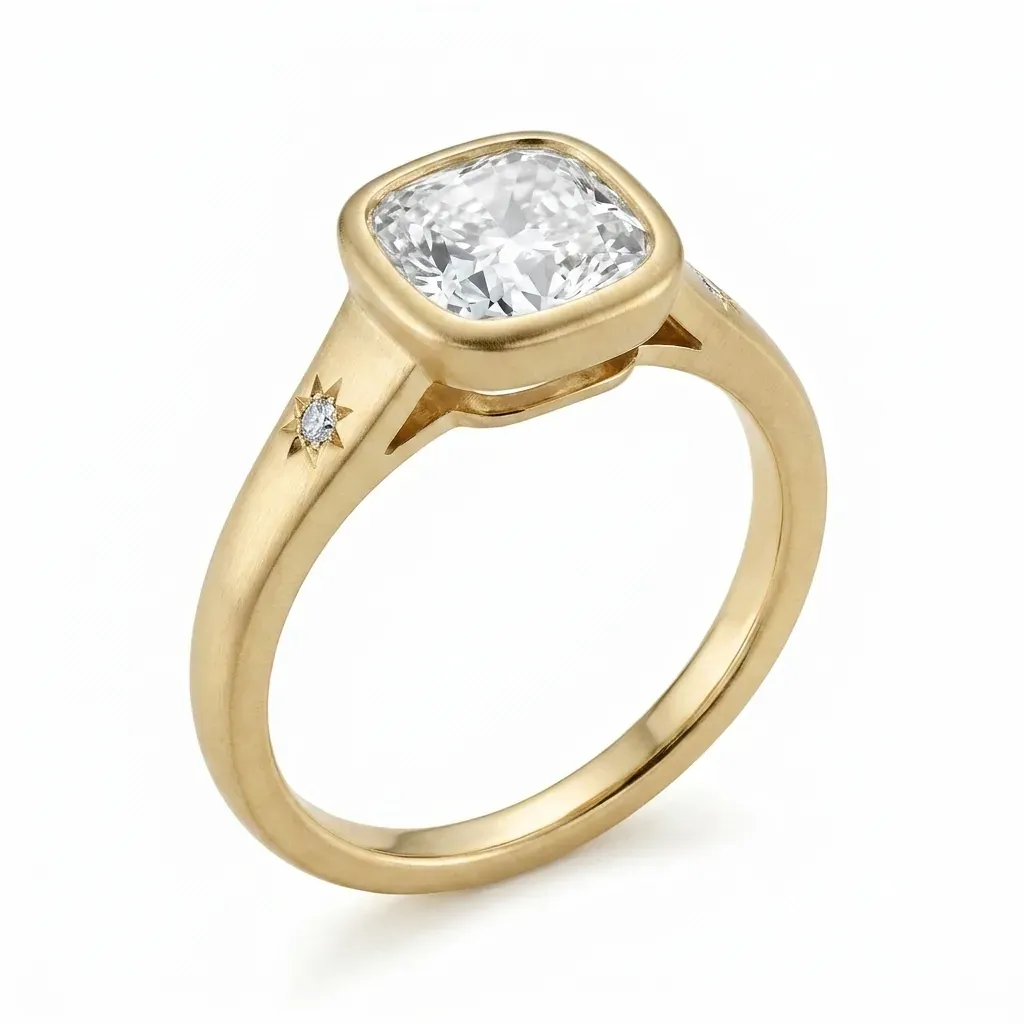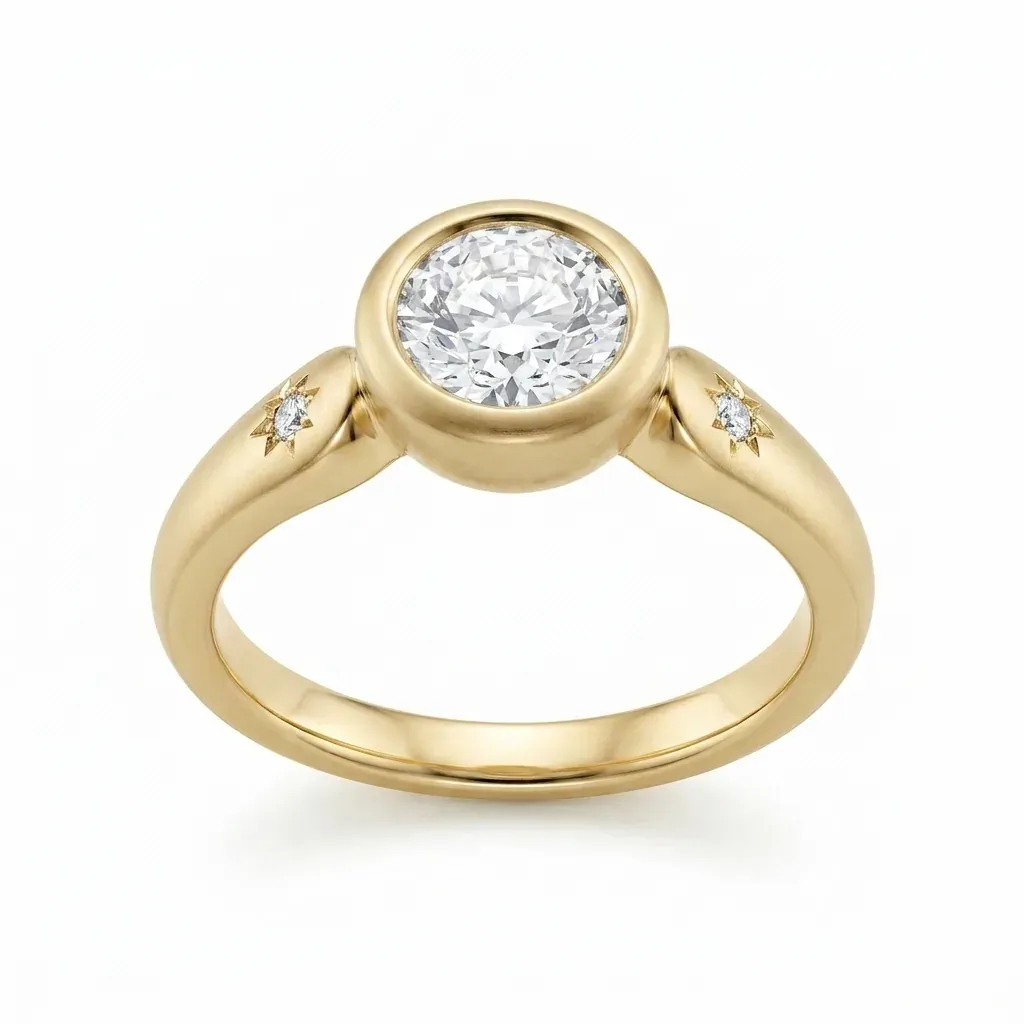
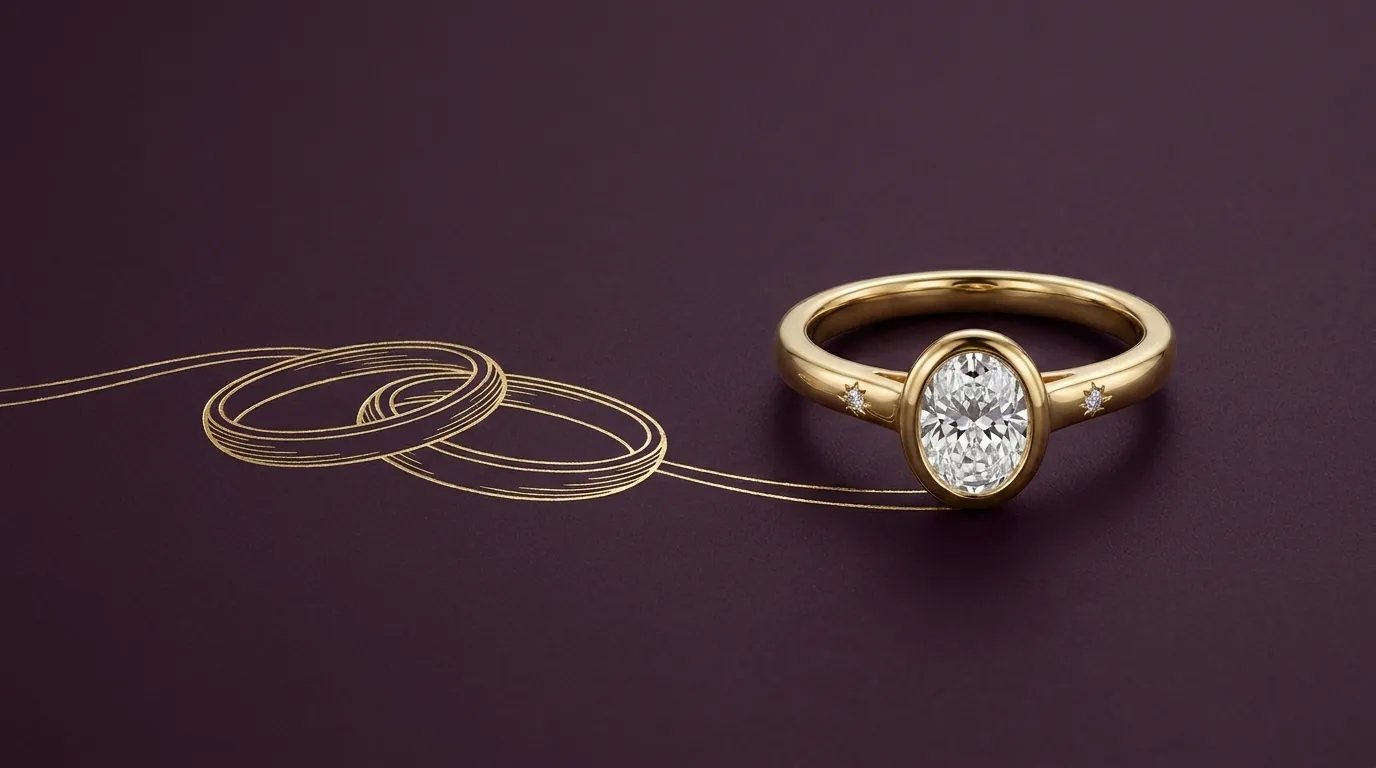
“Together, or a surprise” gets asked as though it only has two answers. It doesn’t. Inside that single question sit three separate ones, and most of the anxiety around proposing comes from trying to answer all three at once, as if they had to move together.
The first is who chooses the design. The second is whether she knows, at any point before it happens, that a proposal is coming at all. The third is when and how the moment itself actually unfolds. None of these depends on the others going a particular way. You can choose a ring together, in full, and still keep the evening itself an entire secret from her. You can involve her in nothing about the design and still tell her plainly that a proposal is somewhere ahead, without naming a day. Pulling these three apart before deciding any of them is the most useful thing this article can hand you, because almost nobody arrives at the question having thought of it that way.

Three decisions, not one
Once you separate them, the combinations multiply, and several of the more comfortable ones are rarely discussed. She can help choose the ring and still have no idea when the proposal will happen, so the object is settled and the moment stays entirely hers to be surprised by. She can know a proposal is on its way, in general terms, without having seen a single sketch, so the design stays a private project whilst the fact of it stops being a secret she has to be protected from. Or both can be kept from her completely, the classic version, which carries its own real appeal and is covered honestly below.
What matters is noticing that “surprise” usually means the last of these when people say it, even though they are often only worried about one part: the size, or her taste, or simply not wanting to spoil the moment. Naming which part you are actually protecting tends to make the decision smaller than it first looked.
What a full surprise actually risks
Choosing the ring entirely alone, with no input from her at any stage, is a real and legitimate choice. It is also worth knowing exactly what it costs, so the choice is made with open eyes rather than by default.
Size is the largest of these risks. Finding a ring size without asking her directly is genuinely difficult, not because the methods are bad but because the margin for error is small: adjacent sizes can differ by less than half a millimetre, which is easily lost in a borrowed ring worn on the wrong finger or a strip of paper pulled slightly too tight. It is not an impossible problem, and there are ways through it, but it deserves to be treated as the harder task it actually is, not waved away with confidence you have not earned.
Taste is quieter but just as real. You know your own eye. Hers may be less familiar at close range, the exact shape of a stone or how wide a band should sit. Two people who know each other thoroughly can still want quite different objects, and neither tends to discover it until one of them is wearing the other’s decision. An engagement ring tends to be worn constantly, for a long stretch of a life. Deciding alone stakes everything on one reading of another person’s taste, expressed through a single object she had no say in before it reached her hand.
Underneath both sits a plainer fact. A commissioned piece is not something sitting ready on a shelf, available to swap for a different one if the size or the style turns out wrong. Any room to adjust afterwards is particular to that maker and that piece, so ask what it amounts to rather than relying on a flexibility nobody has actually promised, before you build a whole plan on the assumption that a mistake is easily undone.
The middle ground is wider than it looks
Between choosing entirely alone and choosing everything together sits a stretch of ground most people never consider, because the question gets framed as a switch rather than a spectrum.
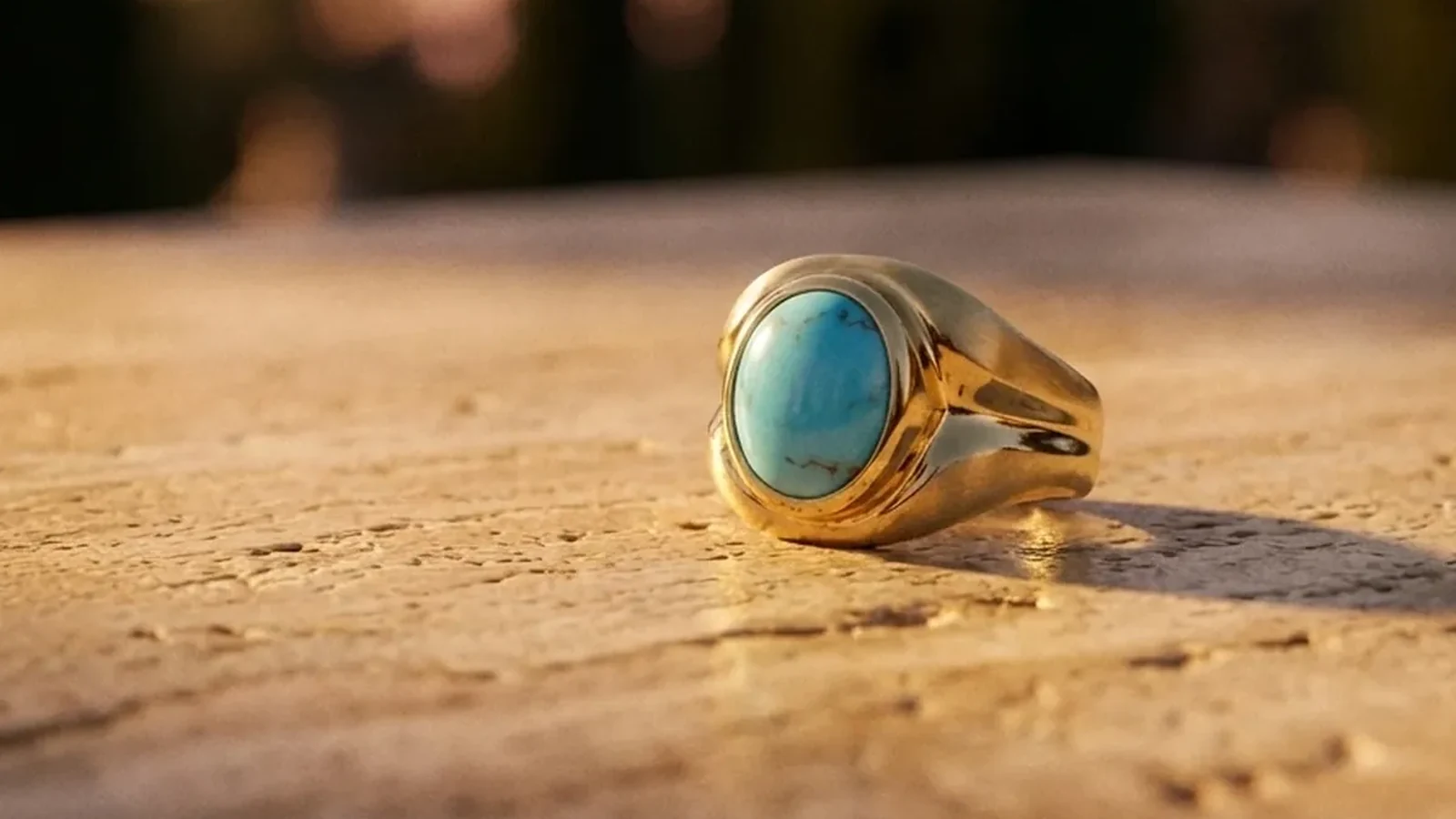
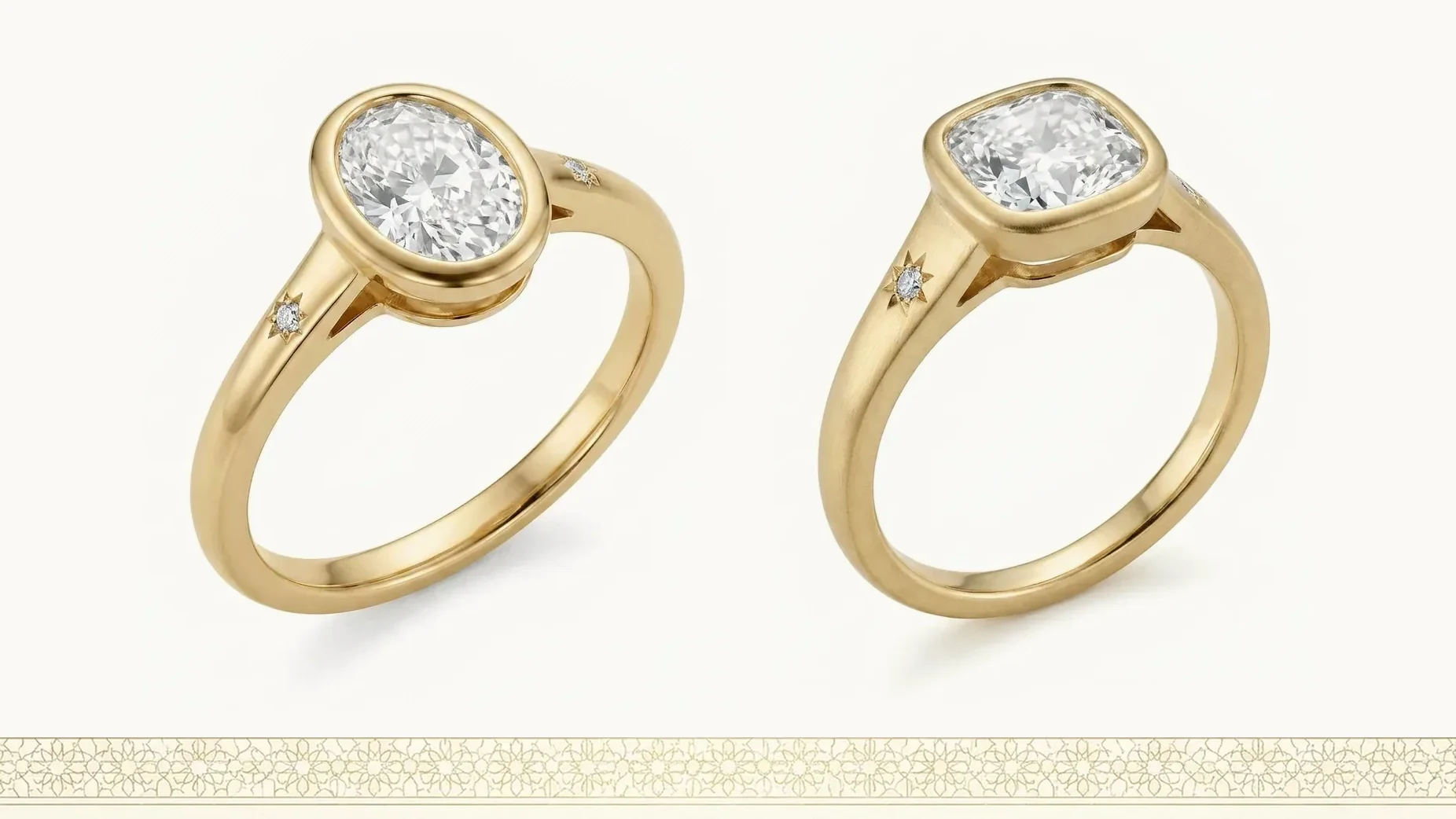
You can agree a direction without either of you seeing the finished ring. Looking through images together, talking in general terms about shapes, stones and styles, settling on a shared sense of what she likes, commits neither of you to seeing the actual piece before it exists. The direction is shared. The object stays a surprise until the day itself. This is closer to a conversation about her than a design meeting: the kind of thing that comes up naturally while looking at personalised engagement rings together, without either of you needing to say out loud what the looking is actually for.
You can also bring in a sister or a close friend, someone she already trusts and talks to freely. Such a person can raise it directly behind some ordinary pretext, or simply pay attention to remarks she makes in passing and relay them, and she never learns why the subject came up. The uncertainty then sits with somebody who already understands what she likes, instead of resting entirely on your own judgement.
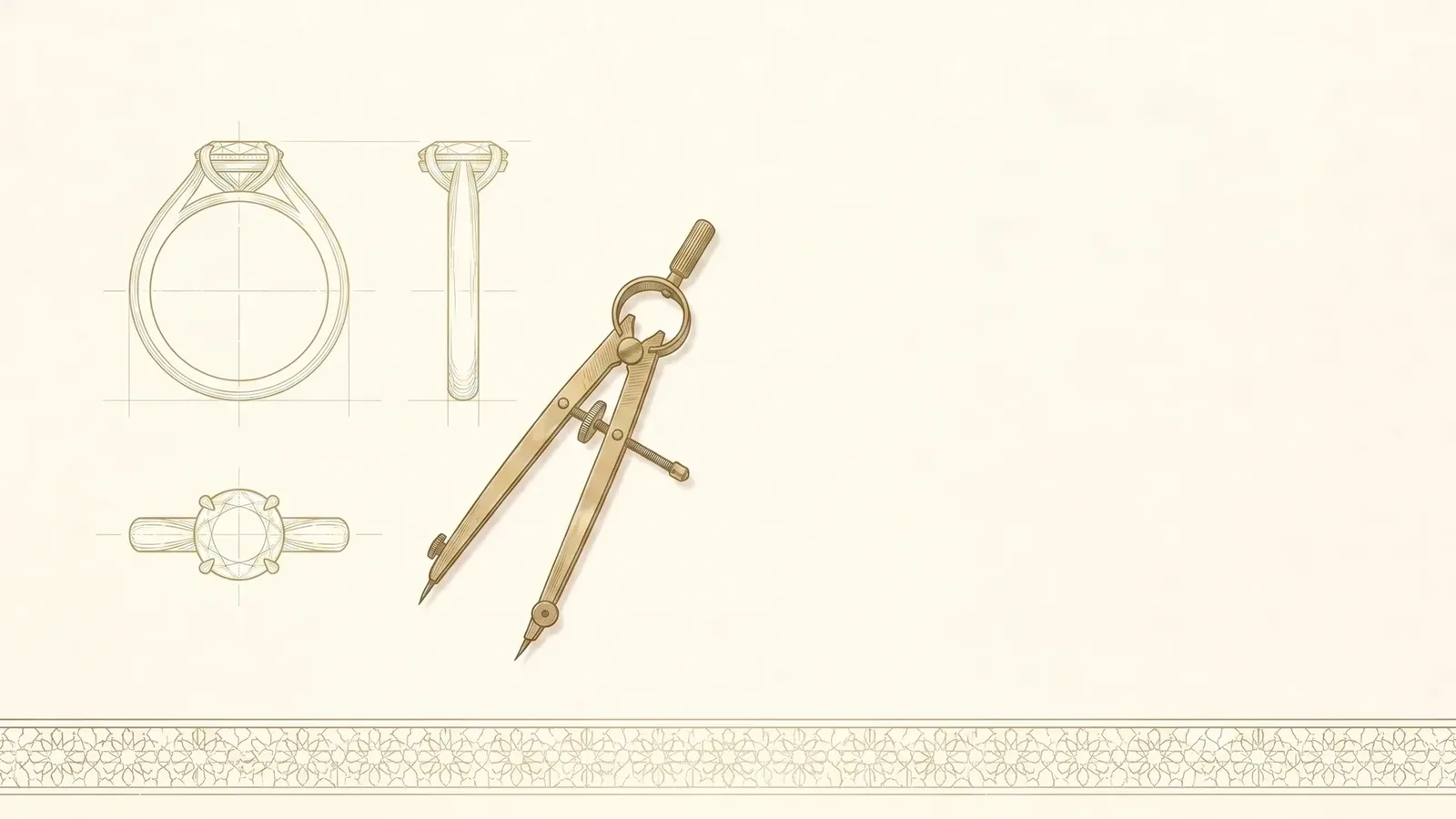
Sketches, or an early drawing showing proportion and structure rather than a finished render, sit in this same middle ground. Enough detail for two people to discuss and agree a direction, not so much that the finished ring holds no surprise at all when it finally arrives.
The route almost nobody mentions
There is one more option, and it removes nearly every risk covered above whilst still giving you the moment in full. Propose with something else entirely: a placeholder, a piece already in the family, or nothing at all, said outright and meant sincerely. Design the actual ring together afterwards.
The size stops being a guess, because you can simply ask her once the moment has happened. The taste stops being a bet, because she is in the room, choosing alongside you rather than having a choice made on her behalf. Nothing about the proposal itself is diminished by this, because the moment and the object were never required to be the same thing. A yes does not need a finished ring attached to it to count.
This deserves to be treated as a complete, deliberate choice rather than a fallback for people who ran out of time or nerve. It solves the size problem and the taste problem at once, and it turns the design of the ring into something you do together, unhurried, once the answer is already known. If this is the route you are drawn to, the conversation that follows is exactly the one a bespoke commission is built to have: starting from what she actually wants, with both of you in the room.
Deciding what you are actually protecting
None of this settles the question for you, and it isn’t meant to. Some people would feel that something real had gone missing without a fully private, fully self-directed surprise, and that preference deserves no apology. Others would feel excluded by exactly that, and would rather have chosen a stone together on an ordinary afternoon than be handed a finished object they had no say in.
The useful question is not “together, or a surprise” at all. It is which specific part you are trying to protect: the not-knowing, the design, or both. Once you can name that, the rest of this decision tends to answer itself.