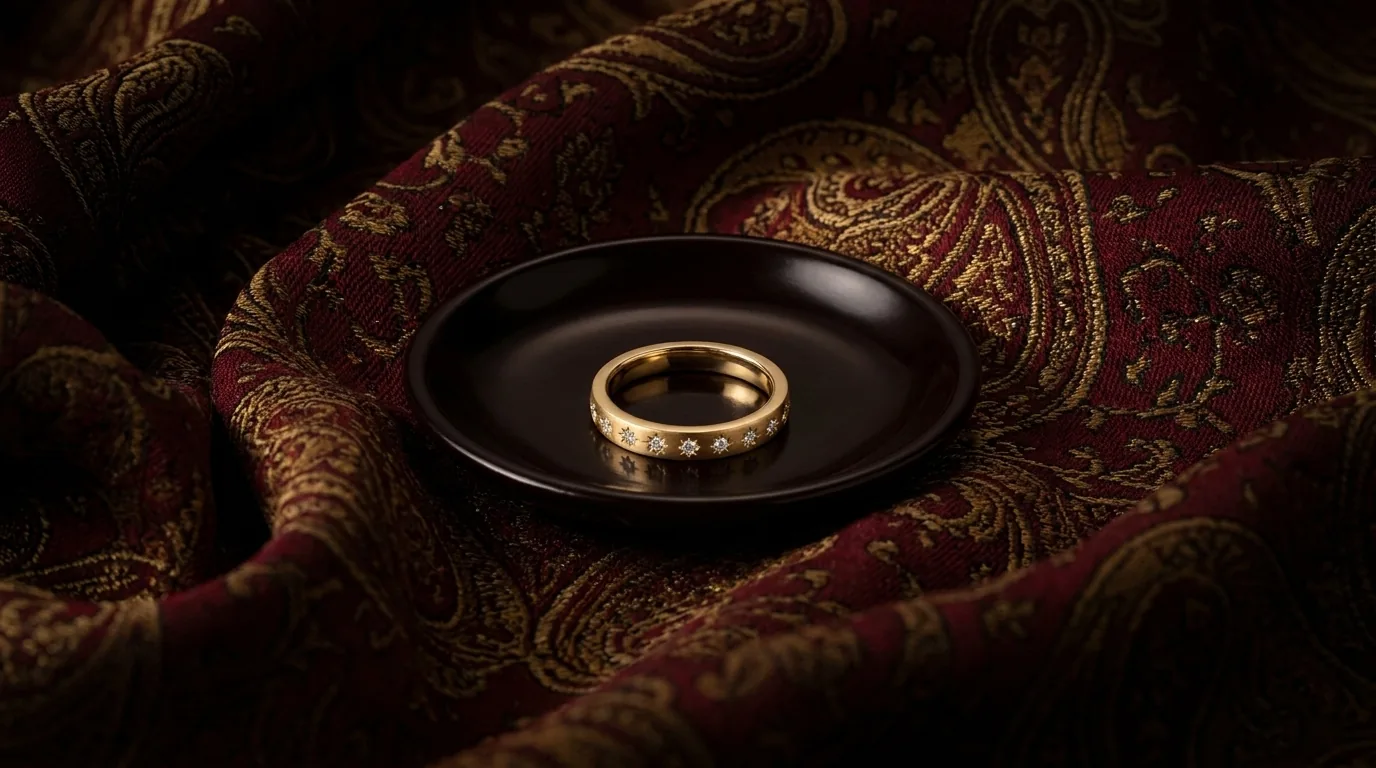
Most jewellers use the word personalised to mean a date engraved inside the band, a birthstone in the shoulder, or a choice of metal colour. Those are pleasant touches and they are not what the word should mean.
Personalisation is when every design decision, from the silhouette of the setting to the orientation of the stone to the profile of the band, was made in response to something specific about the people it is for. The distinction is not pedantry. It is the difference between choosing from options that already existed and creating something that did not exist before.
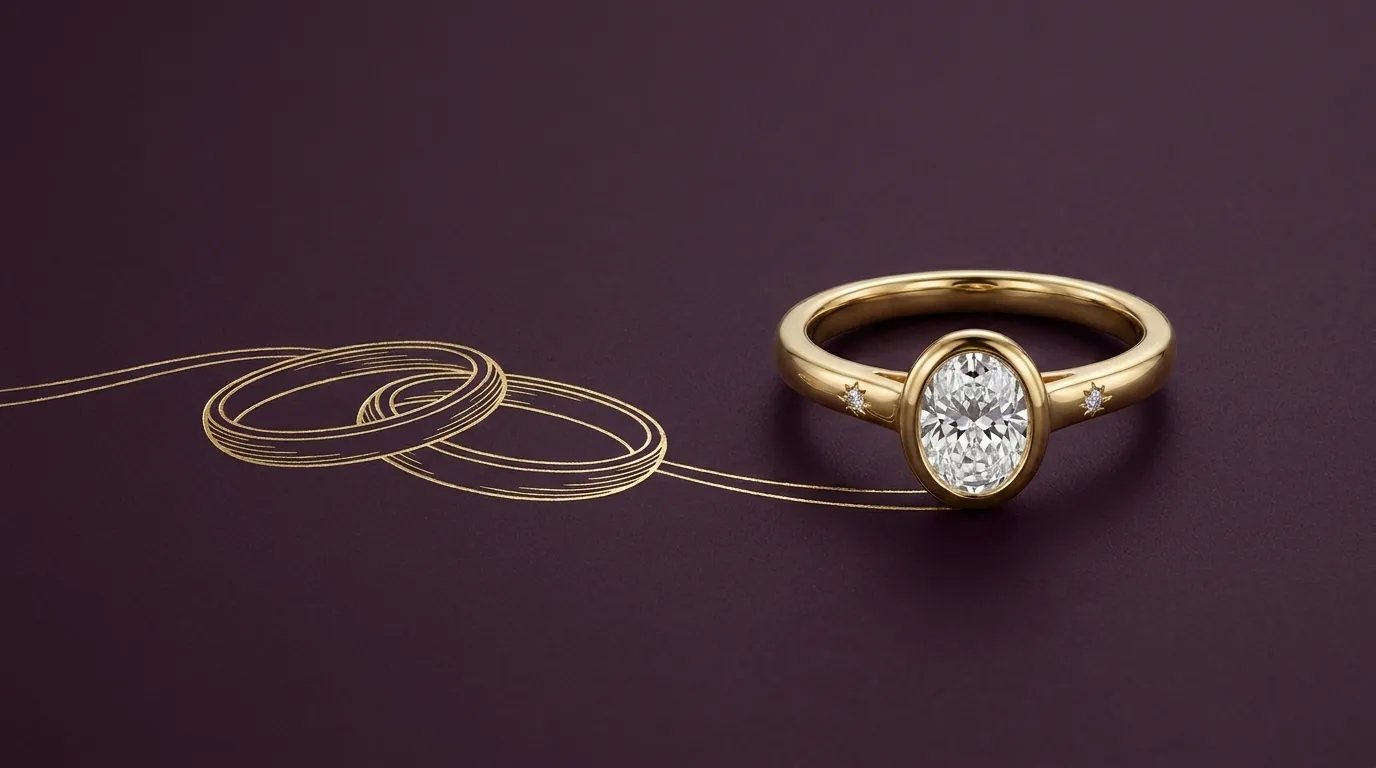
Consider two rings with almost identical specifications: a round diamond chosen because round is popular, and an oval set across the finger because its horizontal orientation stands for a journey made across continents. On paper they are similar. They are not the same object.

The shift that made this normal
The old model was straightforward. Choose a diamond, choose a setting, choose a metal. The ring was beautiful and interchangeable, and any couple could have worn it.
What changed is that people started arriving with mood boards, family stories, photographs from places that mattered, and questions with nothing to do with carat weight. They want to know how a ring can carry where they met, what they believe, or the culture they came from. That is not shopping for jewellery, it is commissioning meaning, and it needs a different process.
Social media has driven it in a way that looks contradictory and is not. After seeing several thousand near-identical rings, the thing that stops the scroll is the unfamiliar one.
A design problem needs a vocabulary
Treating a commission as a design problem is only useful if there is a language to solve it in. Otherwise personalisation collapses back into picking from a menu, just a longer menu.
Persian art and architecture provide one of the richest such vocabularies in existence, and it is specific enough to be genuinely useful rather than decorative. Geometric systems that stand for infinity. Arched forms built around the idea of passage from one state into another. Layered garden plans with a mathematics underneath them. Calligraphic line that holds precision and movement at the same time.
Drawn on as a language rather than as ornament, it does real work. A couple who value growth and structure might find their ring in the tiered geometry of a garden plan translated into the architecture of a gallery. A couple whose story involves crossing between cultures might recognise themselves in the pointed arch of an iwan, the monumental portal that exists to mark passage from one world into another.
Orientation: the most underrated decision
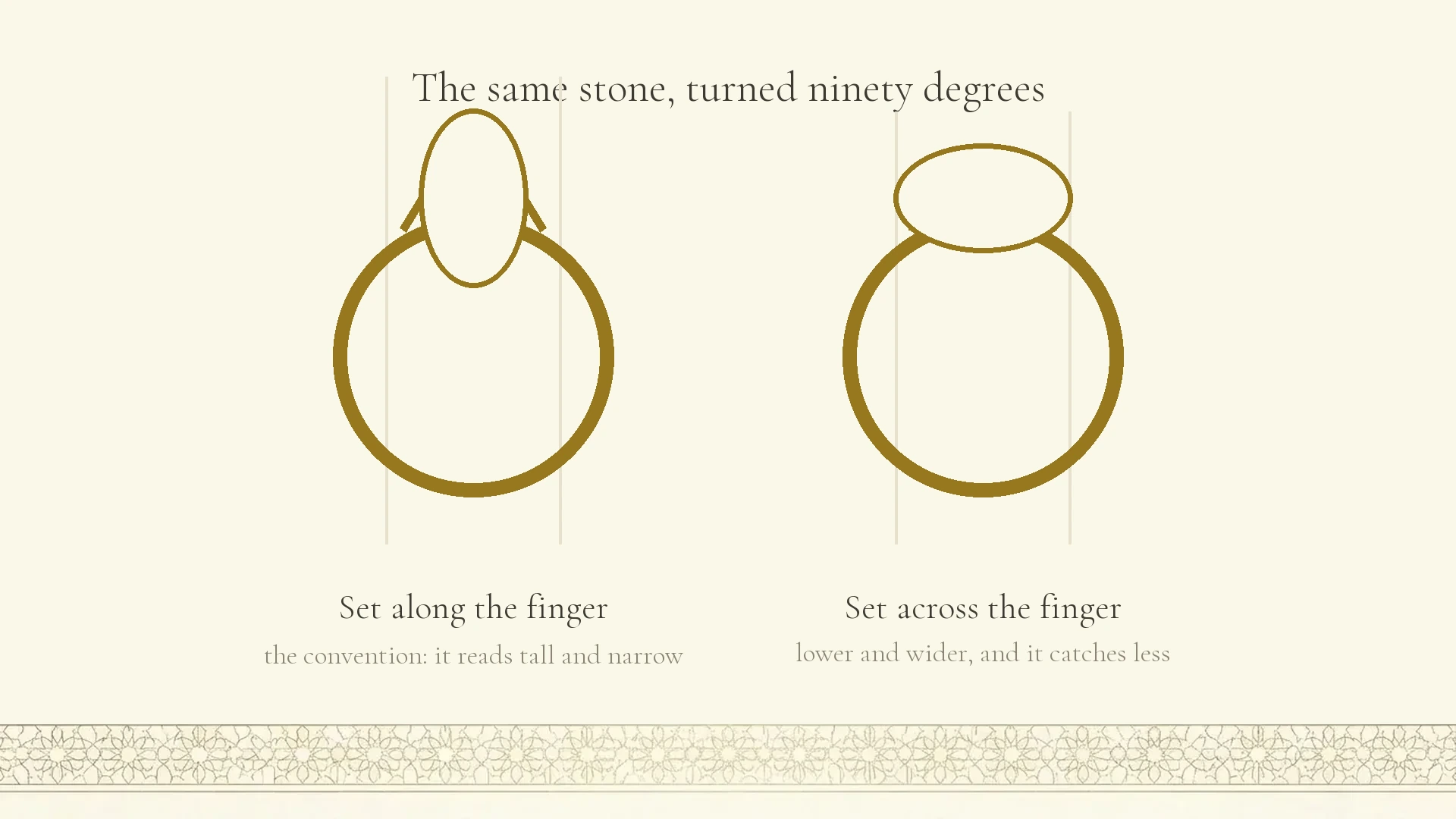
The convention sets an elongated stone, an oval or a marquise, vertically along the finger. It is elegant and it is what nearly everyone does.
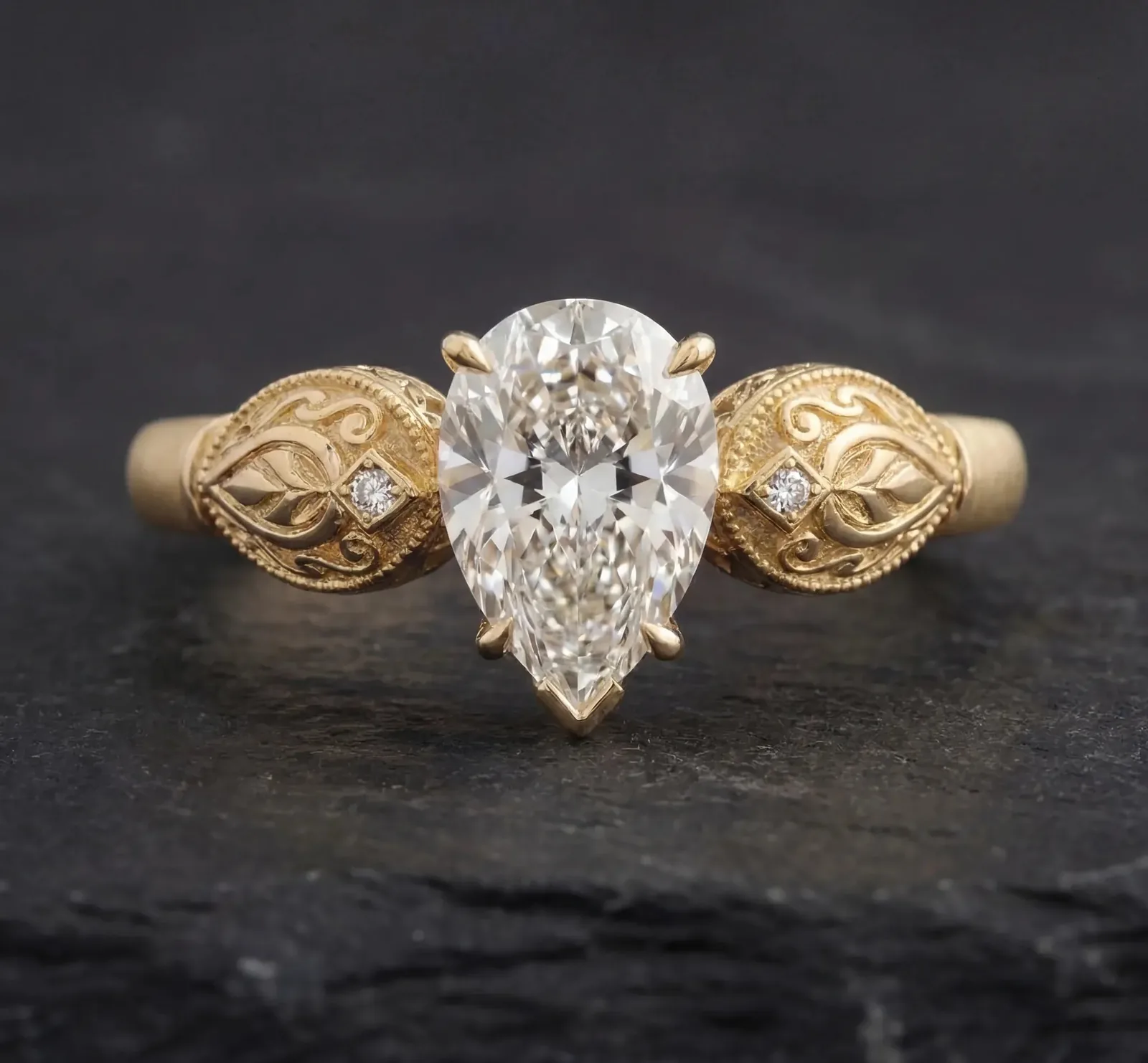
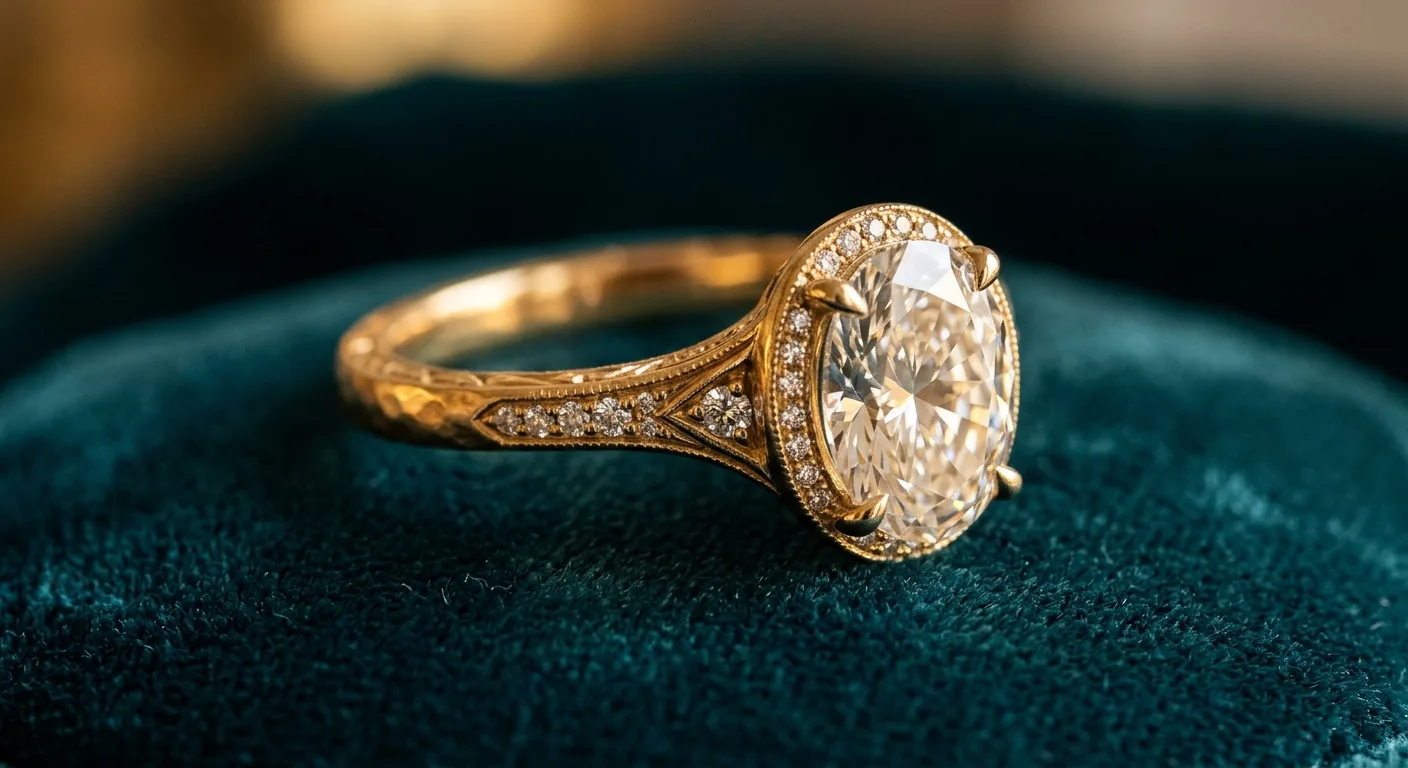
Rotating the same stone ninety degrees, so it sits across the finger rather than along it, changes the character of the whole ring. The profile becomes wider and lower, the eye is drawn horizontally, and the piece reads as a landscape rather than a portrait. It is a different object made from identical parts.
There is a practical argument too. A lower profile catches less on clothing and furniture, which matters more than people expect on a ring meant to be worn every day.
And there is an argument from the tradition. Horizontal emphasis runs right through Persian architecture and textile design: the long low profiles of caravanserais, the sweeping bands of tilework that carry a wall. Setting a stone across the finger draws on the same instinct. The ring sits differently on the hand.
Colour, and what stones have meant
If the setting is the structure of the story, the stones are its palette, and nothing personalises a ring faster than stepping away from the all-diamond default.
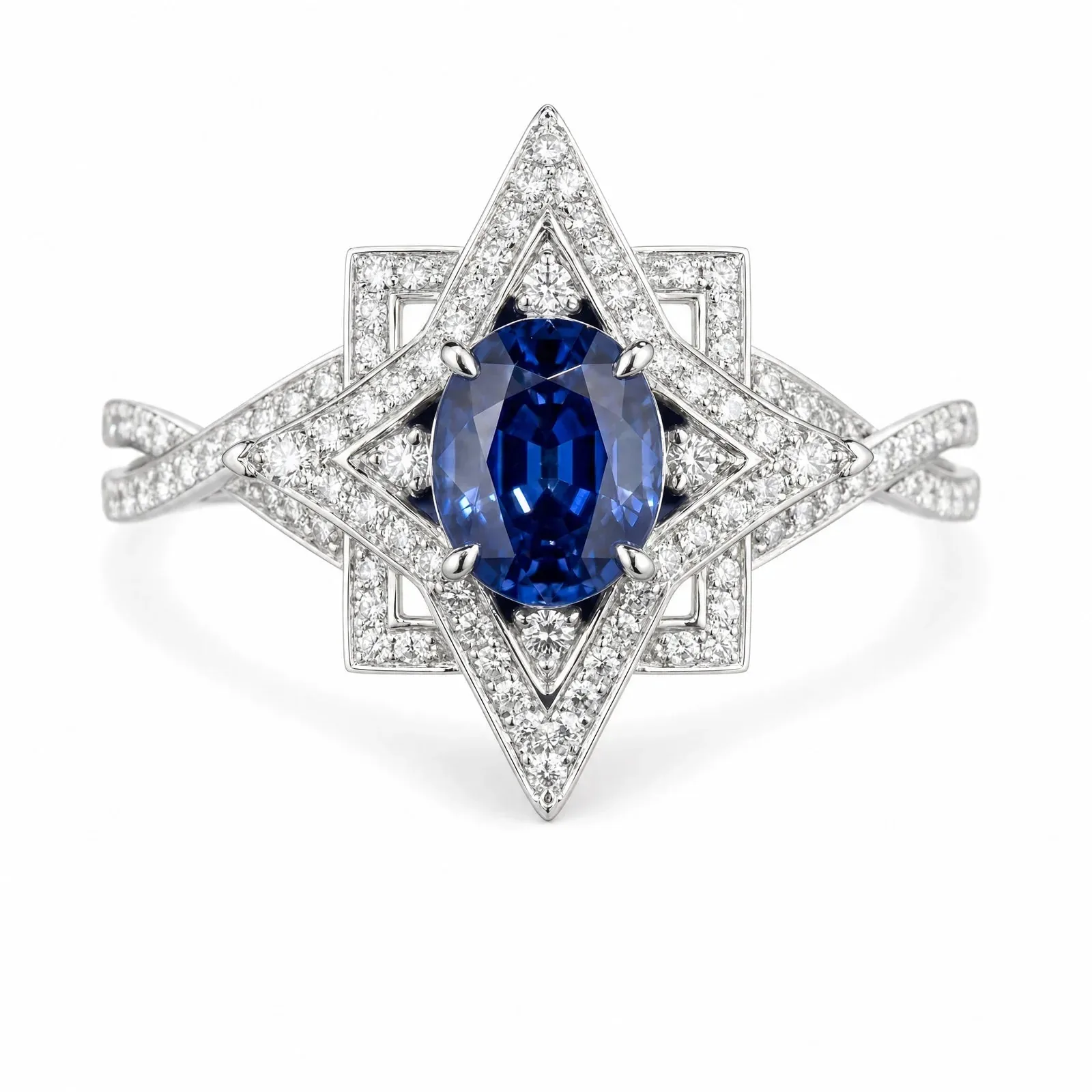
In Persian tradition, gemstones have carried symbolic weight for millennia. The ruby, yaqut, stands for courage and the fire of commitment: set in yellow gold it has a warmth on the hand that reads as alive rather than decorative. Blue sapphire is associated with wisdom, truth and the vastness of the sky, and the range of sapphire colour, from deep royal blue through padparadscha pink to golden yellow, means the stone itself can be tuned rather than merely chosen. Emerald connects to the garden and to the idea of paradise, which is a Persian word before it is an English one.
None of that should dictate a choice. It is a layer of meaning worth knowing about before deciding, because a stone chosen for what it represents in a tradition three thousand years old carries a weight that the colour alone does not.
Yellow gold is a decision, not a default
Metal is usually treated as an afterthought. It should not be. It is the ground everything else performs against.
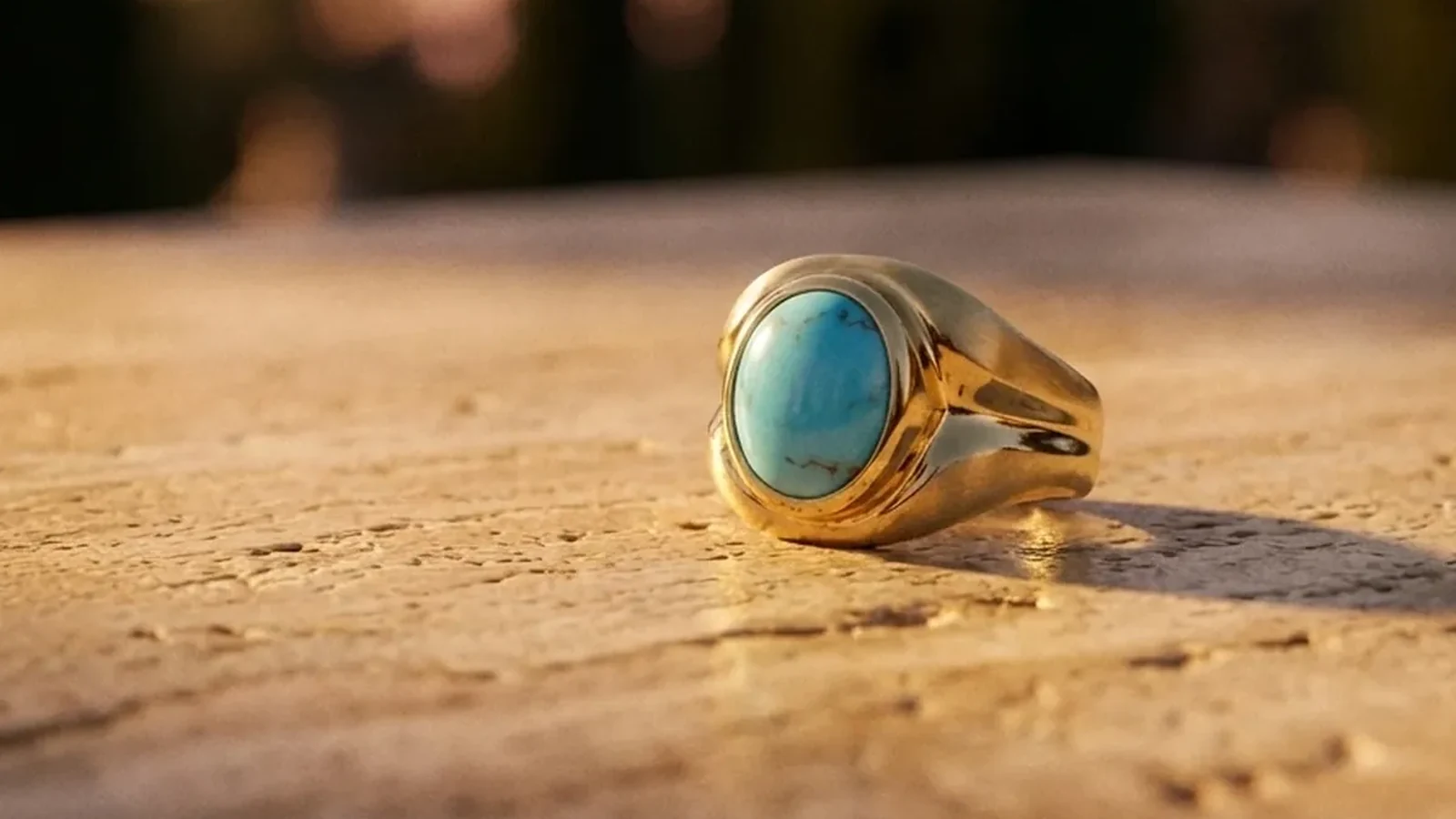
Yellow gold has come back strongly in the UK, and for a Persian design vocabulary it is the native material: the metal of crowns, of fire temples, of illuminated manuscript. It is warm where white metals are cool, it flatters a wider range of skin tones than is generally assumed, and it amplifies coloured stones in a way platinum and white gold cannot.
Choosing it is itself an act of personalisation. It steps outside the white-metal consensus that has held British engagement rings for two decades, and it says something about preferring warmth to neutrality.
Most work here is in 18ct yellow gold, which balances colour, durability and gold content better than the alternatives. Platinum and 9ct are both used where a design or a budget calls for them.
When the band carries the story
In conventional design the band is functional: it holds the ring on and supports the setting. It can do considerably more than that.
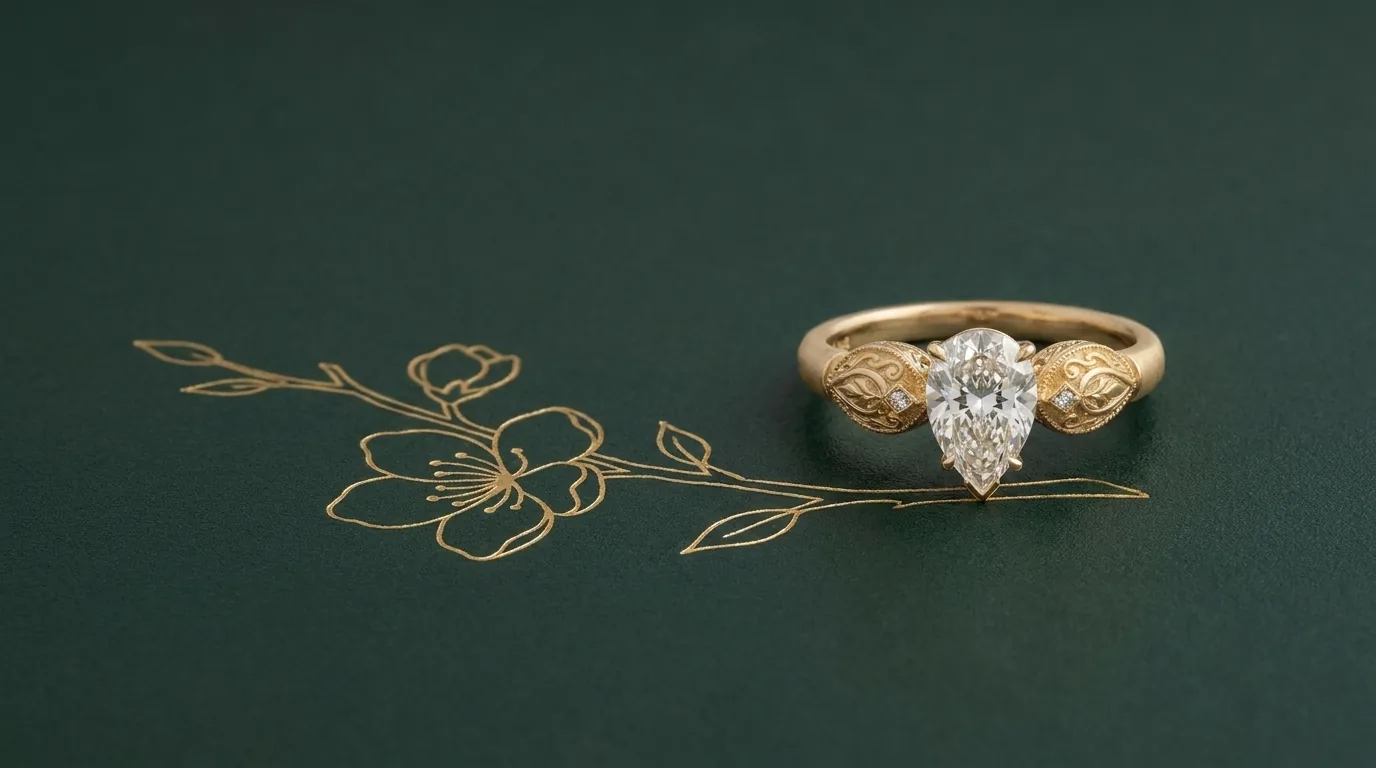
A sculptural setting treats the whole ring as one form rather than a stone perched on a hoop. The band can taper, twist, branch or fold. It can carry geometry drawn from tilework, or smooth curves drawn from something growing. The gallery, the space under the stone that only shows in profile, is the natural home for detail that only the wearer ever really sees.
A knife-edge profile echoes a pointed arch. A split shank recalls the branching water channels of a garden. Each is a legitimate answer to a different brief, and which one is right depends entirely on whose ring it is.
This is where personalisation is hardest to imitate. Any jeweller can source a coloured stone. Any workshop can cast a yellow gold setting. A band whose form was drawn for one specific brief, in a vocabulary most of the trade has never used, belongs to nobody else.
How the commission actually runs
It starts with a conversation, in person, by video or by email. The useful subjects are the relationship, the aesthetic instincts, any cultural reference that matters, and the practical constraints including budget.
Design concepts follow, as drawings and then as renders of a 3D model detailed enough to judge proportion from every angle before anything is committed to metal. That stage is iterative by design, and the honest feedback is what makes it work.
Stone selection sits alongside it. For a coloured stone, several options are worth comparing for colour and character, because two sapphires of the same grade can look nothing alike. For a diamond, certification matters and so does an assessment of how the stone actually performs, since a certificate does not tell you how it will look on a hand.
Then the making. The full timings are published here, derived from one source rather than estimated per enquiry, so the figure you are given is the figure on the site. Solid pieces are hallmarked at a UK assay office where the Hallmarking Act 1973 requires it, before dispatch.
A personalised ring is not the fastest route to being engaged. It is the one where the object at the end could not have belonged to anyone else.