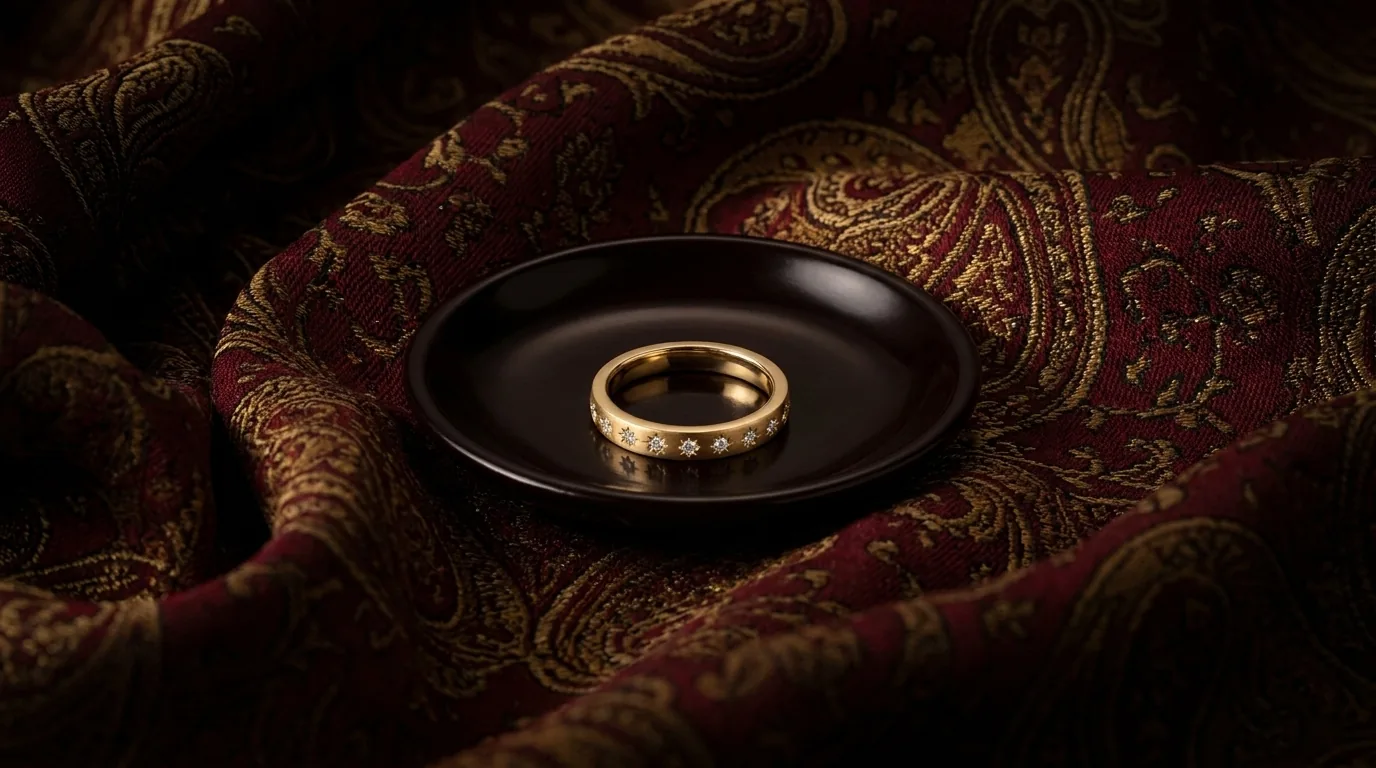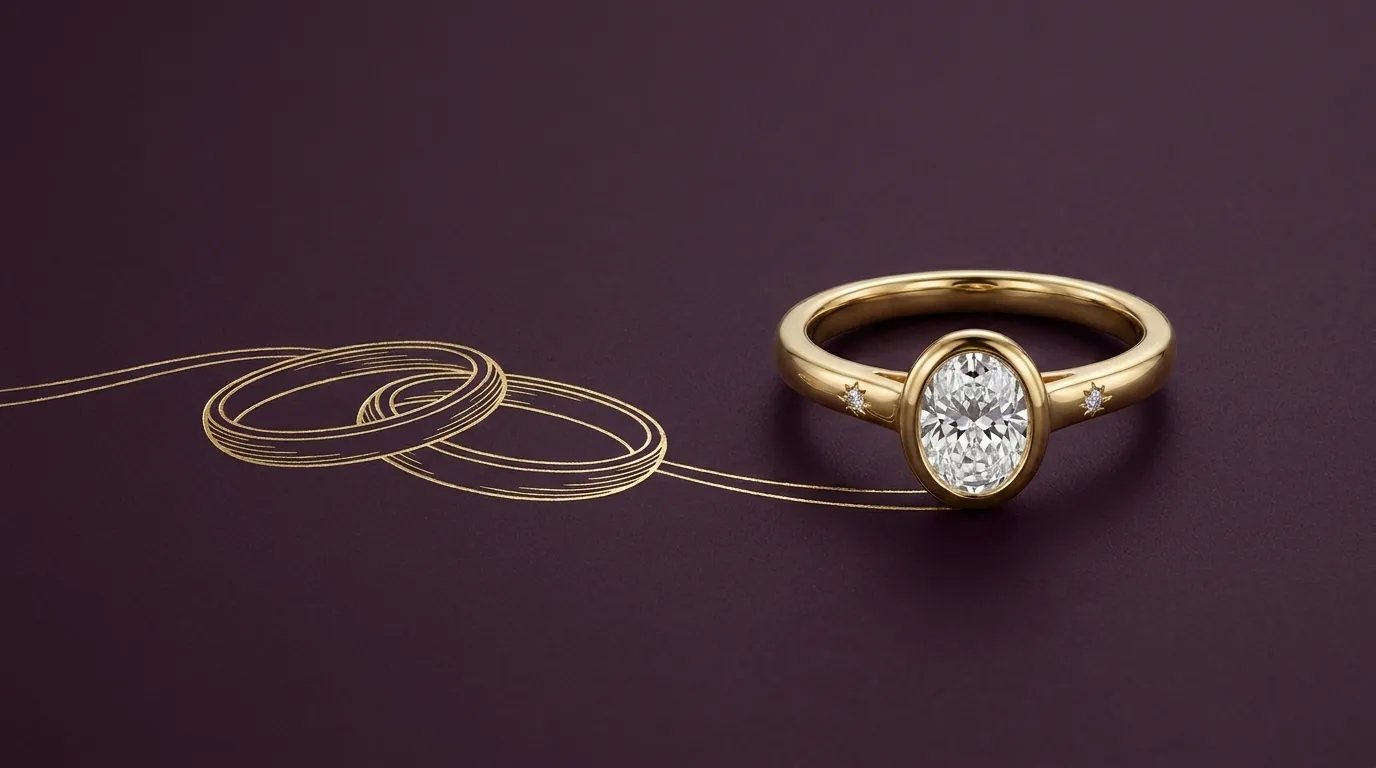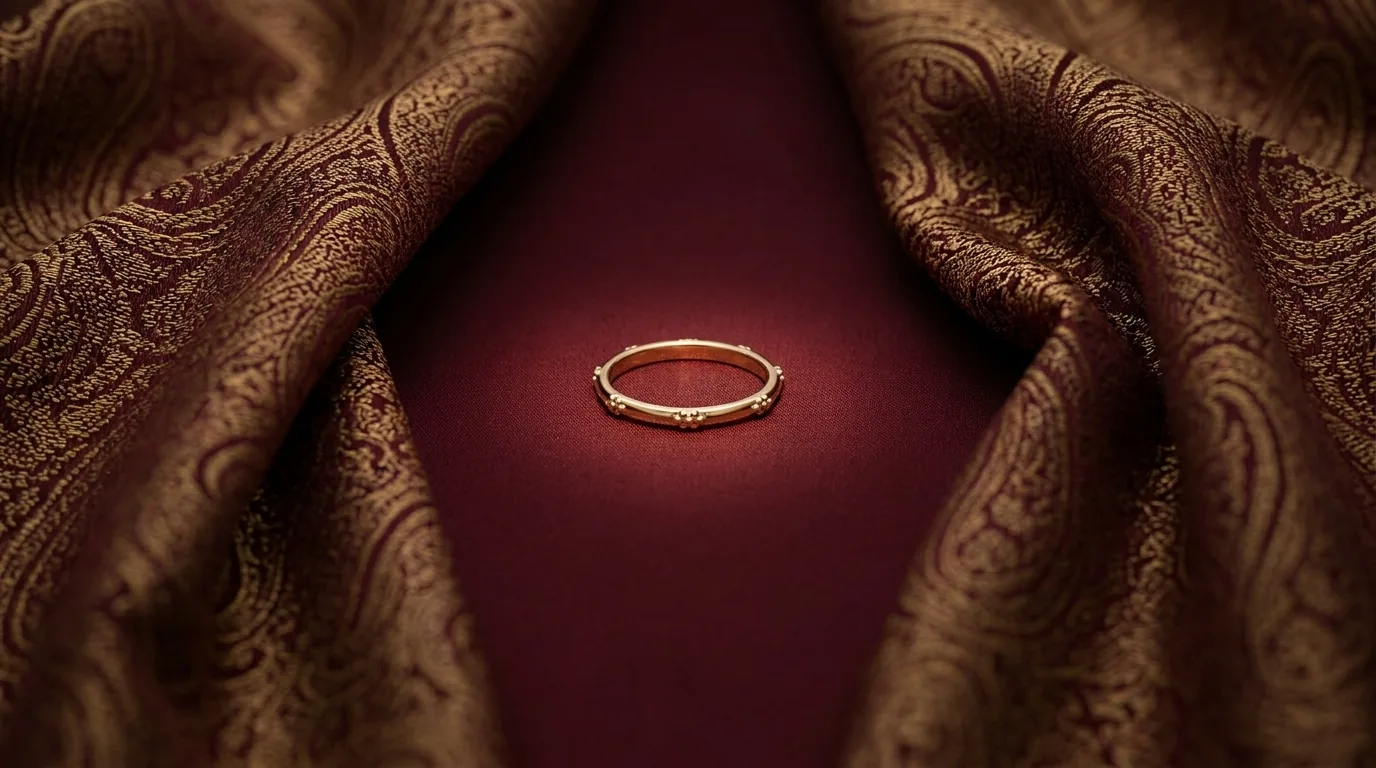
The single-chain-and-studs minimalism that ran through the last several years is giving way to something richer. Layered gold is genuinely back, and unlike most trends this one has a reason to last: a stack is personal in a way a single piece cannot be.
Two people can own exactly the same three pieces and wear them to entirely different effect. A wedding band next to an inherited ring next to a plain band bought to mark something private is a combination no stylist could reproduce, because the reason it exists is not aesthetic.

Where the idea actually comes from
It is worth saying plainly that this is not a new invention, and in Persian culture it was never a trend at all.
In Iran, gold has long been a form of personal wealth as much as decoration. A bride traditionally receives gold from both families. Pieces are added over years to mark births, anniversaries and milestones, and the collection is worn together rather than one item at a time. Walk into a family celebration in Tehran or Isfahan and you will see wrists stacked with bangles, several chains at different weights, and rings on more than one finger, each carrying its own occasion.
The aesthetic is warm, rich and unapologetically layered. Gold on gold on gold. What is currently being written up as a 2026 direction is, in that context, ordinary.
That instinct is the reason several pieces here are drawn as slim bands and repeating forms rather than as single statements: they are designed on the assumption that they will be worn with something else.
Layering necklaces
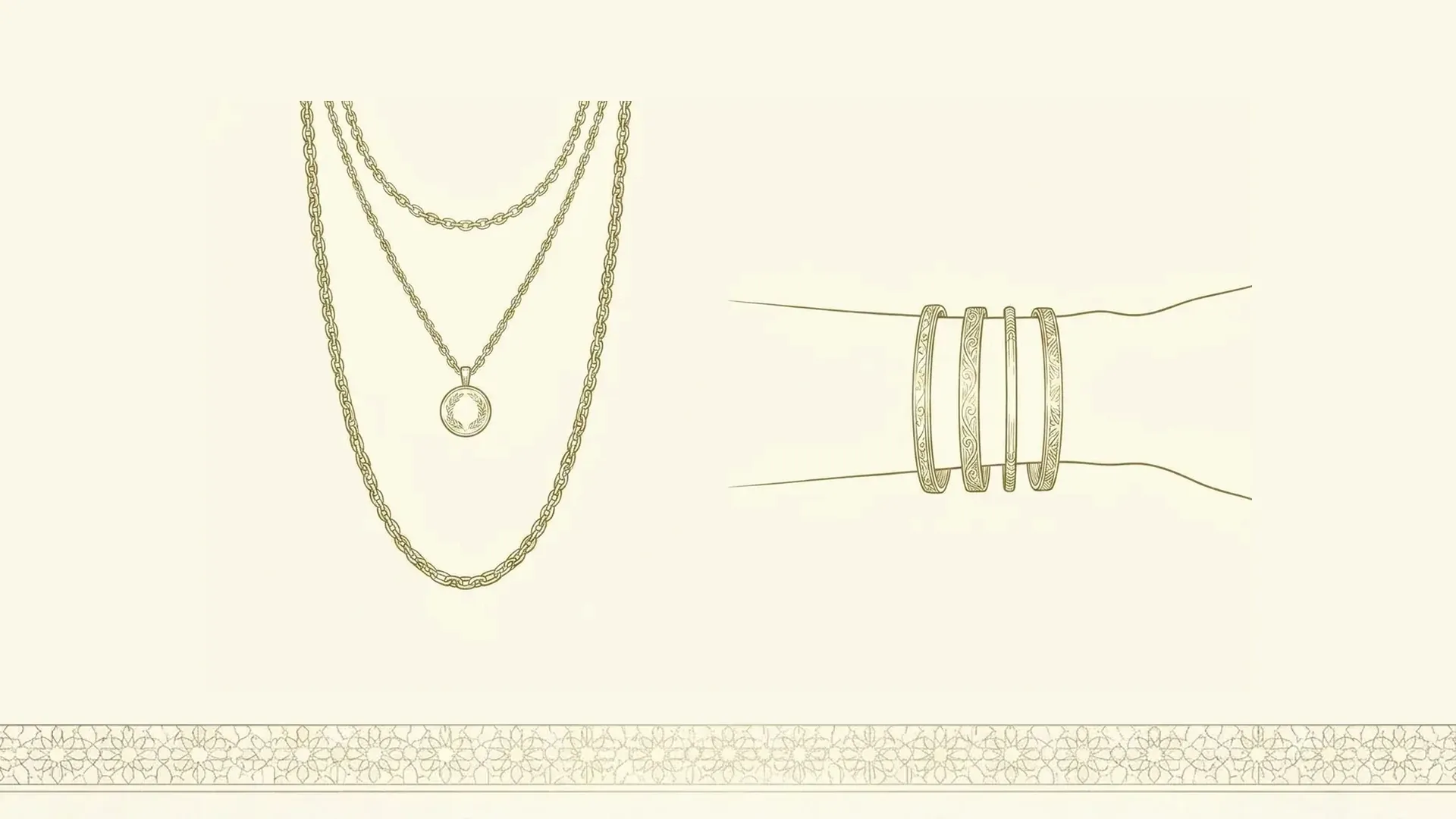
Separate the lengths. This is the rule that matters most. Each chain needs to sit at a clearly different length, or the pieces compete for the same few centimetres and none of them reads. A workable three-layer stack might be a 14-inch choker, an 18-inch pendant and a 22 to 24-inch chain. The gaps are doing as much work as the pieces.
Vary weight and texture. Three near-identical chains look like an accident. Three different ones look like a decision. Put a fine cable chain with a heavier curb link and a pendant on something in between. Mix polished against brushed or engraved surfaces. The contrast is the entire point.
Give it one anchor. Every stack that works has a centre: a pendant, a medallion, a piece with real form to it. The other layers frame it. Treat it as a composition rather than a collection, and the question of what to add next answers itself.
Stay in one metal, or break that deliberately. All 18ct yellow gold gives warmth and unity and is the easiest thing to get right. Mixing is perfectly good if it is confident. One rose gold chain among yellow gold reads as intentional. One of everything reads as whatever was to hand.
Stacking the wrist
The wrist is where this feels most natural, and it is the most tactile version of it. The sound bangles make against each other as you move is half the pleasure.
Build outward from the hand. Start with the most fitted piece closest to the wrist bone and let the pieces get bolder as they move up the arm. The graduation is what makes it look composed rather than piled.
Mix rigid with flexible. Solid bangles give structure, chain bracelets give movement. Three bangles and two chains occupy the same space as five bangles with considerably more interest in it.
Work around a watch. If the watch is on the same wrist, keep everything else slim and let the watch be the anchor. One bangle and one chain bracelet beside a gold watch is enough.
Odd numbers sit better. Three, five or seven tend to look more alive than four or six. It is not a law, but even numbers pair off visually and odd ones do not, which is why the eye keeps moving.
Stacking rings
Rings are the most personal of the three, because hands are always visible.
Start from the anchor. For most people that is an engagement ring or a wedding band, and it sets the direction for everything else. A plain solitaire wants slim, textured bands beside it. An architectural piece wants bands with geometry of their own.
Spread across both hands. Nothing requires the whole stack to live on one finger. Three on the left ring finger, one statement ring on the right index and a slim band on the right middle reads as lived-in rather than loaded.
Let each one mean something. The stacks that hold up are the ones where every piece has a reason. That is not sentimentality, it is what stops a stack looking like shopping.
Pieces designed to be worn together
Several pieces here were drawn specifically as stacking bands rather than adapted into the role, which shows in the proportions.
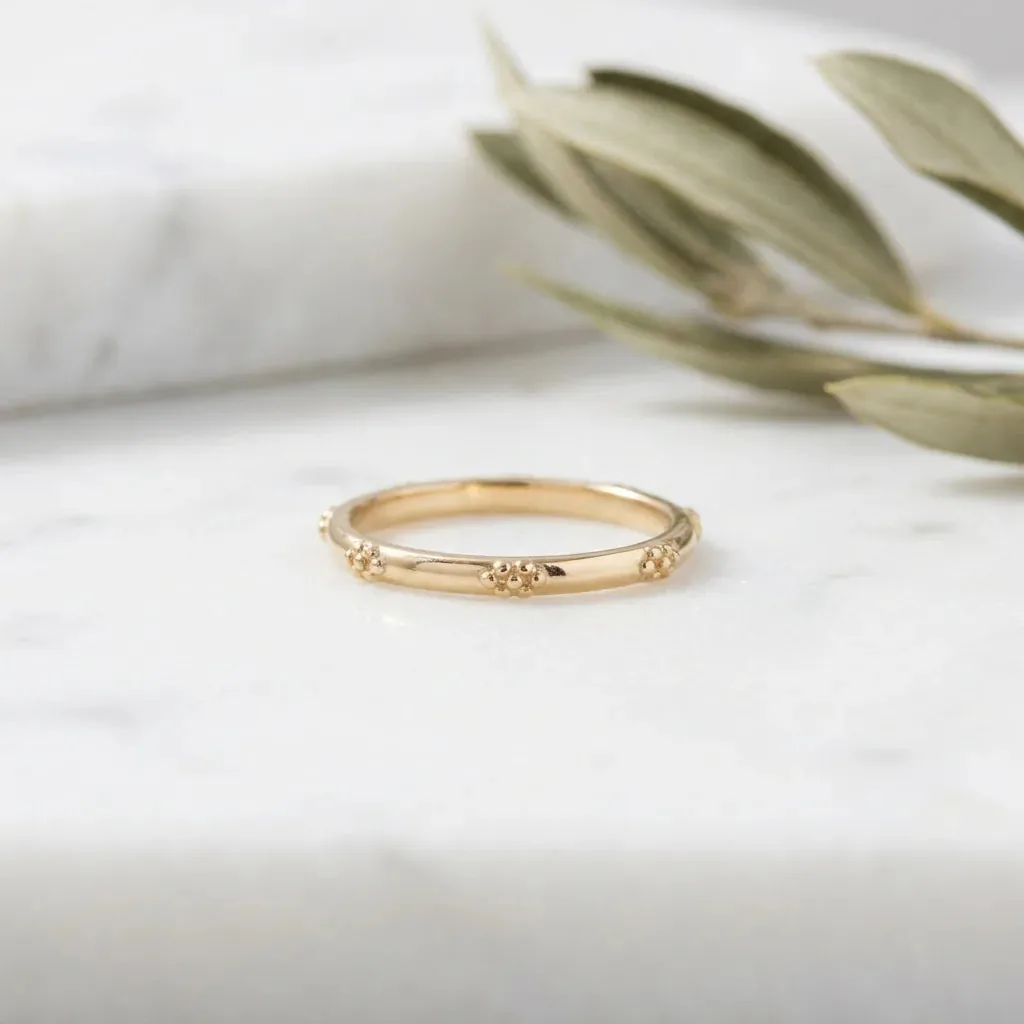
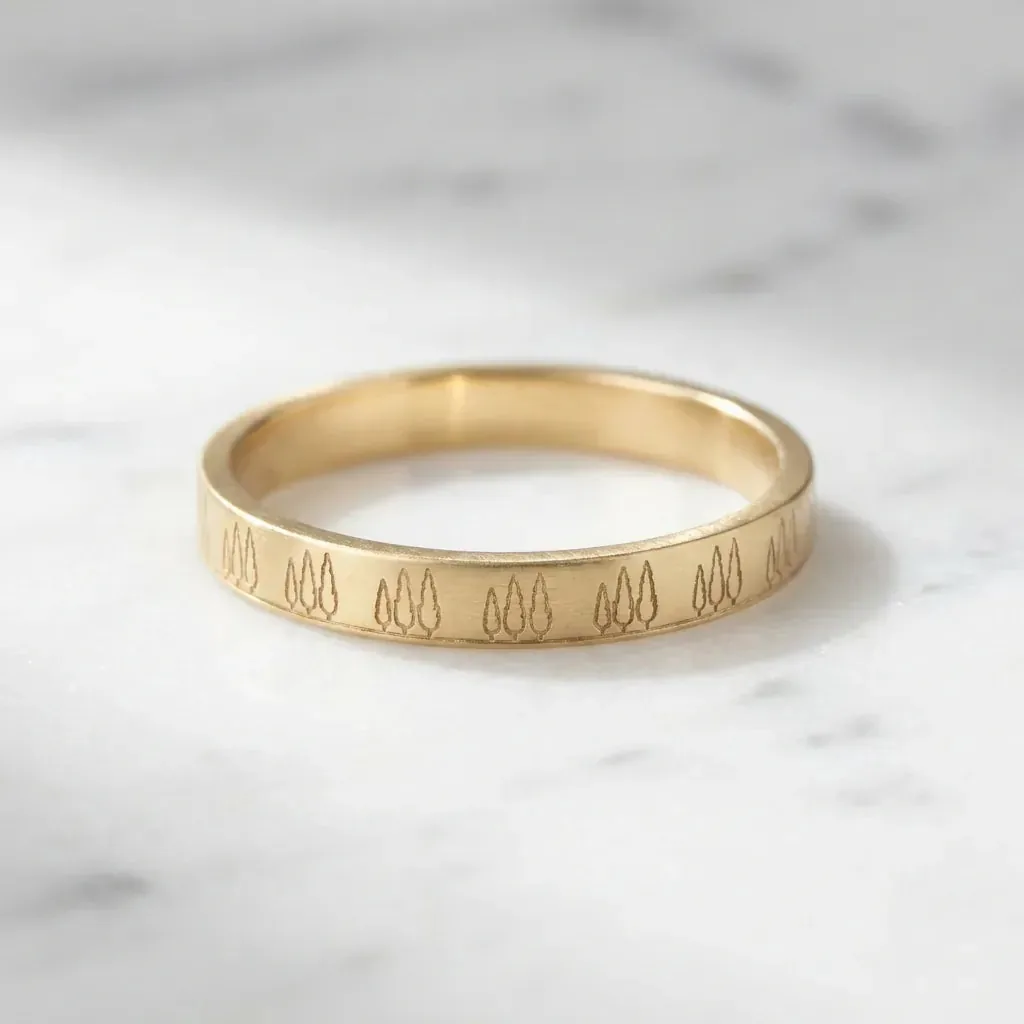
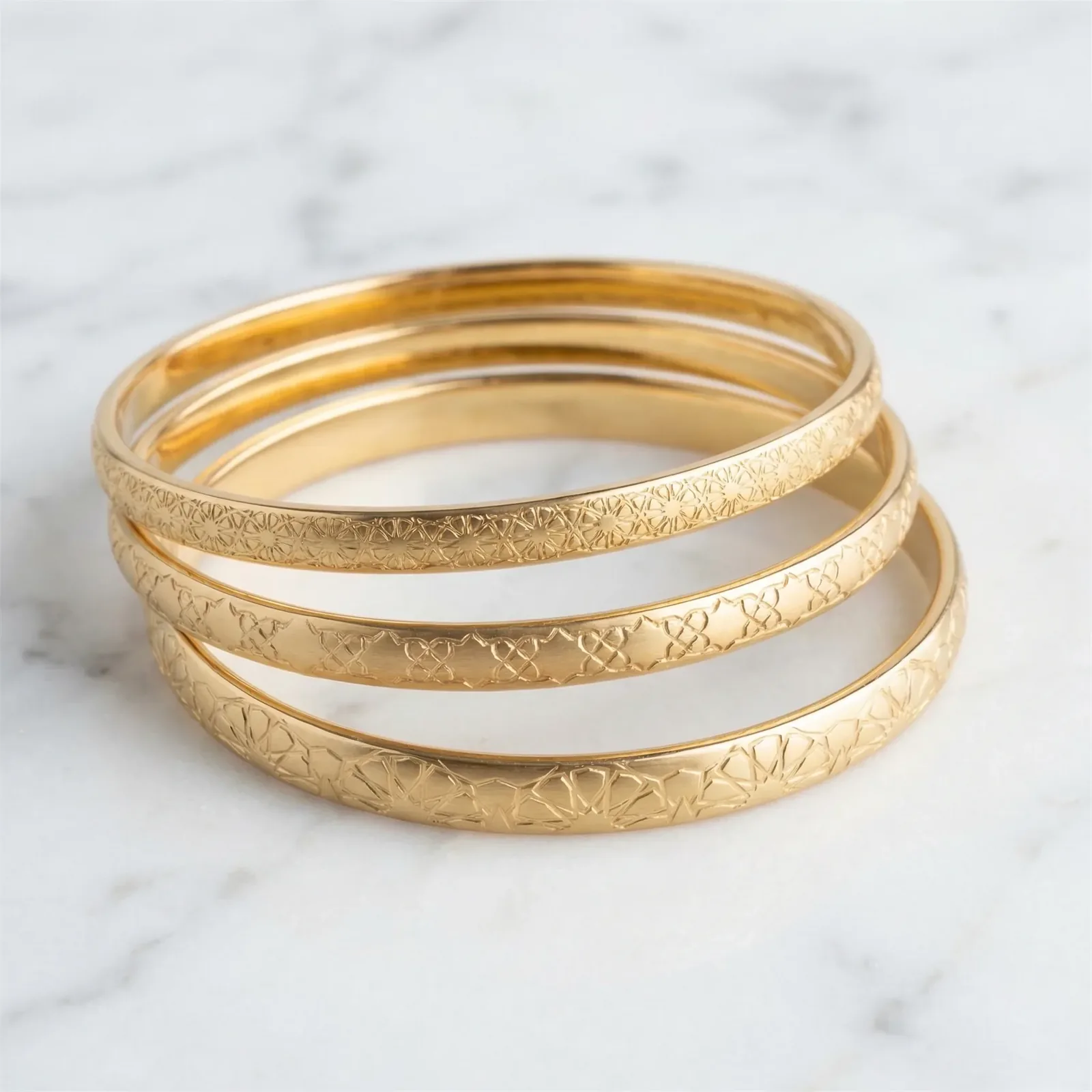
The Golestan Anar Stacking Ring carries the pomegranate, one of the oldest Persian symbols of abundance and the fruit on every Nowruz table. The Sarv Stacking Band is a 2mm band engraved with a repeating cypress, the tree Persian poetry uses for the upright beloved. The Golestan Boteh Band carries the boteh, the teardrop with the curving tip that travelled the Silk Road and became the paisley. The Peyvand Bangle Stack is sold as three slim bangles designed as one set, each engraved with the same girih pattern, so the stack arrives already coherent.
They work together because they were drawn to a shared vocabulary rather than as separate ideas that happen to be the same metal.
Building one from nothing
Start with two. Add one piece to something you already wear every day, then live with the pair for a while before adding a third. You learn more from a fortnight of wearing two things than from an afternoon of trying on ten.
Fewer, better. Three well-made 18ct pieces will beat ten fashion pieces every time, and not subtly. Solid gold has a weight and a depth of colour that plated metal cannot imitate, and the difference is most obvious precisely when pieces sit next to each other.
Treat it as a wardrobe. You do not wear everything you own at once. A three-piece stack for ordinary days, something fuller for evenings, and one strong piece alone when that is the right answer. The versatility is the point of building a collection rather than buying a set.
Let it take years. The stacks worth looking at are not assembled in one afternoon. They accumulate, and each piece arrives attached to something that happened. That is exactly how the tradition this comes from has always worked, and it is a better way to buy jewellery than any styling rule.