
Ask what holds a stone up, and most people mean it as a style question: curled prongs or a smooth rubover collar, a paved band or a flush line of channel-set stones. It is a style question, and jewellers’ websites are full of diagrams answering it. What fewer explain is what each choice actually means once the ring is being worn: what catches on a sleeve, what a clean involves, what a repair looks like a decade in. None of that shows up in a photograph, and it is worth understanding before a stone is chosen, not after.

Four ways of holding a stone
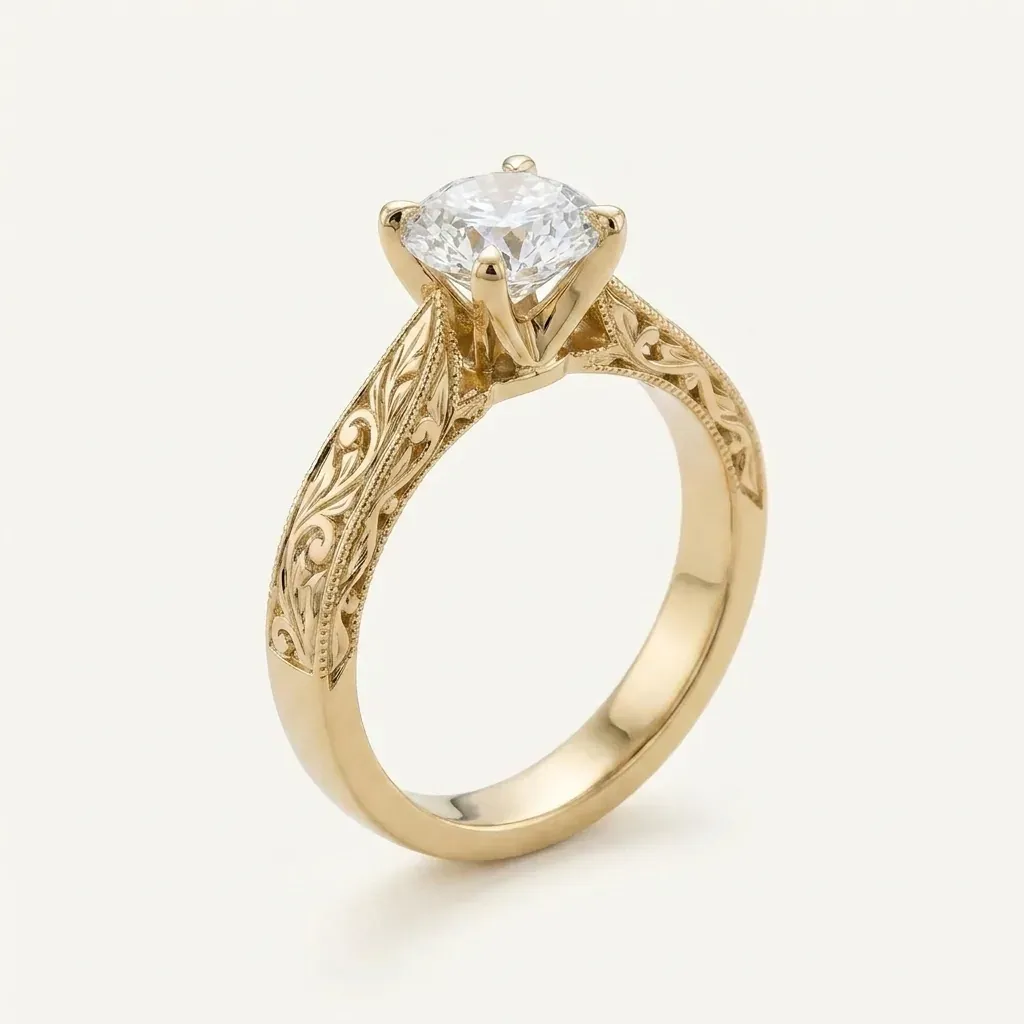
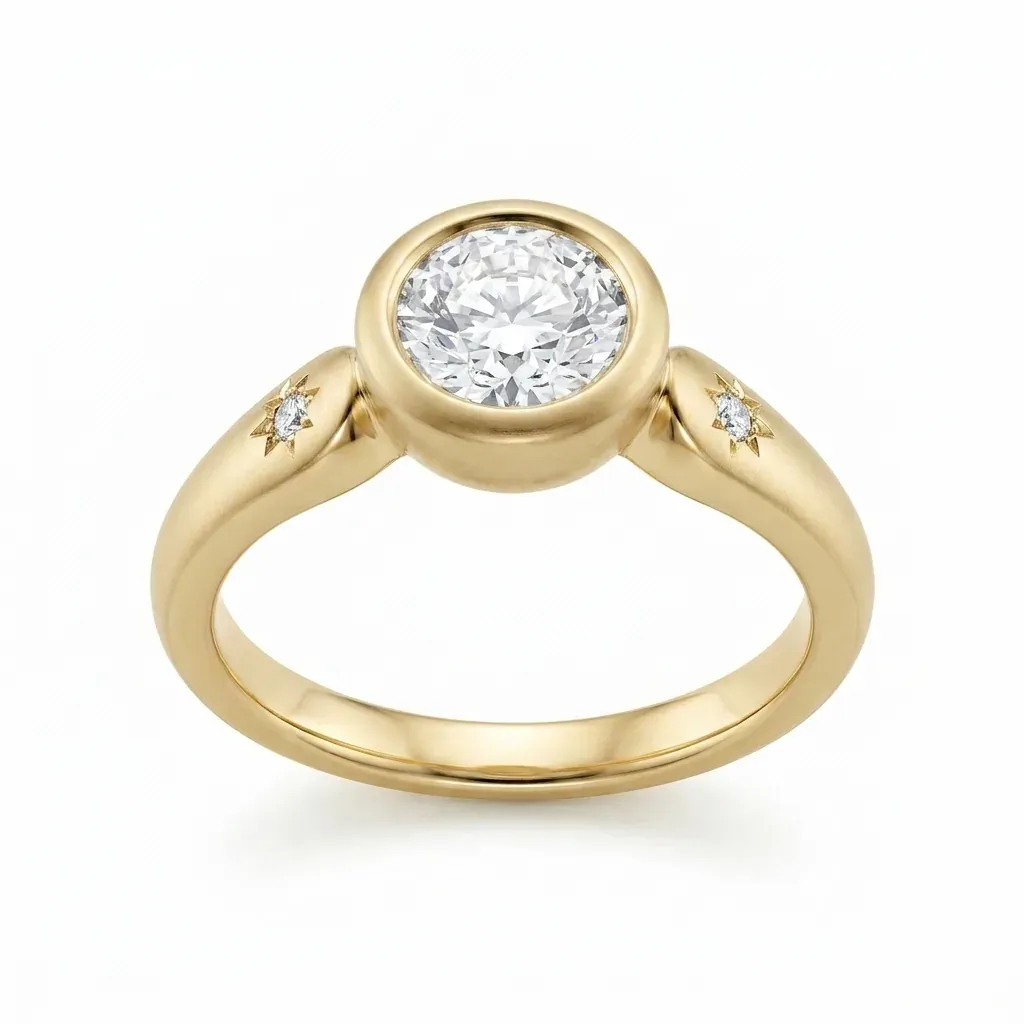
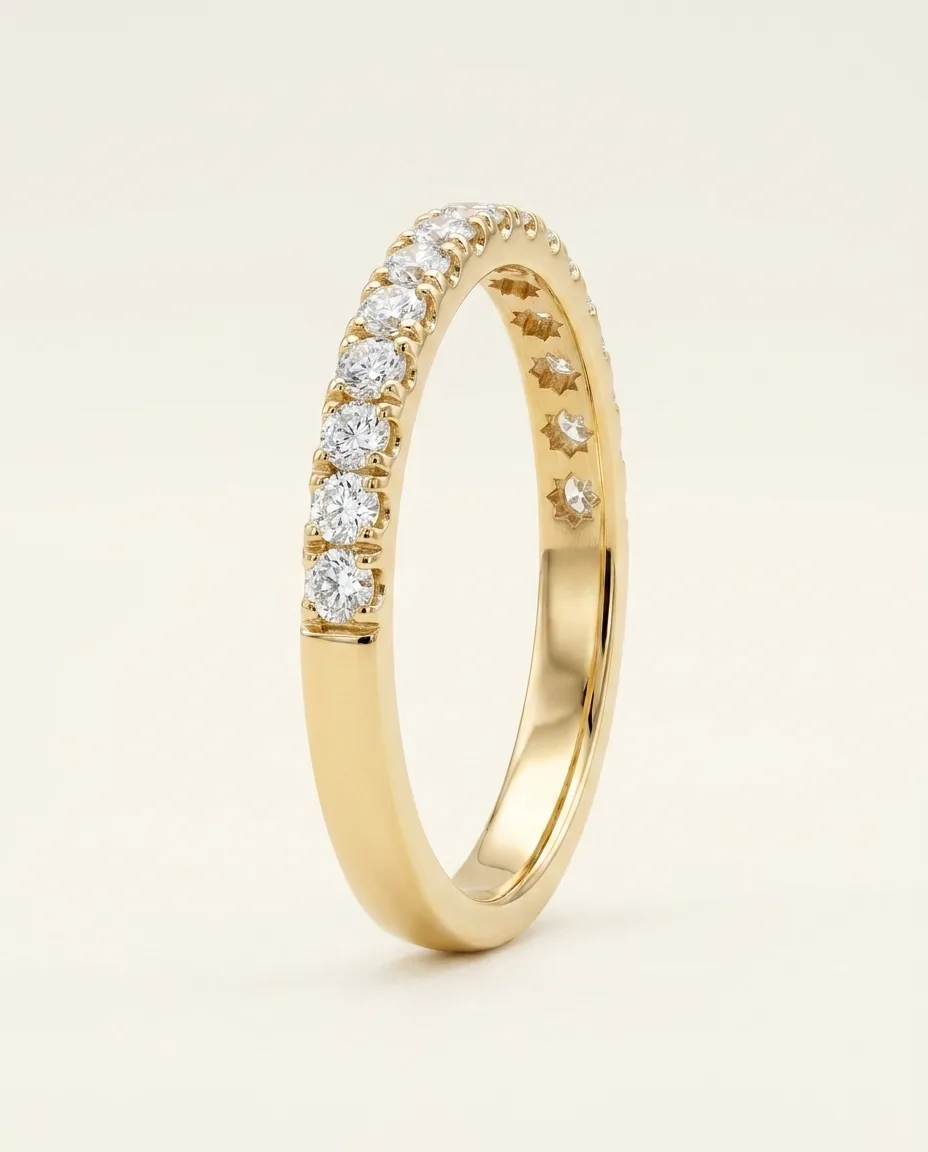
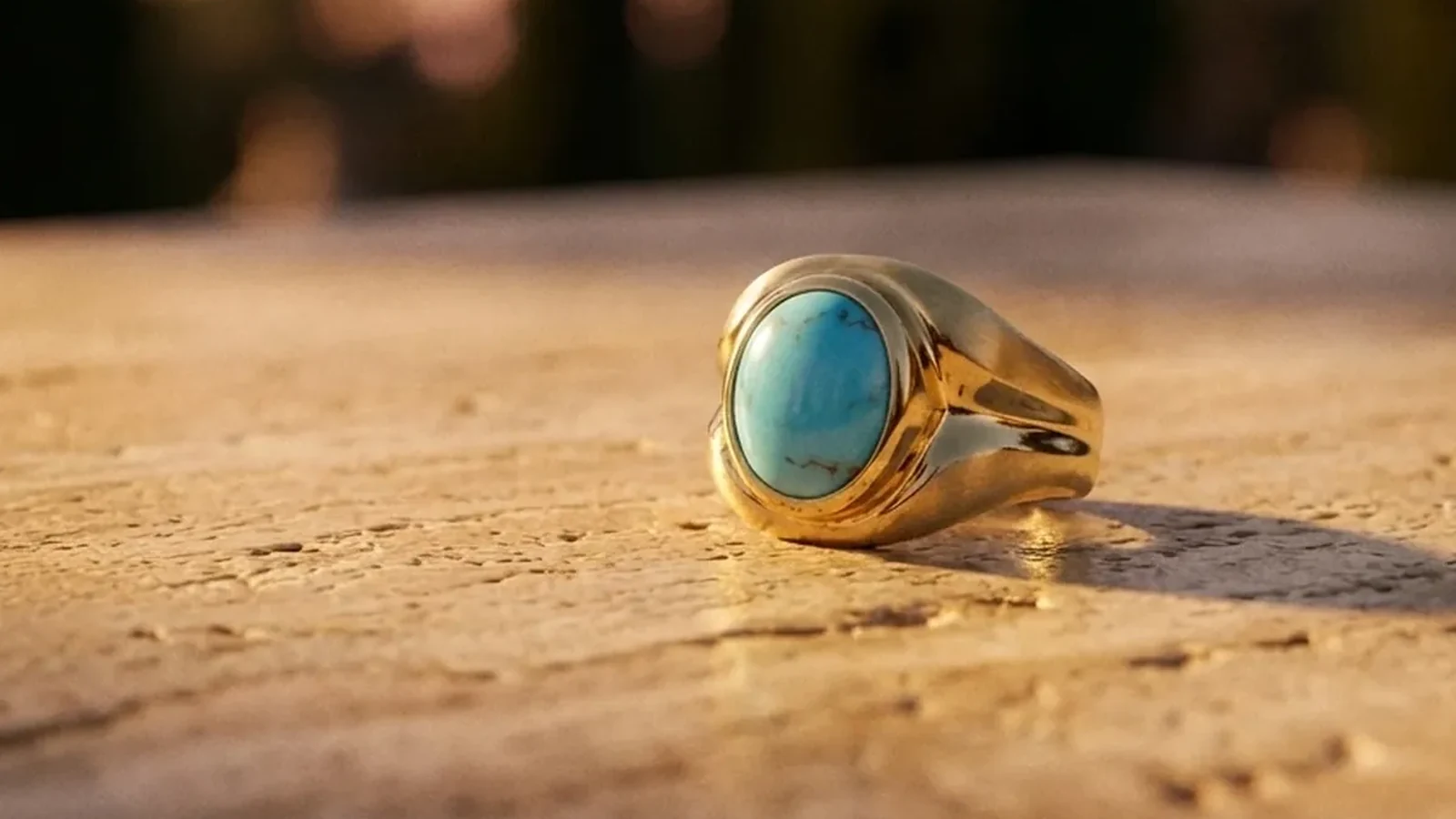
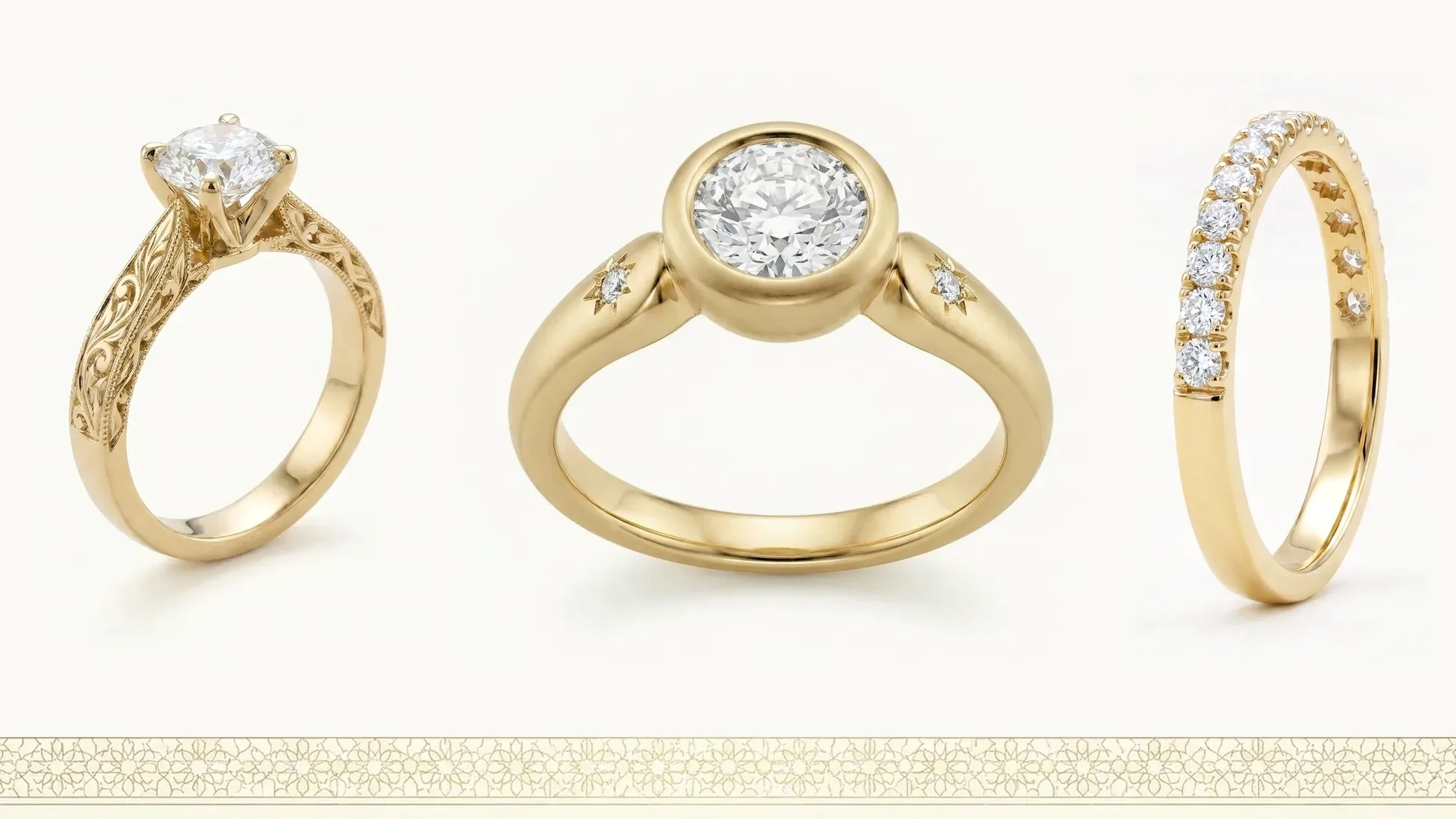
A claw setting holds the stone up on a handful of slender metal fingers, each one curled over the girdle, the stone’s widest point, so the stone sits proud of the band with air and light reaching it from almost every direction. A bezel, known in the trade as a rubover, takes the opposite approach: instead of a few points of contact, a single band of metal runs the whole way round the stone, closing over its edge like a rim rather than gripping it at intervals, which pulls the stone in close to the surface of the ring. Pavé covers a stretch of band in small stones set so tightly together that almost no metal shows between them, each one held in its own miniature seat rather than by anything shared with its neighbours. Channel setting runs a row of stones along a groove cut into the band, gripped at the edges by two walls of metal rather than by individual prongs, so the surface reads as one unbroken line of stone rather than a series of separate settings.
A halo does not hold anything by itself. It is a border of small stones set around a centre stone that is still being gripped, underneath, by one of the four methods above, most often a claw or a bezel. Whatever holds the centre stone is doing the actual work: the halo sits on top of that choice rather than replacing it.
None of the four should be read as more secure than the others. There is no published, trade-recognised scale ranking settings by security, and this piece will not manufacture one where none exists. What can usefully be said is different: how much each design leaves exposed above the band, day to day, once it is actually being worn.
The tolerances behind the shape
Take the claw first. Too thin, and it will not survive an ordinary day, catching a sink edge, a car door, a gym bag. Too thick, and closing it around the stone risks damaging the very thing it is meant to protect, which is why platinum, one of the stiffer metals to work, is never taken past 1.20 millimetres. The working range in practice sits between 0.80 and 1.20 millimetres, dropping to 0.60 millimetres only for smaller stones or for settings that share the load across several claws rather than asking one or two to do all of it. Height above the stone follows a similar logic: a claw generally sits 0.30 to 1.00 millimetres proud of the stone’s table, its flat top facet, enough to hold firmly without looking heavy-handed.
A bezel answers to a different constraint, because the whole point of a collar is that it looks solid from above whilst still leaving room to function underneath. The metal needs to run at least 0.80 millimetres deep to actually hold the stone, and a gap of 0.40 to 0.50 millimetres has to survive between the top edge of the collar and the seat the stone sits in, or there is nowhere for light, or a cloth, to reach once the ring is finished. Multiple stones set close together carry their own version of the same rule: at least 0.50 millimetres left between one seat and the next, a gap that exists purely so a brush can get in, not for how it looks. None of these figures are house preference: they are documented working tolerance, and the reason a claw only ever gets so fine.
Living with it, day to day
A claw is built to grip, and gripping means leaving metal proud of the surface: the very thing that makes it hold a stone is what a coat pocket, a glove or a woollen sleeve can find on the way past. A bezel closes that gap by design. Because the collar runs level with, or barely above, the rest of the band, there is far less edge for daily life to snag on. Pavé and channel work the same way again: neither relies on metal standing proud to hold its stones, so both sit close to flat.
Cleanliness follows a similar shape of logic, for a different reason. A claw leaves gaps all round the stone, so warm water and gentle brushing reach it from nearly every side without much effort. A bezel does the opposite: the one place dirt gathers is the narrow seam where the collar meets the stone, needing its own gentle pass rather than a general rinse. Pavé multiplies that seam by however many stones sit in the pattern, and a channel runs it the length of the row, so both need more patience at each clean, not more skill. None of this rules a setting out. It changes what looking after the ring actually involves, worth knowing well before the ring is a year old, not after.
A repair, years on
A claw earns its keep here too. Years of ordinary wear loosen one gradually, long before the stone is genuinely in danger, and putting it right, re-tipping or rebuilding that single finger, barely touches the rest of the ring: one part is worked on, the rest stays exactly as it was. A bezel offers no such shortcut. Because the collar runs continuously, reworking any part of it means lifting and rebuilding the whole rim, finished carefully enough that the join should not show. Pavé sits somewhere in between: losing a single stone from a long line is a small, contained job, resetting that one seat, though spotting which stone has actually worked loose among identical neighbours takes practice. A channel-set stone, held only by the two walls beside it, can generally be addressed the same way, on its own, without disturbing the rest of the row.
There is a further consequence worth a single line here, because it has a fuller answer elsewhere: a claw or a partial bezel generally leaves a plain section of shank behind, free to cut and rejoin if a size ever needs to change, whilst a pavé line running the whole way round often does not.
The question worth asking
None of this needs paperwork, and it is a perfectly ordinary thing to ask standing at a counter. Ask plainly: what does looking after this actually involve, and if a claw loosens or a stone works loose one day, is that something put right in an afternoon or something bigger? A maker who answers without pausing has clearly thought about a piece’s life beyond the day it is sent. How a bespoke ring is actually made sets out where that kind of conversation fits into a commission, from the first conversation onward.
None of this decides which of the four suits you. That is entirely a matter of how a ring looks and feels on your own hand, and no amount of information here should try to make that call instead of you. What is worth taking away is the rest of it: what will actually catch on daily life, what will need a little extra attention to keep clean, and what a repair looks like once the ring has been worn for years rather than days. That holds true whoever the ring is commissioned from.