Somewhere in the process of buying or commissioning a ring, someone will hand you a piece of paper and call it a certificate. It is worth pausing on that word, because it is doing three jobs it was never built to do at once.
“Certified” gets used loosely for three entirely different documents, issued by three entirely different kinds of organisation, answering three entirely different questions. One is about the metal. One is about the stone. One is about the money. Confuse them and you can end up trusting a document to answer a question it was never written to answer, which is one of the more expensive mix-ups a first-time buyer makes.

What the hallmark actually tells you
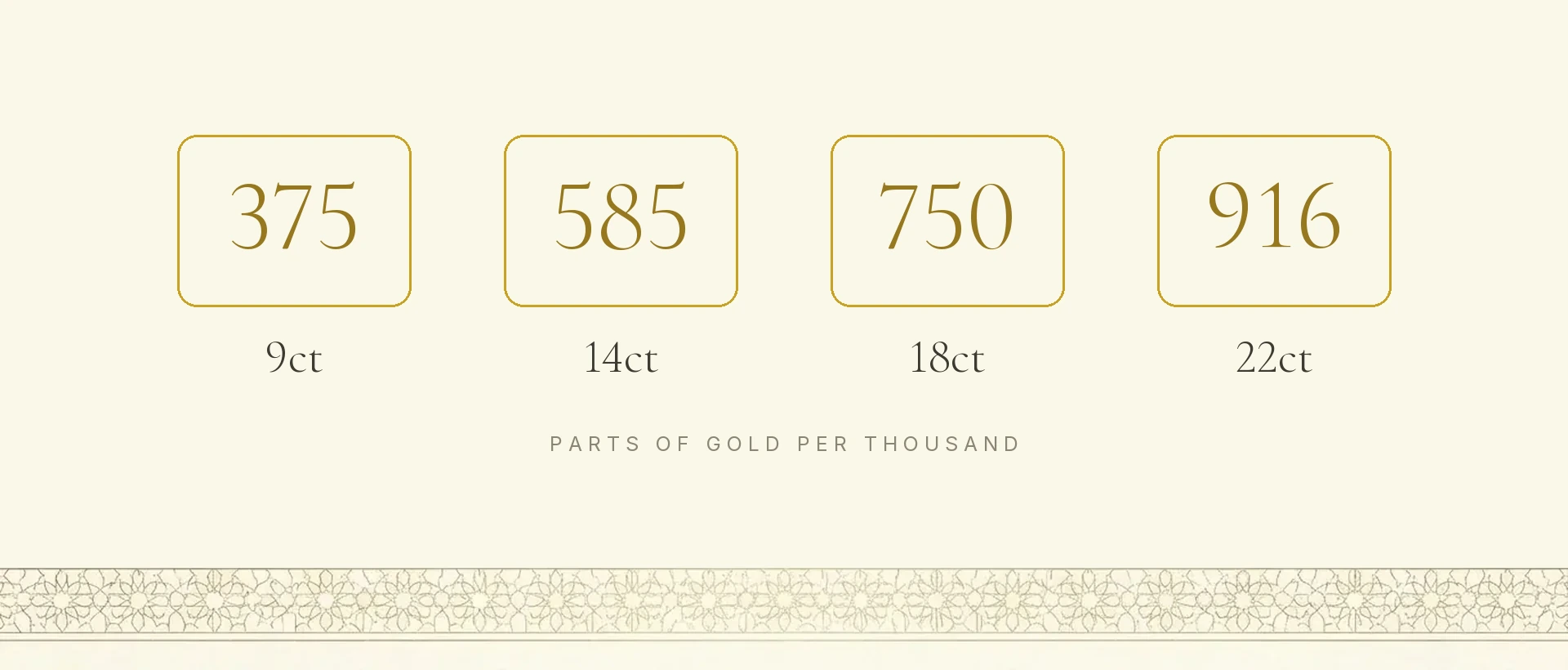
Start with the one most people have at least heard of. A hallmark is a legal mark struck into the metal itself by an assay office, one of the UK’s independent testing bodies, working under the Hallmarking Act 1973. It states how much precious metal is genuinely present in the alloy, gold, silver, platinum or palladium, and how much of it.
That is worth being precise about, because it is the detail people most often get wrong. A hallmark says nothing about any stone set into the piece. Not its size, not its quality, not whether it is natural or laboratory grown. The metal and the stone are two separate physical facts about the same object, tested by two separate kinds of organisation, and a mark that answers one question has never claimed to answer the other.
Exemptions exist for pieces under a certain weight, so an unmarked piece is not automatically a problem, it may simply fall under that threshold. Reading the marks themselves, and what each one actually means, is covered in full in How to read a UK gold hallmark, so this piece will not repeat that ground. The point worth carrying forward here is narrower: whatever a hallmark has told you, it has told you nothing yet about the stone.
What a grading report actually tells you
A grading report is a different kind of document, from a different kind of organisation entirely. Where a hallmark comes from a legal testing body with statutory standing, a grading report comes from a gemmological laboratory: a private organisation that examines a stone under controlled conditions and records what its graders observed.
That description is worth taking literally. A grading report is a description, not a valuation, and the laboratories that write reputable reports say so themselves, usually in the small print. It states what the stone is: its proportions, its colour and clarity as observed, and any treatments detected, because a treated stone can look identical to an untreated one until it is examined properly. What it does not do is endorse the seller, confirm that a quoted price is fair, or say anything at all about the setting the stone eventually sits in. All of that happens later, and a report written before any of it existed cannot speak to it.
One shape worth knowing before you read one. For a round brilliant, the major laboratories issue an overall cut grade. For any other shape, generally called a fancy shape: oval, pear, cushion, marquise and the rest, they do not. There is no single figure summarising how well a fancy shaped stone was cut, so two such stones cannot be compared on one number, however confidently a seller might suggest otherwise.
It is also worth knowing, and being honest about, that which laboratory issued the report is itself part of the information it carries. Different laboratories are widely understood in the trade to differ in strictness, though exactly which one is stricter is a genuinely contested question rather than a settled fact, and this is not the place to rank them. Ask which laboratory issued yours, and treat the answer as part of reading the document, not a detail to skim past.
What an insurance valuation actually tells you
The third document is neither of the first two, and it is easy to assume it simply confirms the other two together. It does not. A valuation sets down what a valuer, or a jeweller acting in that role, judges it would cost to obtain the piece again. It is written for an insurer to work from. It is not a record of what was paid. It is an estimate of what it would cost to replace the piece, materials, making and all, at today’s prices.
Because of that, it is entirely normal for a valuation figure to come out above the original purchase price. That is not a mistake and it is not a sign anything is wrong. A valuation is answering a different question to the one a receipt answers, and the two are allowed to disagree with each other.
It is worth understanding why that matters in both directions, because it genuinely cuts two ways. A figure set too high can push a piece over a policy’s limit for a single item, or push up what it costs to insure, for no benefit to anyone. A figure set too low can leave the owner unable to actually replace the piece if it is ever lost, because cover generally follows the number written on the document rather than the real cost of replacing the piece later. The practical answer holds either way: have the valuation done properly, and do it soon after the piece is made rather than putting it off. A figure that sits unwritten in a drawer protects nobody.
The test worth carrying with you
There is a quick way to place any document that arrives with a piece of jewellery, and it needs no technical knowledge at all. Look at who signed it.
An assay office deals only in metal, so whatever it has marked concerns purity and nothing else. A gemmological laboratory examines stones, so its report describes a stone and stops there. A valuer or a jeweller writing for an insurer is dealing in replacement cost, so that document concerns money and no physical property of the piece whatsoever.
Three issuers, three subjects. Establish which one produced the page in front of you and everything else follows from it, including the part that tends to matter most, which is the whole territory the document was never intended to cover.
Worth reading alongside this: a champagne diamond is graded on the same three documents even though its colour sits outside the standard scale, which is a useful case in how these papers apply to a stone that does not fit the usual mould. The wider process behind a commissioned piece, from brief to finished ring, is set out at bespoke.