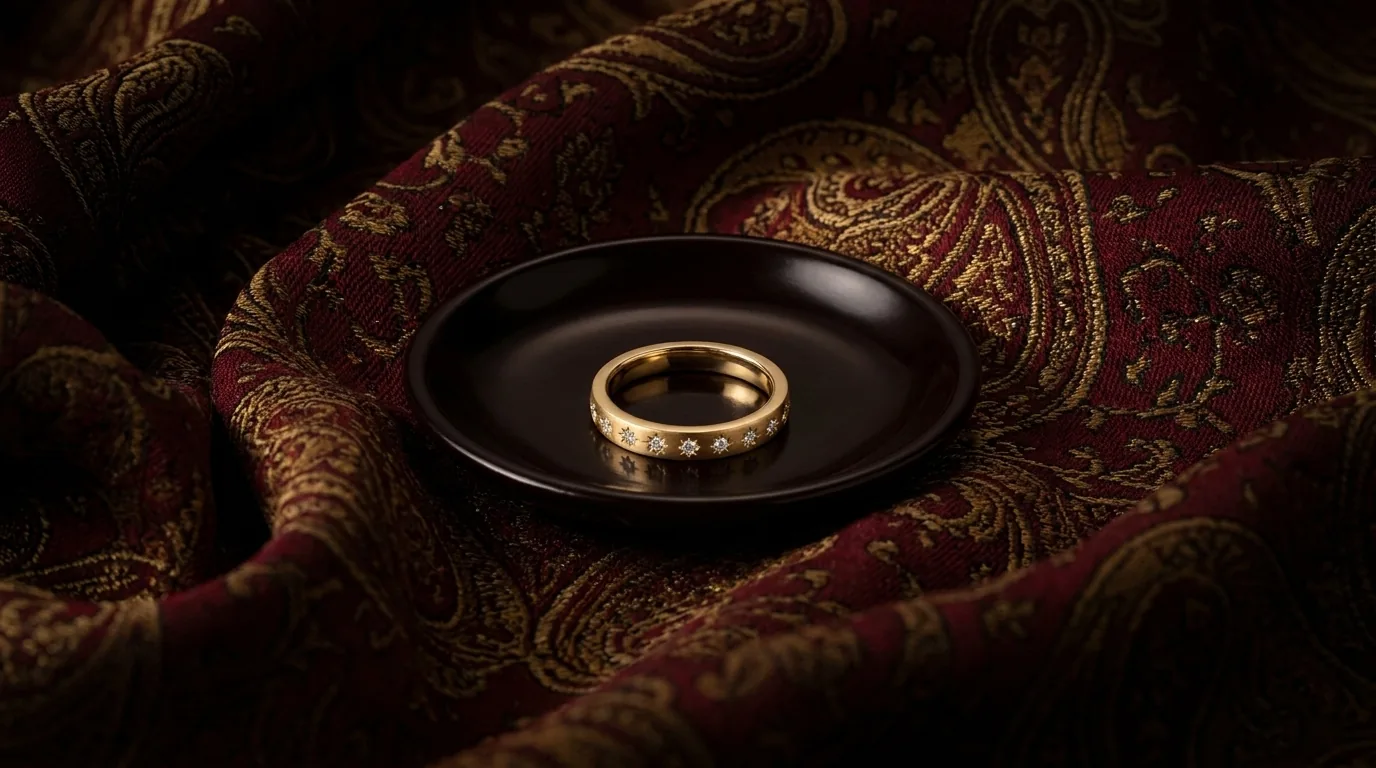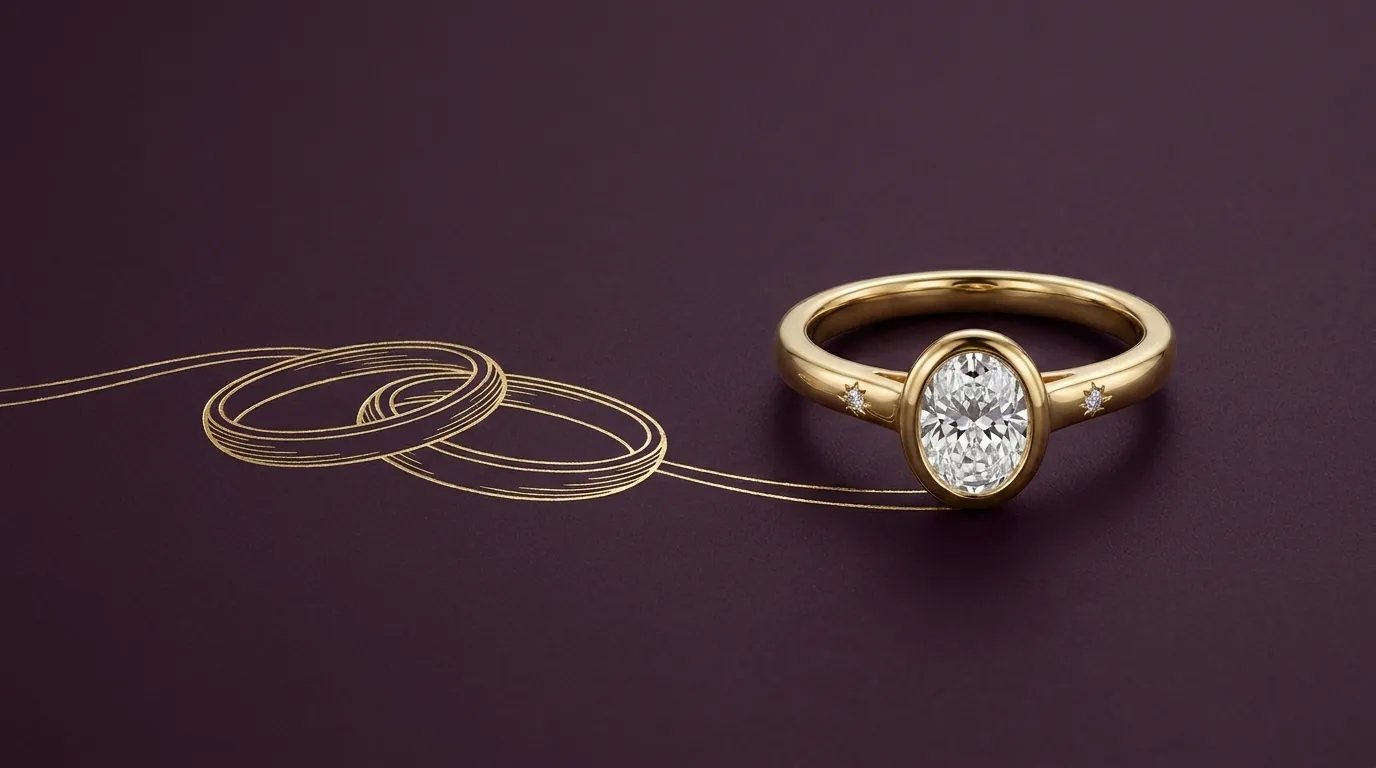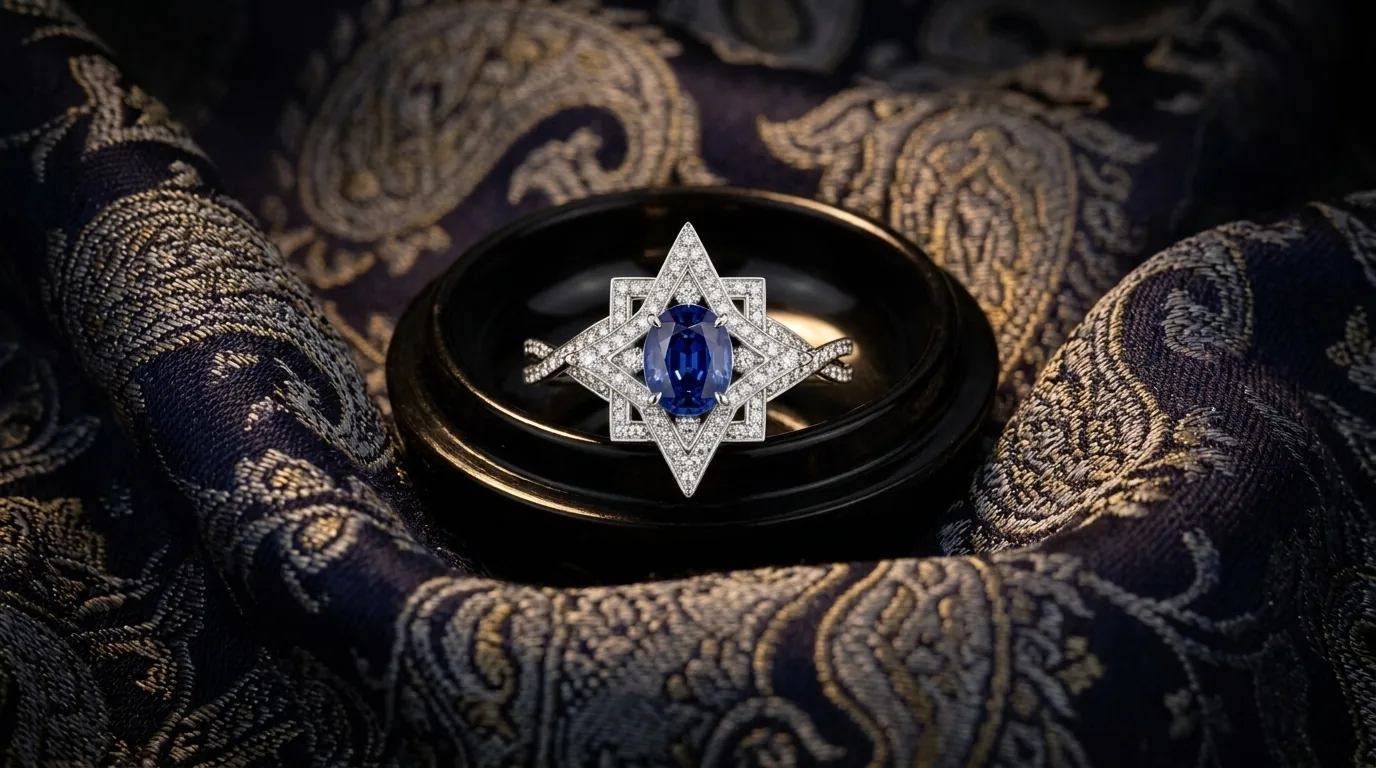
There is a particular quality of light that only an old cut diamond produces. It is warmer than a modern brilliant and it moves more slowly: broad soft flashes rather than the rapid, almost electric scintillation that modern cutting is optimised to deliver. Once you have seen the two side by side it is unmistakable.
That difference is not an accident of age. It is the direct consequence of how these stones were cut and what they were cut for.

The family of cuts
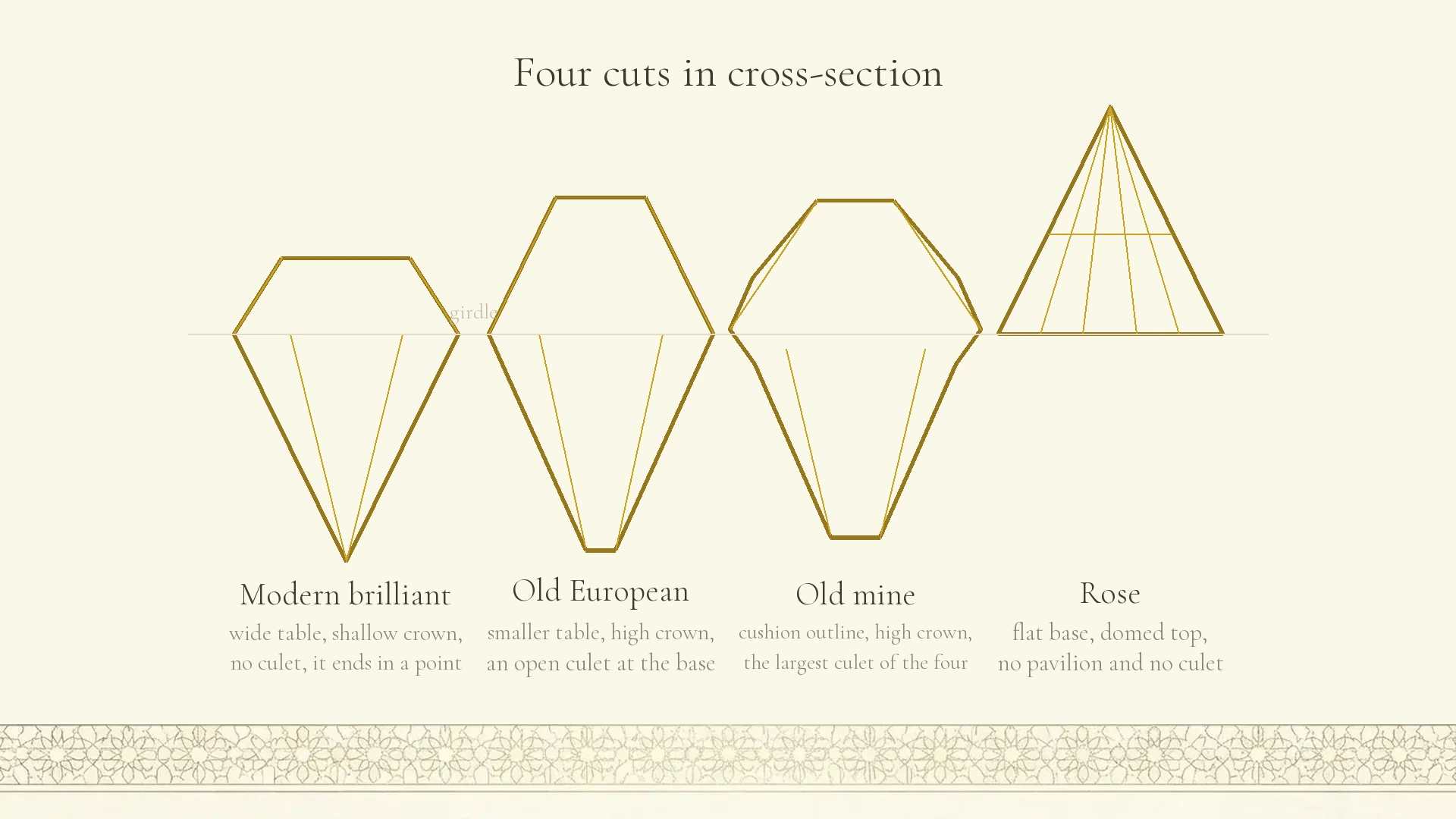
The term covers everything that predates the development of modern brilliant cutting in the early to middle twentieth century. Four matter.
The old European cut is the direct ancestor of the modern round brilliant, cut from the late nineteenth century through to the 1930s. It has a smaller table (the flat facet on top), a higher crown, a large and visible culet (the facet at the very bottom, which on a modern stone is usually a point), and fewer, larger facets overall. Those larger facets are exactly where the candlelit quality comes from: bigger facets return broader, slower flashes.
The old mine cut dominated from the middle of the eighteenth century to the late nineteenth. It is cushion-shaped, because it followed the natural octahedral shape of the rough rather than fighting it, with a small table, a high crown and a large culet. It is the ancestor of both the modern round brilliant and the modern cushion, and it looks like neither. Old mine cuts are frequently slightly asymmetric, and that is a large part of their character rather than a fault in them.
The rose cut is one of the oldest still in use, with roots in sixteenth-century India. It has a flat base and a domed top covered in triangular facets, usually somewhere between three and twenty-four of them, arranged so the stone reads a little like an opening rose. There is no pavilion and no culet at all. A rose cut glows rather than sparkles.
The portrait or lasque cut is a flat, table-cut stone from seventeenth and eighteenth-century jewellery, often set over foil to lift its brilliance. Rare in contemporary commissions and remarkable in the right one.
Why they are relevant again
Modern cutting has made stones consistent. Grading standardises colour and clarity to a decimal point, and computer modelling optimises facet angles for maximum light return. The result is genuinely beautiful and largely interchangeable: two triple-excellent round brilliants of the same grade look essentially the same. Old cuts are the opposite. Each was cut by hand, before grading existed and before mechanised wheels, and each has its own proportions and its own way of handling light.
They were never cut for colourlessness. Modern grading treats warmth as a deduction. An old European or old mine cut in G or H colour, which would be unremarkable as a modern brilliant, often reads as a deliberate warmth rather than as a compromise, especially against yellow gold. A warm old European in a warm metal is coherent in a way a cold D-colour modern brilliant in yellow gold sometimes is not.
They already exist. Old cuts largely come out of antique and estate jewellery, so a stone with documented provenance requires no new mining. That is a genuinely different proposition from a newly mined stone, and it is a stronger one than most sustainability claims in this industry.
Setting them properly
Old cuts are not drop-in replacements for modern brilliants. A high-crowned old European in a four-claw contemporary setting usually looks wrong, because the modernity of the setting argues with the stone.
What works instead: milgrain and beaded borders, which belong to the same period as the cut; closed-back and collet settings that frame the stone in solid metal rather than lifting it on claws; and shoulders that are set with small stones rather than channel-set in a modern band.
A rose cut’s flat base makes it the lowest-profile stone available, which is a practical advantage as well as an aesthetic one for anyone who works with their hands or never takes a ring off. Rose cuts also suit east-west settings, where the stone is oriented across the finger rather than along it.
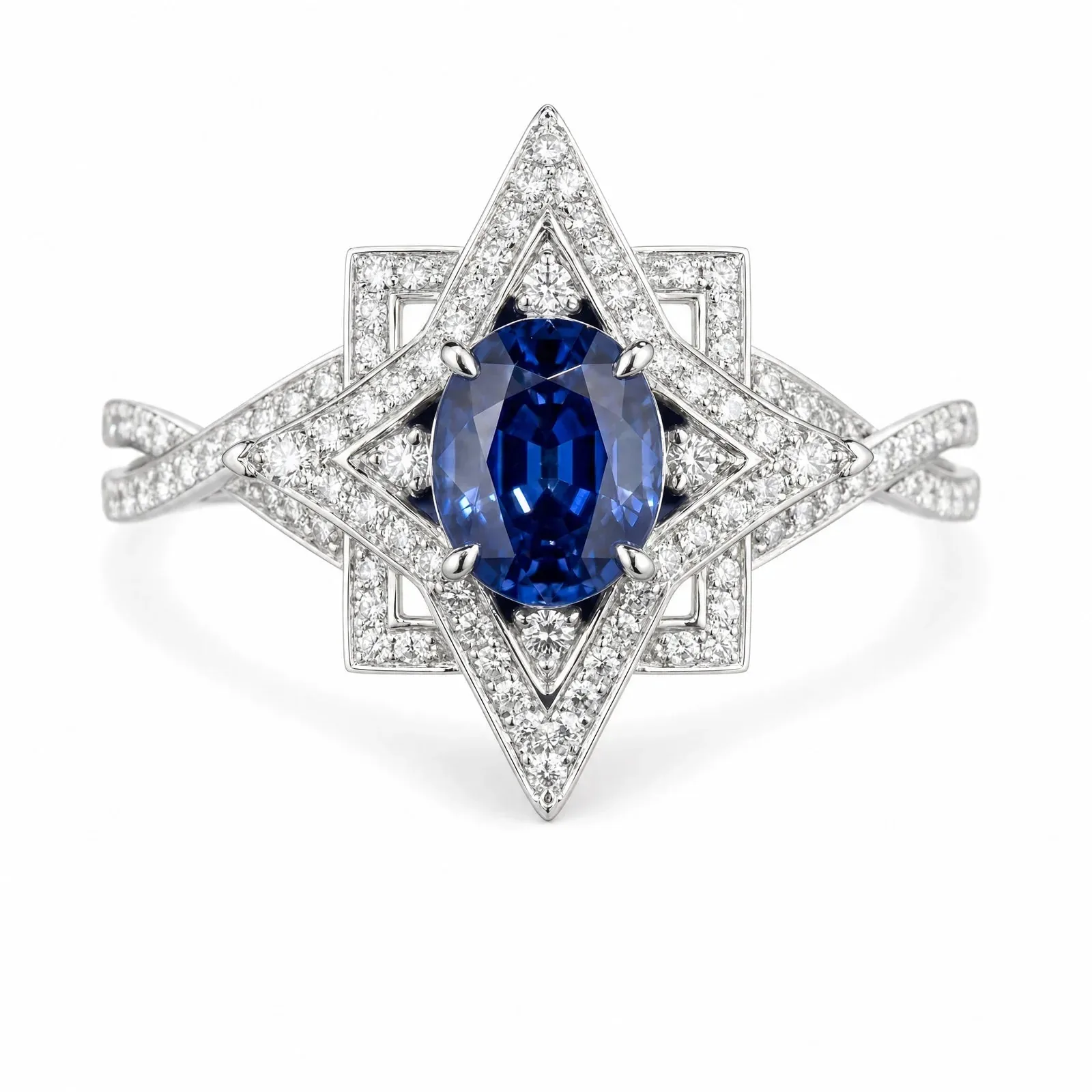
The most interesting contemporary use is next to coloured stones. The softer light of an old European complements a sapphire or a spinel in a way the crisp brilliance of a modern cut does not: the two stones hold a conversation instead of competing. That sits naturally with a design language drawn from the Silk Road, where the rubies and spinels of Badakhshan reached the workshops of Isfahan centuries before the modern brilliant was invented. An old cut in that context is not a pastiche. It is the older of the two ideas.
Finding one in the UK
You are not shopping from a database. You are looking for one specific stone.
Hatton Garden holds several dealers who specialise in antique and estate stones, and a morning spent there is the fastest education available in what these cuts actually look like in the hand. Photographs do not capture the light behaviour, and video is only slightly better.
The major auction houses handle estate jewellery regularly, as do specialist auctioneers. Stones from estate pieces can usually be reset into a new commission after cleaning.
The alternative is to bring the preference to the design conversation and have the stone sourced against it, which has one real advantage: the stone and the setting get designed around each other rather than one being adapted to fit the other after the fact.
What to expect on price
The logic here does not follow modern brilliants.
Old European cuts were historically discounted, because they do not maximise light return in the way the modern market learned to value. That discount has been compressing, for the simple reason that demand has grown whilst supply cannot: no new old cuts are being produced.
Rose cuts above a carat can be expensive, and not because of their grading. Large rose cuts with good transparency are genuinely scarce.
For most old European and old mine cuts, expect broadly similar money to a modern round brilliant of equivalent weight and grade. Sometimes a small premium for a particularly characterful stone. Sometimes a modest discount for visible inclusions that a modern buyer would treat as a fault and an informed one would accept without hesitation, because they do not affect the overall effect.
On recutting
Buyers presented with an old cut often ask whether it should be recut to modern proportions for more brilliance.
Almost never. The moment an old cut is recut as a modern brilliant, the thing that made it interesting is gone, and what remains is a modern stone of slightly reduced weight. That is a loss on every measure that matters and a gain on none.
The exception is a stone with real damage, significant chips or a break, where recutting is preservation rather than an upgrade. In every other case the stone is worth keeping exactly as it was cut.
Whether one suits you
If what you want is maximum sparkle under bright light, the rapid prismatic fire a modern triple-excellent brilliant produces under a showroom spot, an old cut will feel subdued. These stones perform best in warmer, lower light: evening, candlelight, ordinary daylight. They reward looking rather than glancing.
If what you want is a stone with individuality, warmth and a history that started before you, old cuts are difficult to match. They have already been worn and already been part of somebody’s story. Adding yours is not a compromise, it is a continuation.
If you are drawn to the idea, the commission process is described in full here, and the choice of stone is worth having as its own conversation before any setting is drawn.