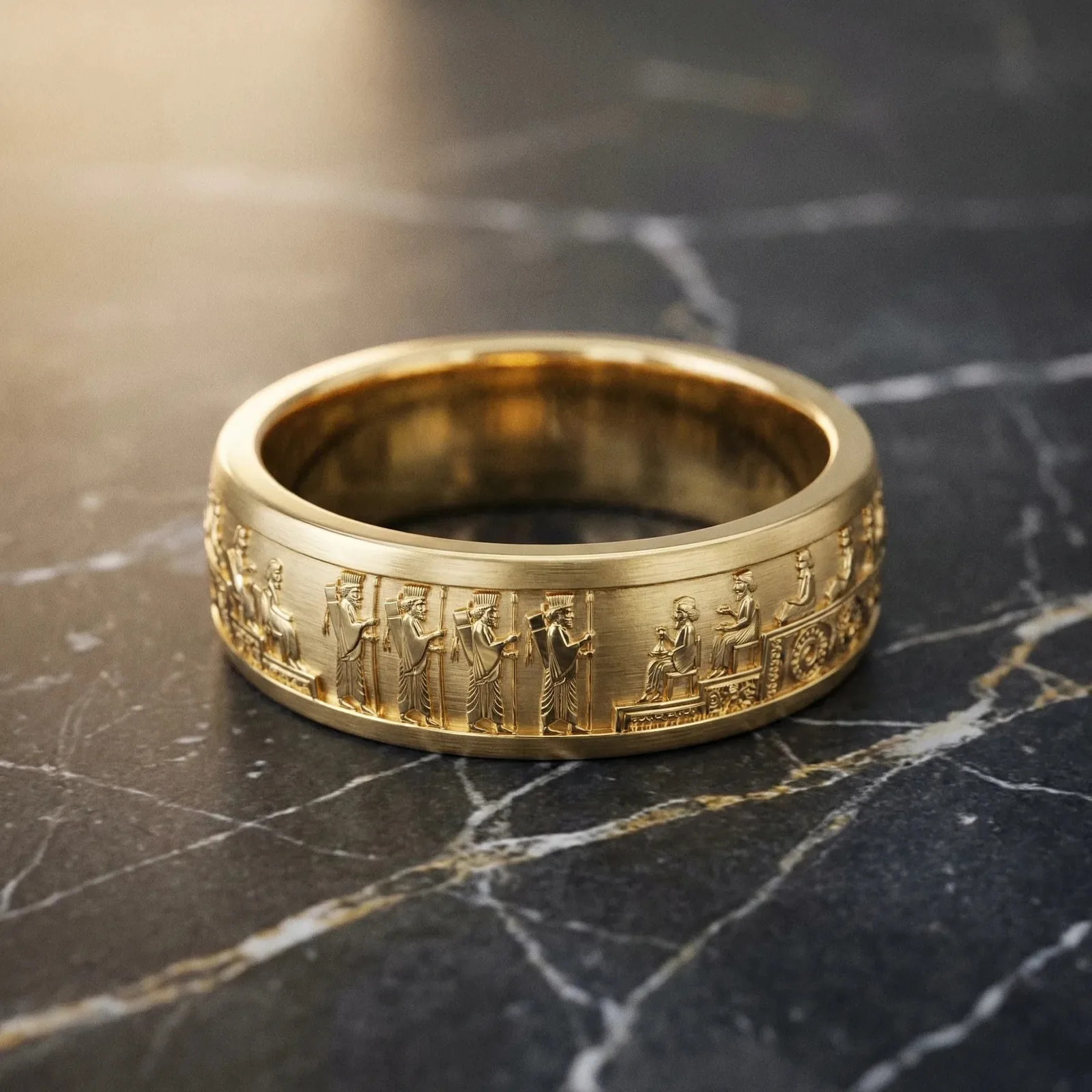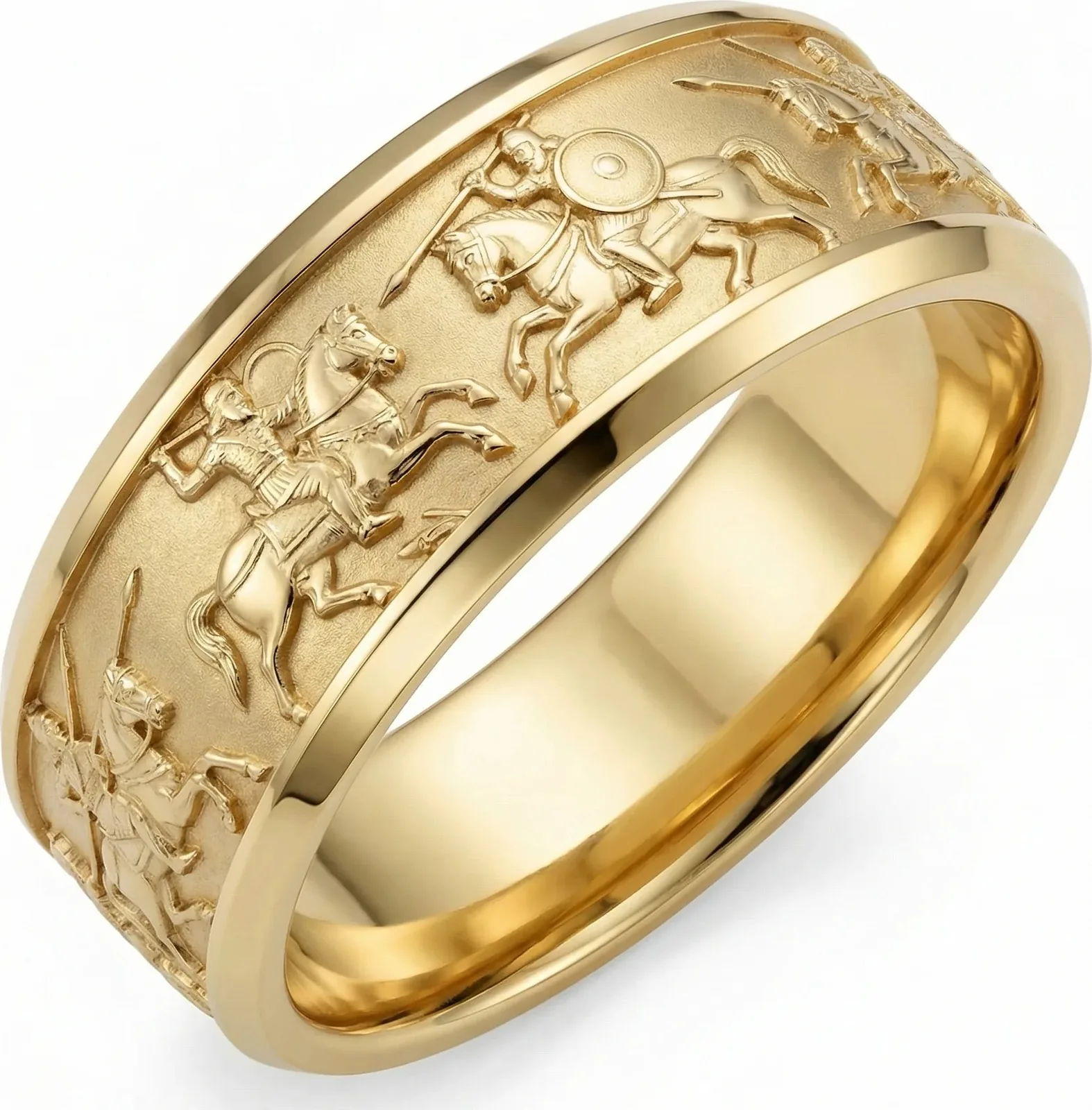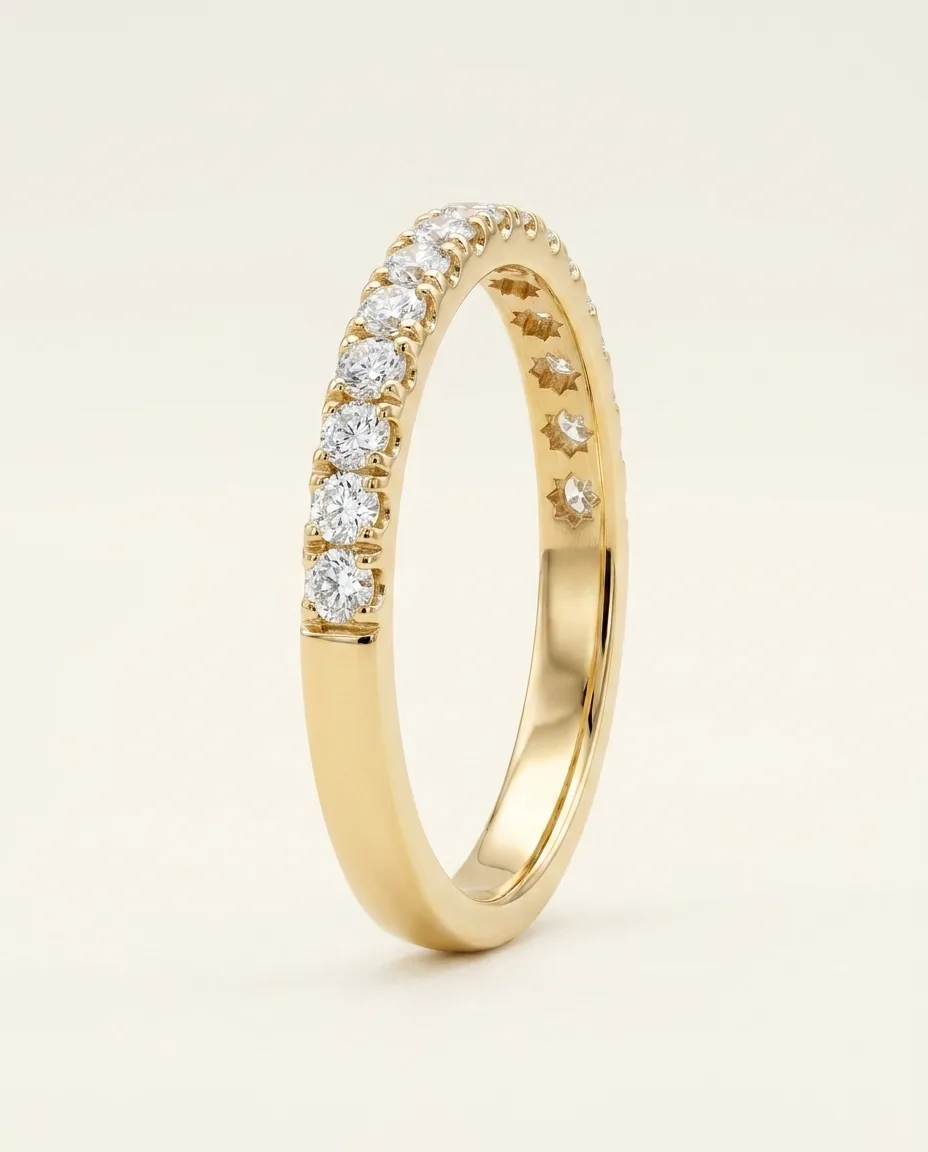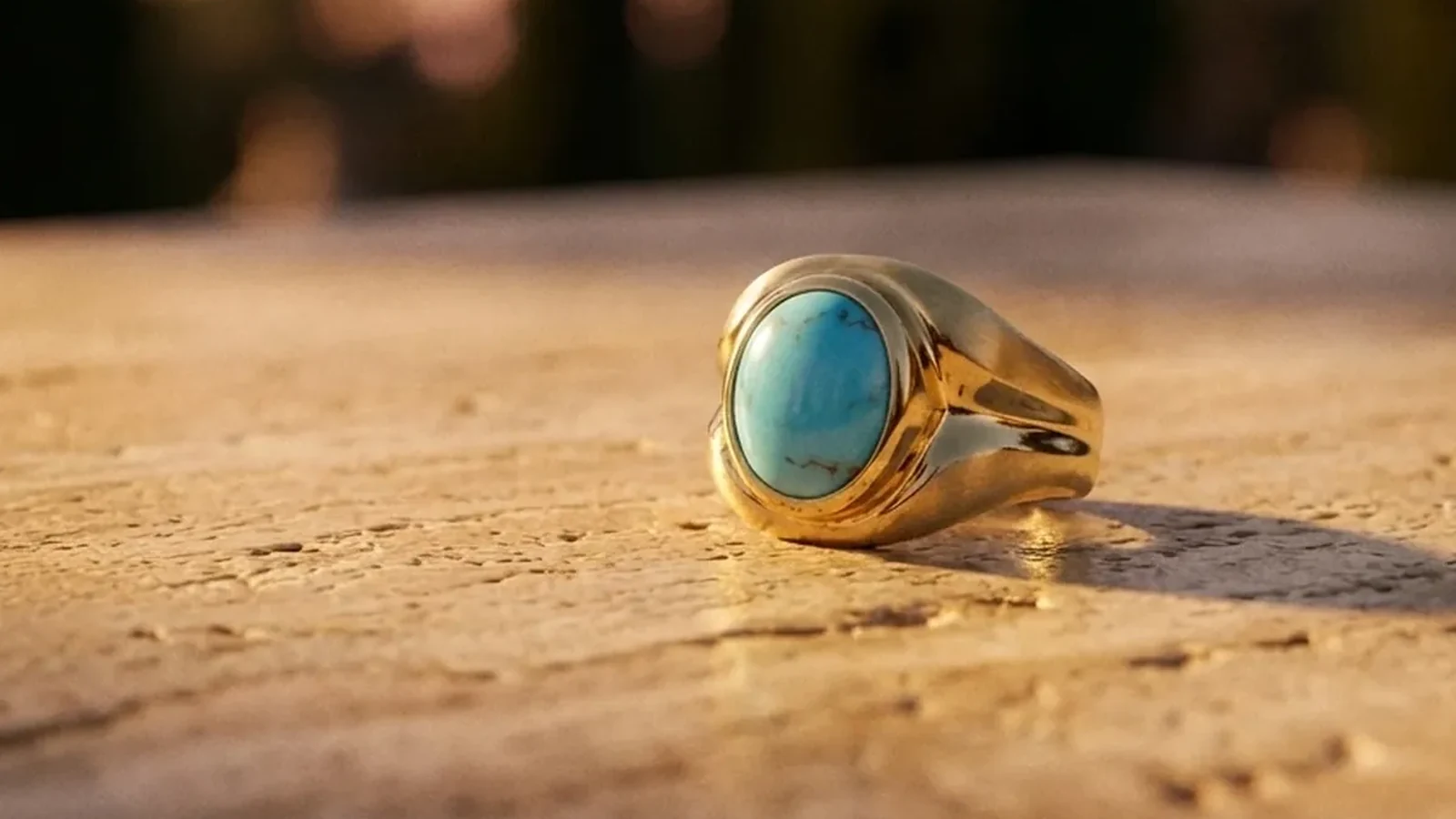
In the United Kingdom, both the engagement ring and the wedding ring are worn on the fourth finger of the left hand.
That is the whole answer for most people reading this, and it is worth giving it before anything else. What follows is only useful if you want to know why, or if the convention you grew up with is a different one.

Which finger, and where to count from
“Fourth finger” is where this gets confusing, because it depends on whether you start counting at the thumb.
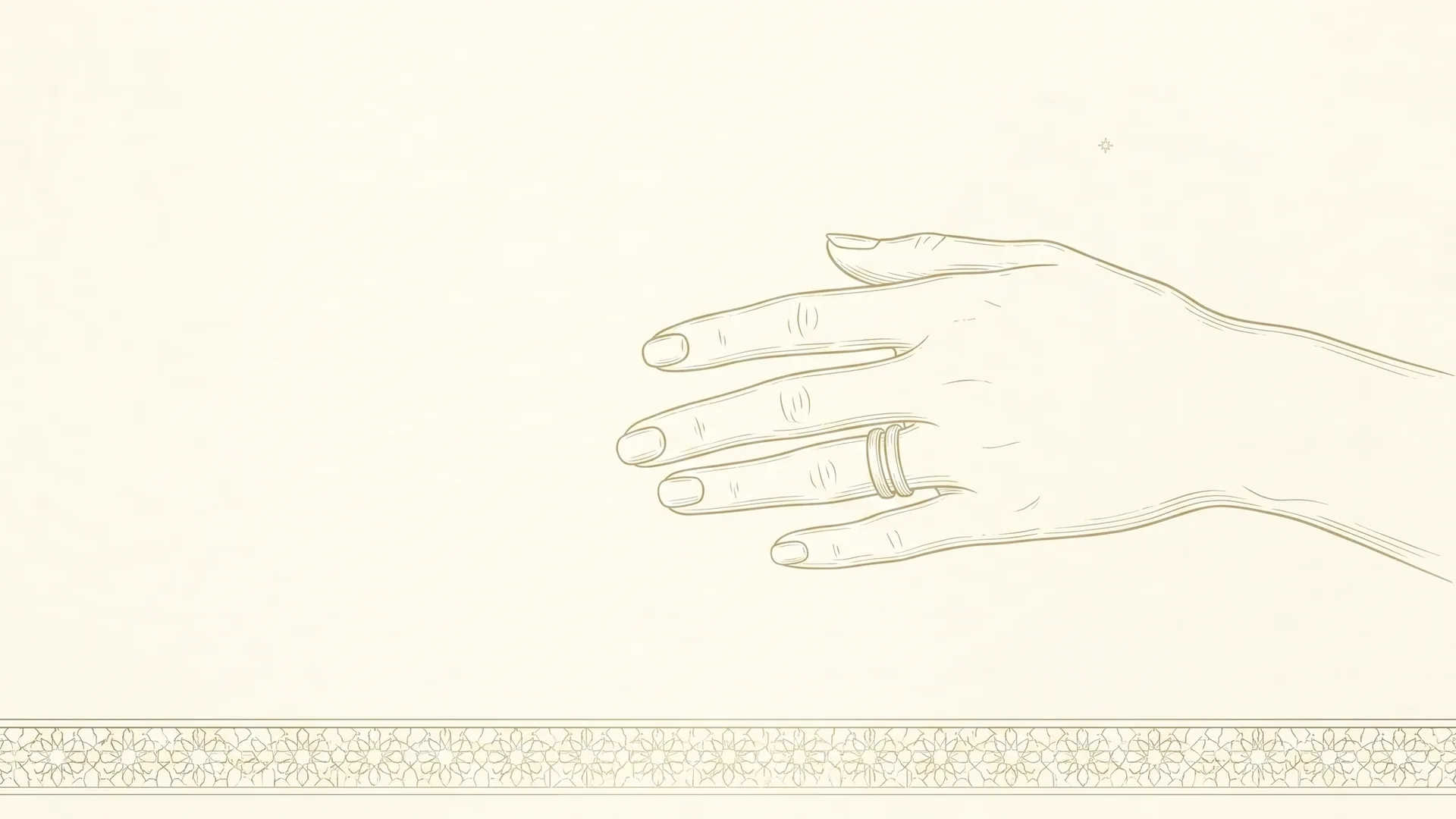
The finger meant is the one between your middle finger and your little finger. Counting the thumb as the first digit it is the fourth; ignore the thumb and start at the index finger and the same finger is the third. Both phrasings describe the same finger, and jewellers use them interchangeably, which is exactly why it is worth stating without the numbers at all.
It is the finger commonly called the ring finger for this reason, and it is the same finger on either hand, whichever hand your tradition uses.
It is the right hand across much of Europe
The left-hand rule is not universal and is not even a majority position worldwide. The wedding ring is worn on the right hand in Germany, Norway, Denmark, Austria, Poland, Russia, Ukraine, Greece, Bulgaria, Portugal and much of Spain, and in Orthodox Christian tradition generally.
Britain, Ireland, France, Italy, Sweden, the United States, Canada, Australia, Egypt and Iran sit on the left.
So a couple with a German parent and a British one are not choosing between a correct answer and a mistake. They are choosing between two conventions, both older than anyone alive.
The romantic explanation is not true
You will read, often, that the fourth finger of the left hand was chosen because a vein runs directly from it to the heart. The Romans are said to have called it the vena amoris.
It is a lovely idea and it is anatomically false. Every finger returns blood to the heart through the same venous network, and there is nothing structurally distinctive about the fourth on either hand. The belief is genuinely old, which is why it persists, but it was wrong when it was invented.
What is probably closer to the truth is more practical: the fourth finger is the least used and the least dextrous of the five, so a ring worn there is the least likely to be knocked, caught or damaged. A convention that survives centuries usually survives because it works, not because it is poetic.
Which order, when you wear both
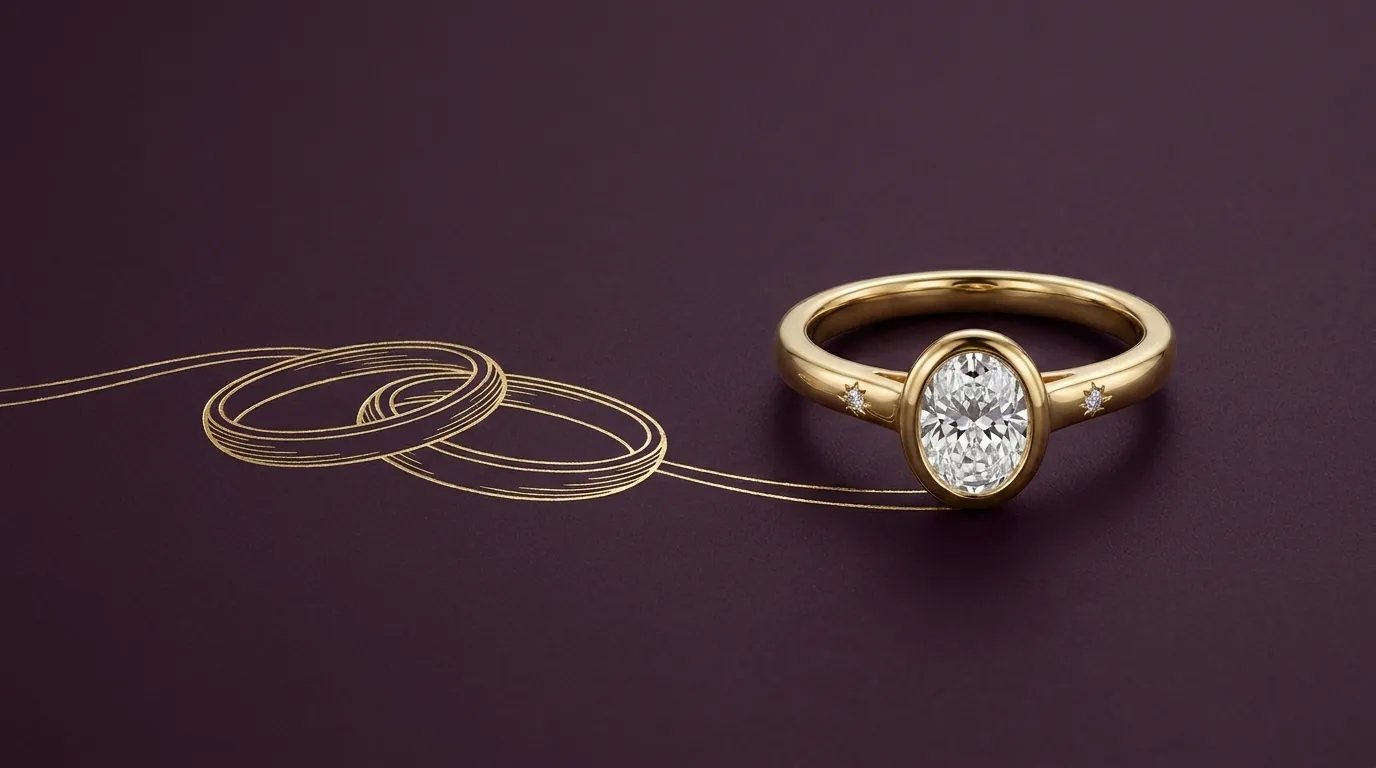
Where an engagement ring and a wedding ring are worn together on the same finger, the usual British arrangement is the wedding ring innermost, closest to the hand, with the engagement ring outside it. The traditional reason given is that the wedding ring should sit nearer the heart; the practical reason is that the wedding band is normally the plainer of the two and sits flatter against the finger.
Plenty of people do the opposite, or move the engagement ring to the other hand for the ceremony and back afterwards, or wear them on separate hands permanently. None of that is a breach of anything.
In Iran, the left
In Iran the wedding ring is worn on the left hand, the same as in Britain. For an Iranian couple marrying here, or for a British and Iranian couple marrying each other, there is no convention to reconcile and nothing to decide: both sides already agree.
That is worth saying plainly, because Iran sits geographically among a good many countries that use the right hand, and the assumption that it must follow them is a common one. It does not.
Within the diaspora you will still find families who do something else, usually because they have absorbed the practice of wherever they settled. That is a family question rather than a national one, and the person to ask is your own family.
The part that actually affects your ring
There is one practical consequence worth knowing before a piece is made, and it is the reason this question reaches a jeweller at all.
Your dominant hand is usually very slightly larger than the other, often by around a quarter to a half of a UK letter size. If a ring is sized for your left hand and you later decide to wear it on your right, or the other way round, it may not simply transfer.
So decide the hand before the piece is made, not after. It costs nothing to say at the start and it is the difference between a ring that fits and a resize on a piece that may not resize easily, particularly where a band is heavily set or textured all the way round.
If you genuinely are not sure, say so. A design can be chosen with that in mind, and it is a far better conversation to have before anything is cast.