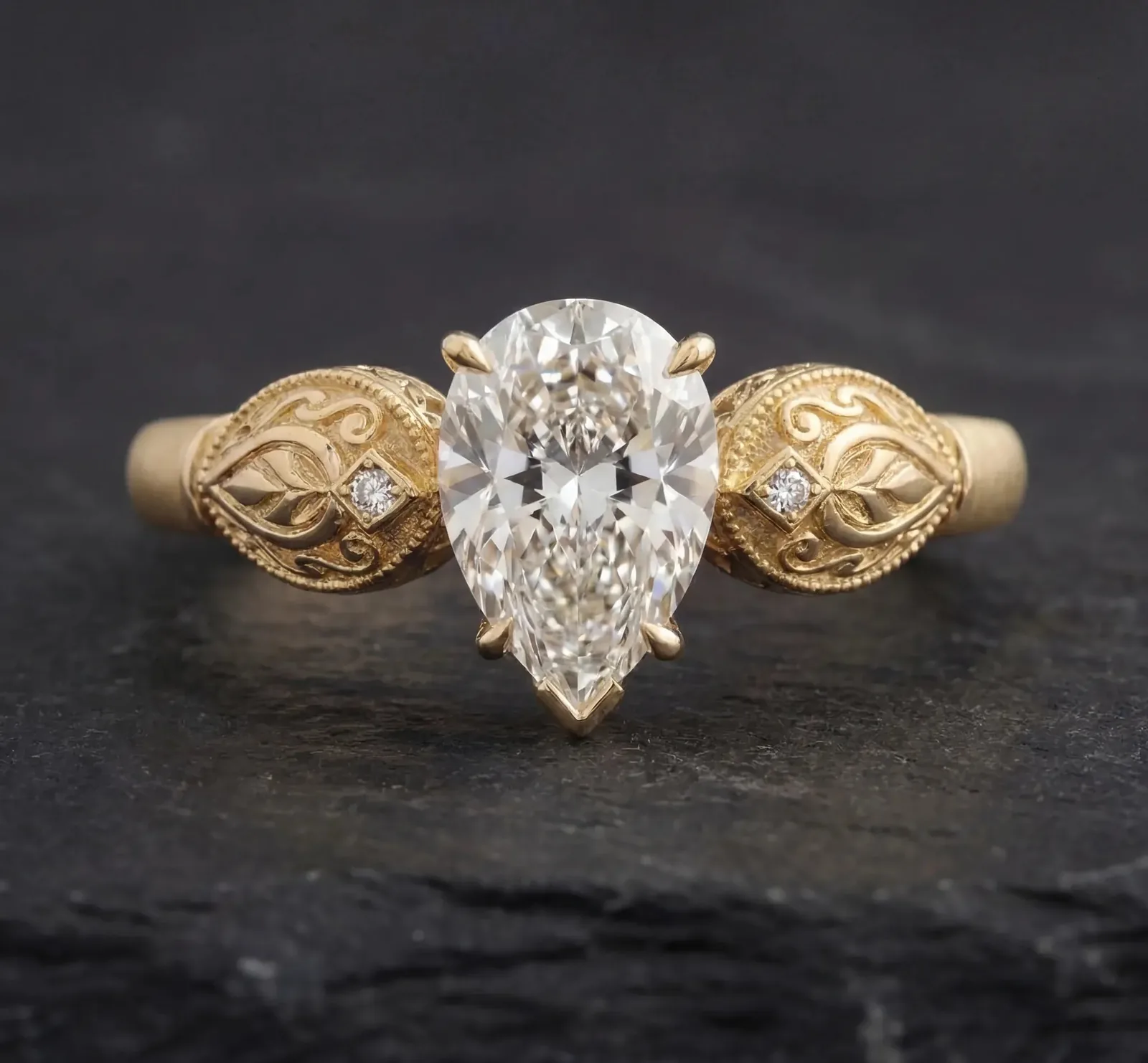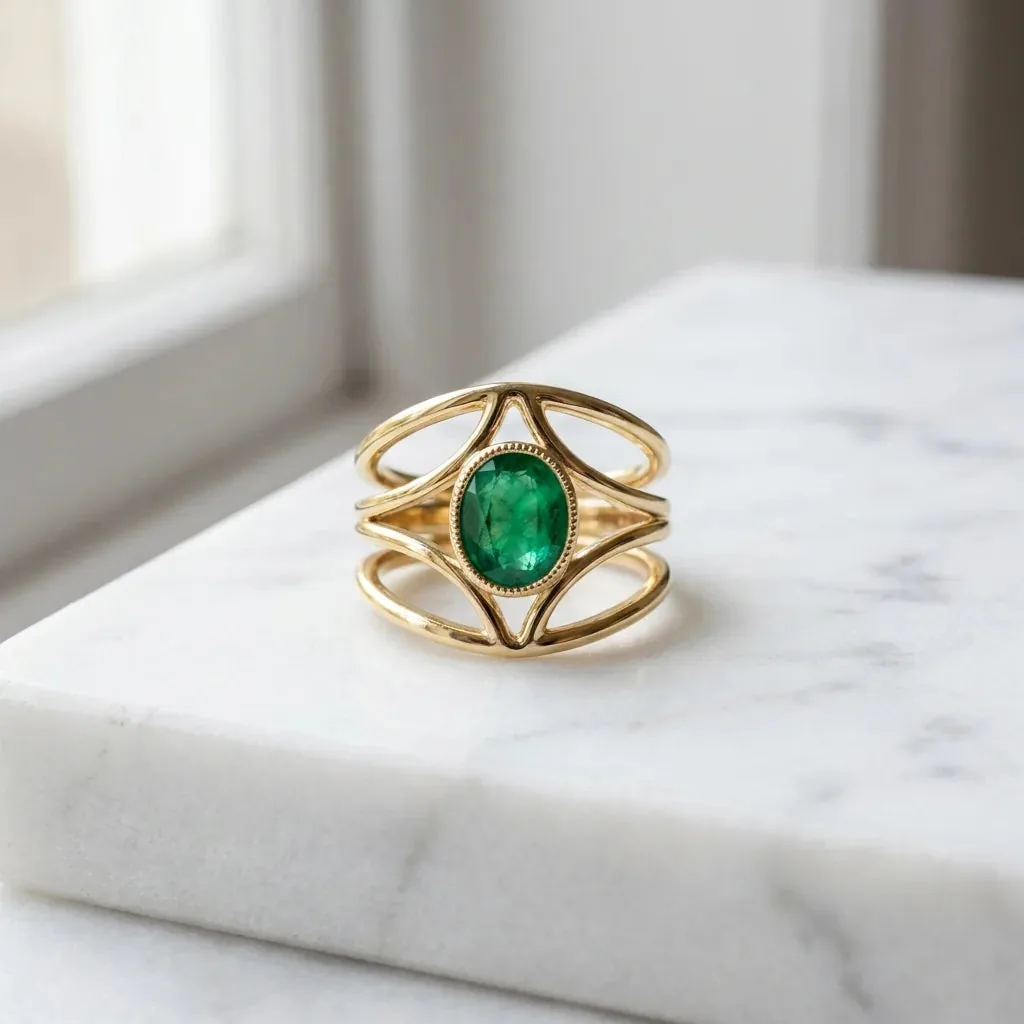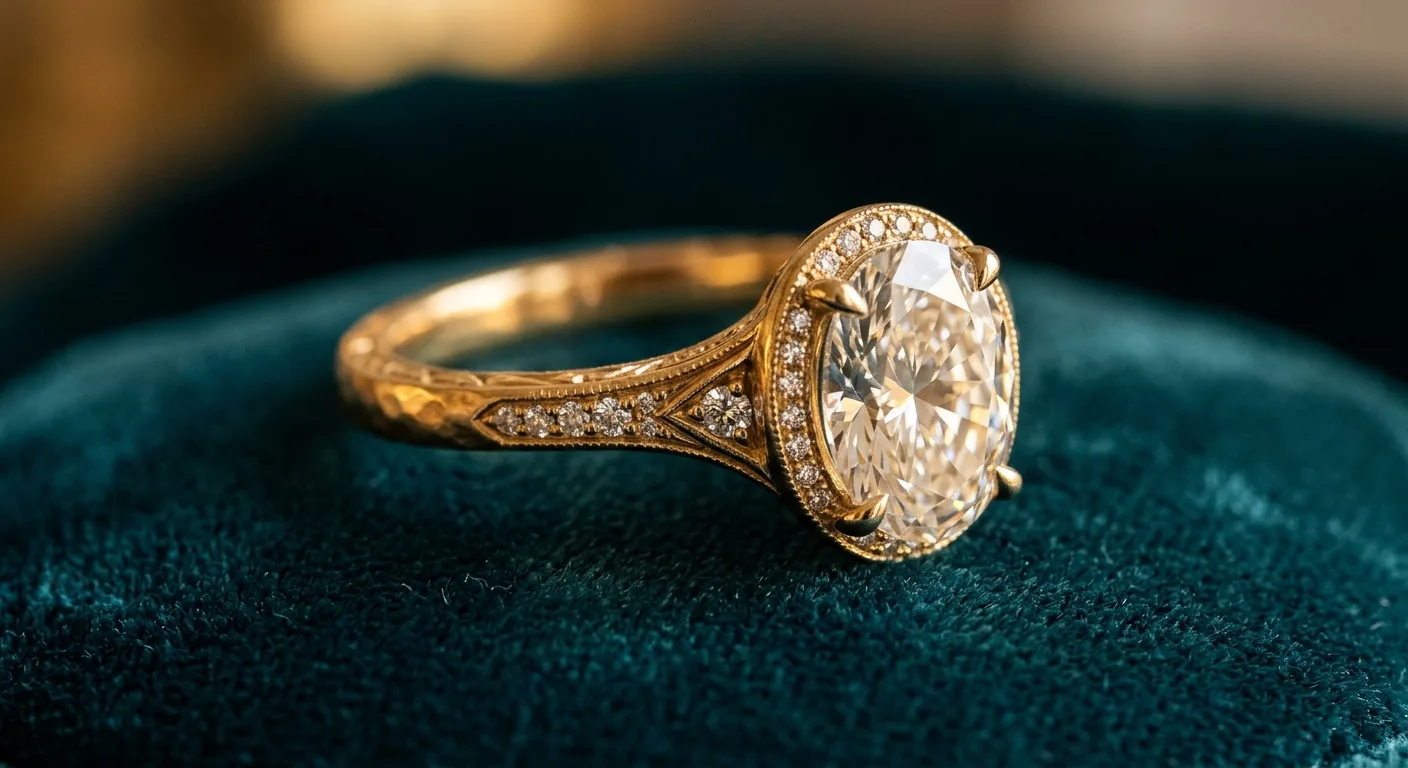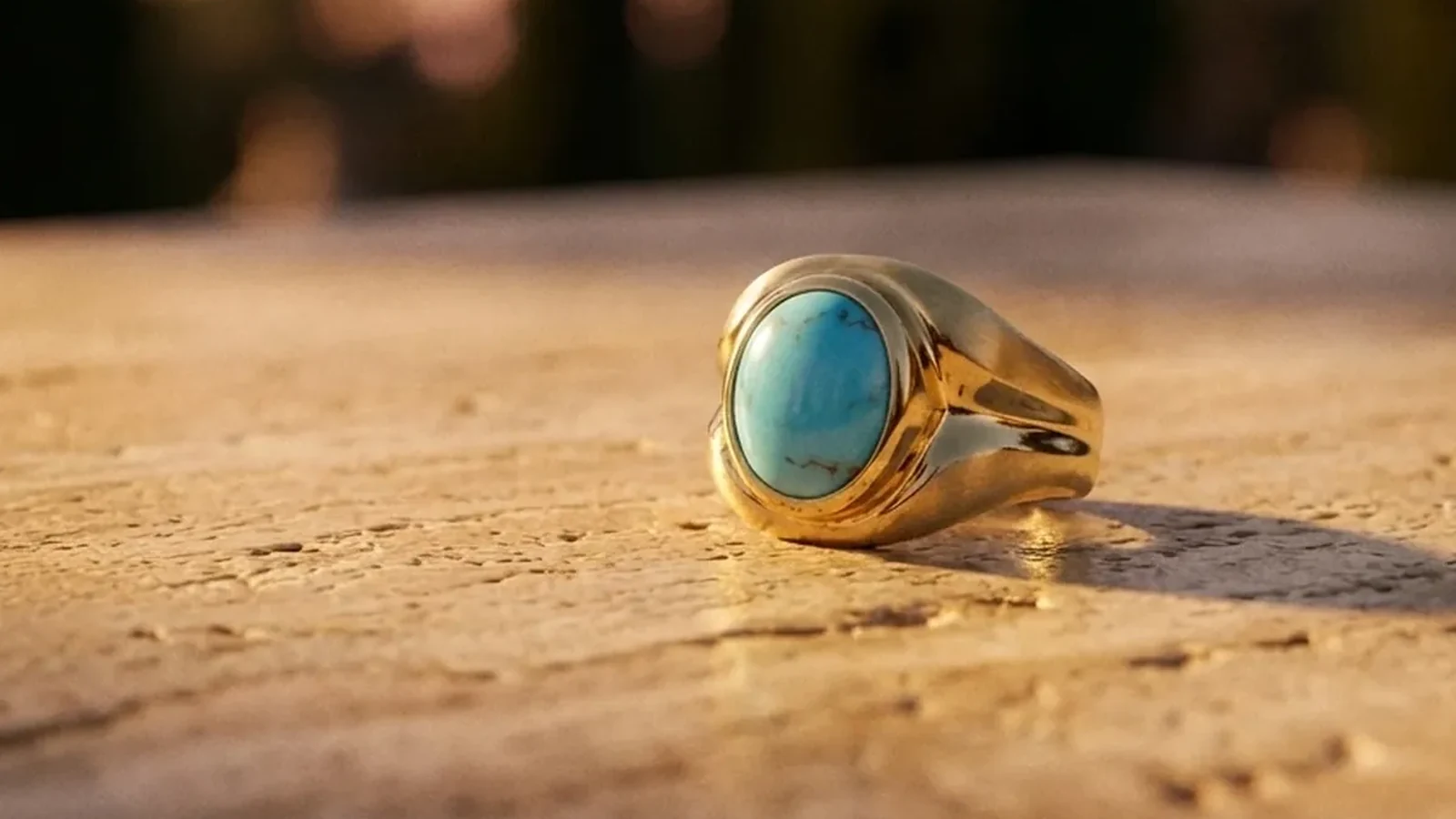
four to six weeks from design approval, and that is to the piece in your hands rather than to it leaving the studio.
That is the number to plan around, and it is the only one this studio commits to. Everything below is why it is expressed that way, what moves it, and how to work backwards from a date.

Why the answer needs two numbers
Most jewellers answer this question with a single figure measured from your first email. That is where the confusion starts, because the stretch before a design is approved does not belong to the workshop. It belongs to you.
So the timeline splits at one point, and it is worth being precise about where.
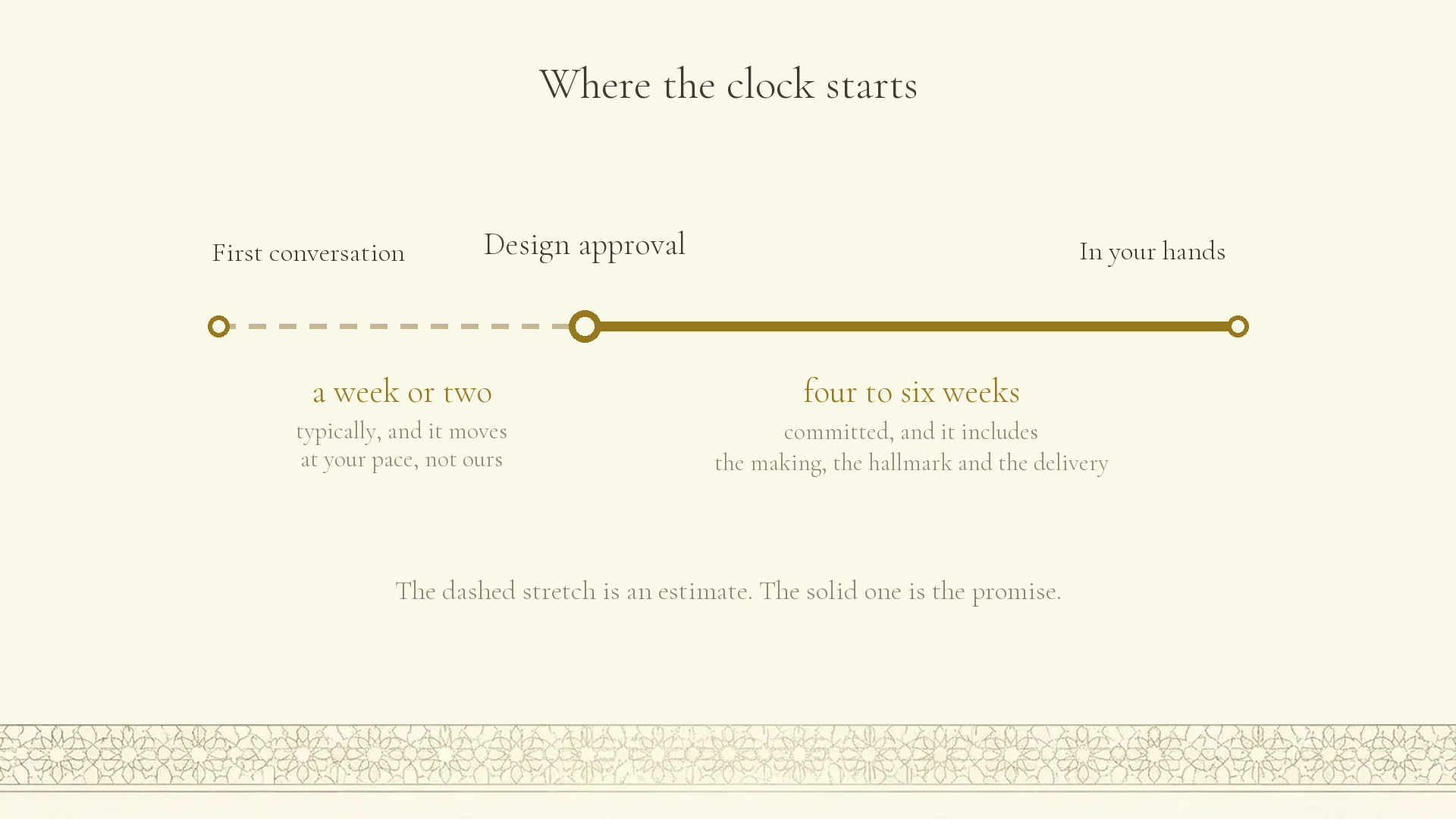
Before design approval: a week or two, typically. First conversation, the design drawn, renders of the 3D model to look at, and the revisions that follow. This is genuinely quick when you know what you want and genuinely slow when you are still deciding, and both are fine. It is stated here as what usually happens, never as a promise, because it depends on how fast you settle a design and no studio can commit on your behalf.
After design approval: four to six weeks. This is the committed range. Within it sits the making itself at three to four weeks from CAD approval, hallmarking where the law requires it, and the delivery.
The two do not simply add up, and pretending they do would be false precision. What you can rely on is the second number: once you have said yes to a design, 6 weeks is the outside figure for the ring being on the hand it was made for.
What the committed range contains
The stages themselves are described properly in how a bespoke ring is made, so this is only the timing view of them.
Modelling and approval come first, and they are the reason the range is wider than the making. You see the piece as renders of the 3D model, at true proportion against the actual stone, from every angle. Changing a shoulder profile at that point costs an afternoon. Changing it after casting costs the casting.
Then the making: three to four weeks from CAD approval. Casting, cleaning up, setting each stone by hand, and finishing to the surface the design asks for. Hallmarking sits inside that figure rather than after it, which is a small point that trips up a lot of published timelines.
Then it reaches you, insured and tracked. Delivery is inside the range, not added to it.
What makes it longer
Three things, and they are worth flagging at the first conversation rather than discovering in week four.
A particular centre stone needs sourcing. A specific cut at a specific weight in a specific colour is a search rather than an order. Say early if you have a firm idea, because that flexibility is what keeps it off the critical path.
The setting is unusually complex. Pierced galleries, multi-stone clusters and dense hand-set work take the time they take, and rushing a setter is the one economy nobody should make. Setting is the stage with the least room for error.
The assay office is in a busier period. Hallmarking is done by an independent office, not by us, and the queue is theirs.
The published range already carries ordinary variation. These are the cases where a piece runs past it, and you will be told which one applies before you commit rather than afterwards.
Working back from a date
If you have a proposal, an anniversary or a wedding in mind, the arithmetic is straightforward.
Take your date. Count back 6 weeks: that is the day the design needs to be approved. Then allow a week or two before that for the conversation and the drawing, and add a buffer of a week or so because you would rather be early.
Two practical notes. Add more room than you think for the deciding rather than the making, because that is the stage people underestimate. And if the ring is for a wedding rather than a proposal, work back from the last sensible fitting date rather than from the ceremony.
The single most useful thing you can do is name the date at the first conversation. You will get an honest answer about whether it is achievable, including a no. A studio that says yes to every deadline is telling you something about the deadlines it has already agreed to.
Can it be done faster
Sometimes, and it depends entirely on the design rather than on willingness.
Simpler pieces move faster than complex ones, and a design built around a stone already in hand moves faster than one waiting on a search. What cannot be compressed is setting and finishing, because those are hand operations where haste shows in the finished piece and shows permanently.
The honest position is that a shorter timeline is a conversation about the design, not a surcharge. If a date is tight, the answer is usually a simpler piece delivered properly rather than a complex piece delivered anxiously.
What happens at each end of the money
Timing and payment are tied together, so it is worth saying where.
The first conversation costs nothing and commits you to nothing. A deposit of 50% is taken at design approval, which is also where the committed clock starts. The balance is invoiced once the finished piece is ready to be dispatched, not before.
If you withdraw after the model has been made but before you approve it, the deposit is refunded less £250 for the design and modelling already done, and nothing will have been made at that point.
The full terms are published here, and the commission process is set out in full on the bespoke page, which carries the same figures as this article for the same reason: they come from one place, so they cannot quietly disagree.
The short version
four to six weeks from design approval to the ring in your hands. Roughly a week or two before that to get to an approved design, depending on you. Name your date at the start, and expect a straight answer about it.