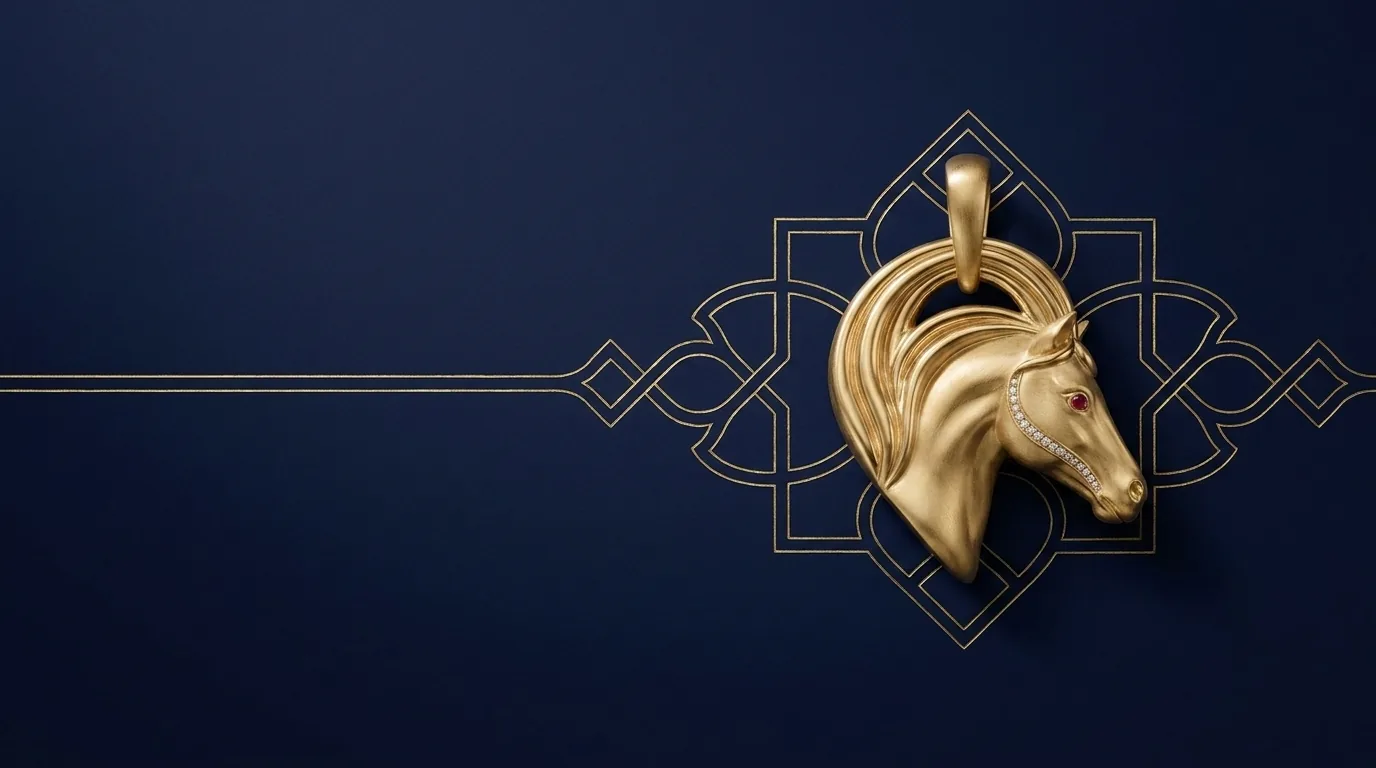
Turn any solid pendant from the house over and there is a second piece of work waiting on the back. A gallery of interlocking geometric line-work, drawn from a Persian architectural tradition older than any of us. Girih: straight lines meeting at fixed angles, building a pattern that covered domes and doorways centuries before it ever sat behind a diamond.
It is not visible when the piece is worn. That is the point.
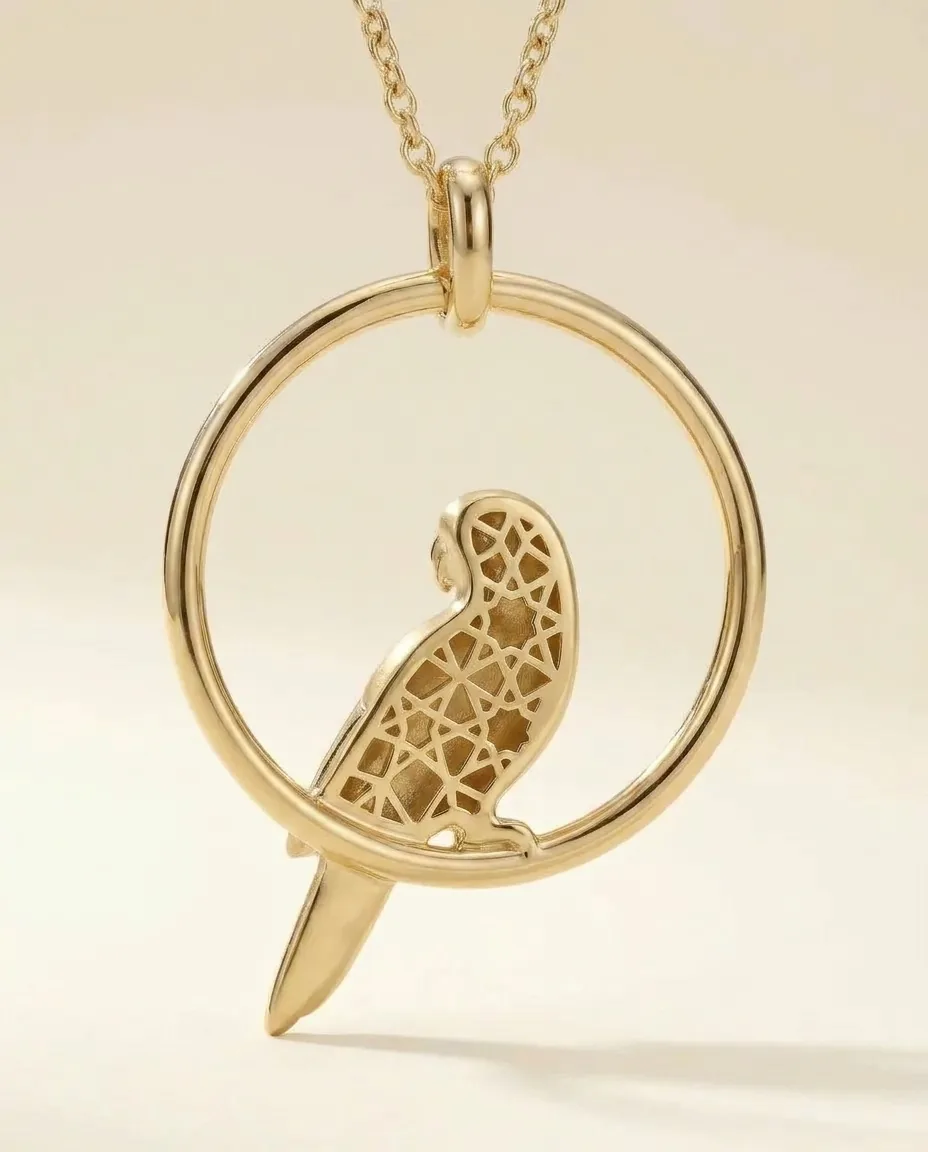
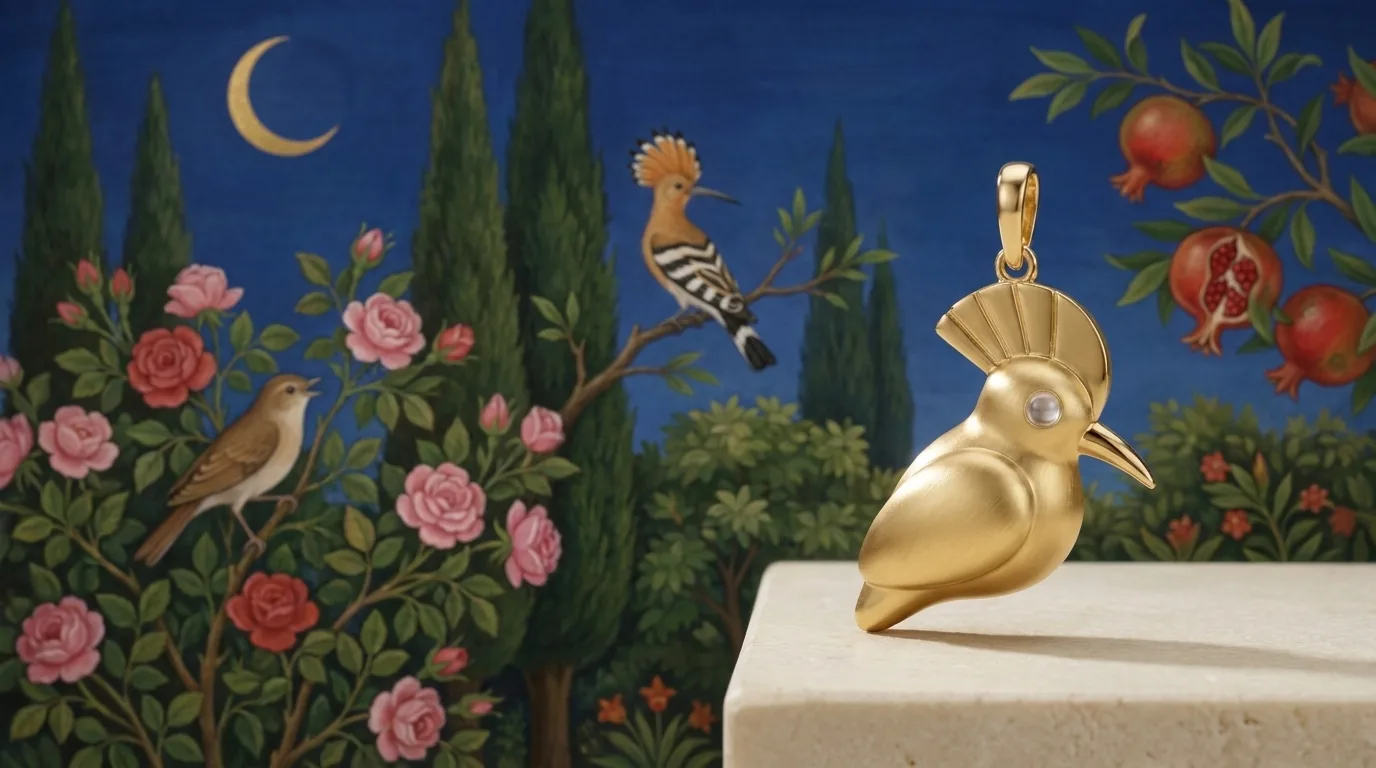
Hamdam carries a hoopoe. Hodhod, the messenger bird from the story of the Simorgh: the one sent ahead, the one who finds the way before anyone else does. Its wings are drawn back mid-flight. A single brilliant sits as its eye, the only stone on the piece, set exactly where a bird’s eye actually sits, not where a stone happens to look convenient. Turn the pendant over and the girih gallery is there, cut beneath the bird, unseen once the chain is fastened and the piece is resting against the skin.
Every solid pendant that leaves the studio carries this. Not as decoration for the case it sits in before it is bought. As a rule for what a piece is allowed to be once someone actually owns it.
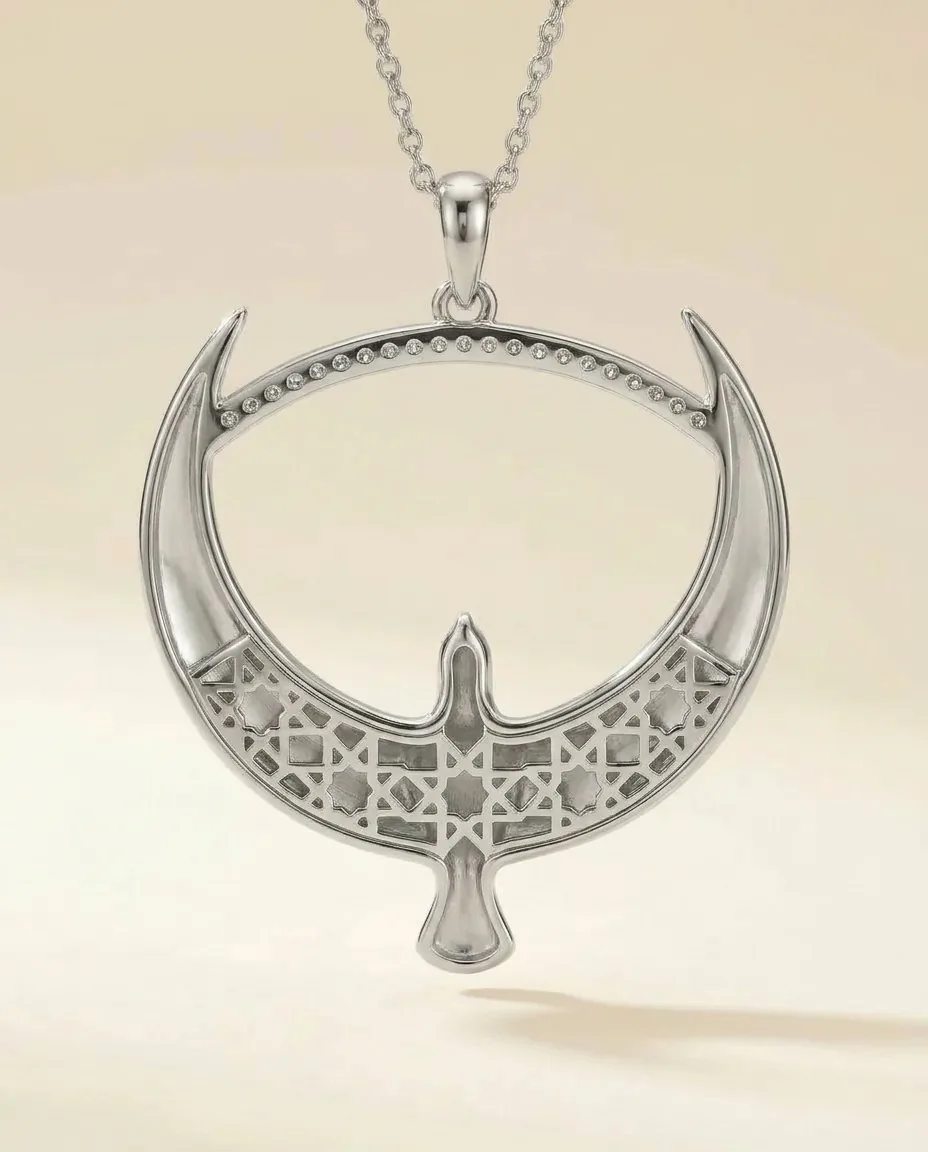
A house signature does not need to be seen to be worth doing properly. Most of what goes into a piece of jewellery is never seen again once it leaves the workshop: the hours spent getting a wing to sit right, a setting checked twice before the stone goes in, a back finished to the same standard as the front, though nobody but the wearer, or a jeweller who knows to look, will ever check it. The girih gallery is that principle made literal. It sits on the one surface that faces the body and nowhere else, a piece of geometry built for an audience of one.
Wear it, and you know something about the piece that no one looking at you can see. That is closer to what jewellery is for than the part that catches the light.
Designed in the studio in Birmingham’s Jewellery Quarter, and made only once it is ordered.